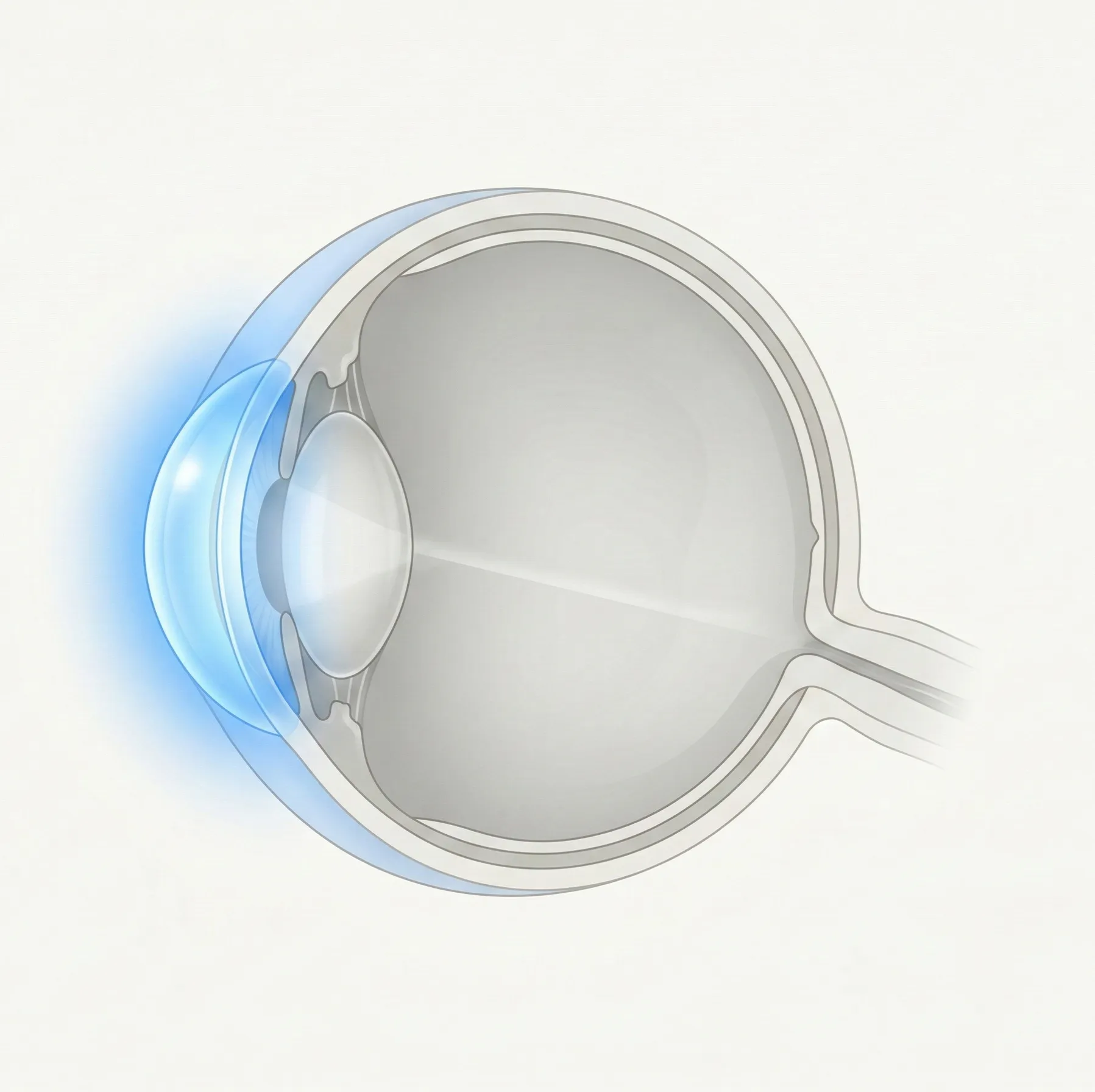
Cornea & External Eye reference image

Cornea & External Eye

The cornea is the clear front window of the eye, and the conjunctiva covers the white of the eye and the inside of the eyelids. This category covers infections, inflammation, degeneration, shape abnormalities, and other conditions affecting the cornea and ocular surface.

86 English articles

Frequently referenced diseases

A

6 articles
Acanthamoeba Keratitis

A rare but severe corneal infection caused by Acanthamoeba, a free-living amoeba that infects the cornea. It is more common in contact lens wearers and causes severe pain and visual impairment.

Acute Hemorrhagic Conjunctivitis

Acute hemorrhagic conjunctivitis (AHC) is an acute infectious conjunctivitis caused by enterovirus 70 (EV70) or a variant of coxsackievirus A24 (CA24v). Bulbar conjunctival hemorrhage is observed in 70–90% of cases, and it is also known as "Apollo disease." There is no specific antiviral treatment; symptomatic therapy is the mainstay. It resolves spontaneously within about one week.

Allergic Conjunctivitis (Including Hay Fever)

Allergic conjunctival diseases are inflammatory disorders of the conjunctiva primarily mediated by type I allergic reactions. They are classified into five subtypes: seasonal allergic conjunctivitis, perennial allergic conjunctivitis, vernal keratoconjunctivitis, atopic keratoconjunctivitis, and giant papillary conjunctivitis. Based on the Japanese Society of Ophthalmic Allergy's Clinical Practice Guidelines for Allergic Conjunctival Diseases, Third Edition (2021), this article provides an overview of the definition, diagnostic criteria, and standard treatments (anti-allergic eye drops, immunosuppressive eye drops, and steroid eye drops).

Amniotic Membrane Transplantation

Ocular surface reconstruction using amniotic membrane. Amniotic membrane, which has anti-inflammatory, anti-fibrotic, and wound-healing promoting effects, is transplanted for various corneal and conjunctival diseases using three methods: graft, cover, and stuff. It has been covered by insurance in Japan since 2014.

Anterior Stromal Puncture

A therapeutic procedure for recurrent corneal epithelial erosion. Using a 25-27G needle, the Bowman's layer and superficial stroma are punctured to promote anchoring fiber production through wound healing response and reconstruct epithelial adhesion. It shows an 85% efficacy rate for recurrences outside the pupillary zone.

Arcus Senilis

A ring-shaped opacity caused by cholesterol and phospholipid deposition in the peripheral corneal stroma associated with aging. It is observed in over 70% of individuals aged 60 and older, and in nearly all individuals aged 80 and older. When similar findings appear in individuals under 40, it is called arcus juvenilis, and evaluation for familial hypercholesterolemia is recommended.

B

5 articles
Bacterial Conjunctivitis

An overview of the causative organisms, symptoms, diagnosis, and treatment of bacterial conjunctivitis, including age-specific characteristics and management of drug-resistant bacteria.

Bacterial Keratitis

Explains the pathology, clinical findings by causative organism, diagnosis, and treatment of bacterial keratitis based on the Infectious Keratitis Clinical Practice Guidelines (3rd edition). Covers the Japanese standard treatment of monotherapy for mild cases and combination therapy with two drugs for severe cases, recommendations for culture and smear, Japan-specific recommendations regarding steroid use, and preparation methods for fortified antibiotics in accordance with AAO PPP.

Bietti Crystalline Dystrophy

An autosomal recessive chorioretinal dystrophy caused by mutations in the CYP4V2 gene. It is characterized by crystalline deposits in the retina and cornea, and progressive chorioretinal atrophy, and is frequently found in East Asians.

Blepharitis

A chronic inflammatory disease centered on the eyelid margin. It is broadly classified into anterior blepharitis (staphylococcal and seborrheic) and posterior blepharitis (Meibomian gland dysfunction, MGD), with alternating remission and exacerbation. Based on the Japanese MGD Clinical Practice Guidelines 2023, warm compresses and eyelid hygiene are the mainstays of treatment, with antibiotics or steroids added as needed.

Boston Type Keratoprosthesis (Type 1 and Type 2)

The Boston Keratoprosthesis (Boston KPro) is the most widely used artificial cornea in the world. Type 1 is used for severe corneal diseases that are difficult to treat with conventional corneal transplantation, and Type 2 is used as a last resort for visual recovery in end-stage ocular surface diseases with loss of tear film and ocular surface keratinization.

C

15 articles
Chemical Injury of the Conjunctiva and Cornea (Alkali and Acid)

Chemical injuries of the conjunctiva and cornea are ophthalmic emergencies requiring immediate irrigation. Alkali agents have high deep-tissue penetration and tend to cause severe damage. Severity is assessed using the Kinoshita classification or Roper-Hall classification, and management proceeds in stages from conservative treatment in the acute phase to surgical ocular surface reconstruction in the cicatricial phase.

Cicatricial Conjunctivitis

Cicatricial conjunctivitis is a group of vision-threatening diseases characterized by chronic inflammation and scarring of the conjunctiva, caused by various factors such as autoimmune diseases (ocular cicatricial pemphigoid), drug toxicity, infections, and chemical trauma. Early diagnosis and treatment according to the underlying disease determine the prognosis.

Cogan syndrome

Cogan syndrome is a rare autoimmune disease characterized by non-syphilitic interstitial keratitis and vestibuloauditory symptoms. It predominantly affects young adults and presents with recurrent ocular inflammation and progressive hearing loss. Up to 80% of patients have systemic symptoms, and up to 15% have vasculitis.

Congenital Hereditary Endothelial Dystrophy (CHED)

Explains the causative gene SLC4A11, symptoms, diagnosis, treatment including corneal endothelial transplantation, and pathophysiology of congenital hereditary endothelial dystrophy (CHED).

Conjunctivitis

A general term for inflammation of the conjunctiva. It is broadly classified into infectious (viral, bacterial, chlamydial) and non-infectious (allergic, toxic, etc.) types, with hyperemia, discharge, and foreign body sensation as the main symptoms.

Conjunctivochalasis

Definition, symptoms, pathophysiology, diagnosis, and treatment of conjunctivochalasis according to Japanese standards. Covers Norihiko Yokoi's proposed lacrimal meniscus reconstruction (3-block resection), tear dynamics disorders common in the elderly, association with MGD, and latest treatments including HFR-ES.

Contact Lens Complications

A general term for corneal and conjunctival disorders caused or triggered by contact lens wear. The main mechanisms include mechanical trauma, hypoxia, inadequate lubrication, immune reactions, and microbial infection. Identifying the cause through fluorescein staining patterns is key to diagnosis.

Corneal Collagen Cross-Linking Techniques (Epi-off vs Epi-on)

A comparative explanation of the two major corneal collagen cross-linking (CXL) techniques: Epi-off (epithelium-off) and Epi-on (transepithelial). Covers the standard Dresden protocol, accelerated protocols, indications, procedures, outcomes, and complications for each method.

Corneal Cross-Linking (CXL)

Detailed explanation of corneal cross-linking (CXL) indications, surgical techniques (Dresden protocol, accelerated CXL, PACK-CXL), effects, complications, and latest research. A minimally invasive procedure that halts the progression of progressive keratoconus and post-LASIK corneal ectasia.

Corneal Donation

A comprehensive explanation of the corneal donation process, donor eligibility criteria, the role of eye banks, tissue evaluation and preservation, and the legal framework.

Corneal Epithelial Basement Membrane Dystrophy

An anterior corneal dystrophy characterized by abnormal thickening and deformation of the corneal epithelial basement membrane, producing characteristic patterns called map (geographic lines), dot (punctate opacities), and fingerprint (fingerprint lines). It is a major cause of recurrent corneal erosion and is also relevant to ocular surface management before cataract surgery.

Corneal Epithelial Defect

An evidence-based explanation of the symptoms, causes, diagnosis, and treatment of corneal epithelial defect (simple erosion, recurrent erosion, persistent epithelial defect).

Corneal Stromal Dystrophy

A group of hereditary diseases in which abnormal proteins deposit in the corneal stroma, primarily due to TGFBI gene mutations. Includes lattice corneal dystrophy, granular corneal dystrophy, and macular corneal dystrophy.

Corneal Transplant Rejection

This article explains the definition of corneal allograft rejection after corneal transplantation, the three types (epithelial, stromal, and endothelial), Khodadoust line, risk factors, incidence rates by PKP/DALK/DSAEK/DMEK, and standard treatment including frequent steroid eye drops, mini-pulse therapy, and systemic cyclosporine or tacrolimus.

Cytomegalovirus Corneal Endotheliitis

Cytomegalovirus (CMV) corneal endotheliitis is a disease in which reactivation of CMV causes inflammation of the corneal endothelial cells. It is a chronic, recurrent anterior segment infection characterized by coin-shaped keratic precipitates, corneal edema, and elevated intraocular pressure.

D

6 articles
Deep Anterior Lamellar Keratoplasty (DALK)

A partial-thickness corneal transplant that preserves the recipient's Descemet membrane and corneal endothelium, replacing only the corneal stroma with donor tissue. Compared to penetrating keratoplasty (PK), it has no endothelial rejection and higher long-term graft survival. Keratoconus is the most common indication.

Descemet Membrane Endothelial Keratoplasty (DMEK)

A corneal endothelial transplant that only grafts the Descemet membrane and endothelial cell layer. It is the latest surgical technique for Fuchs endothelial corneal dystrophy and bullous keratopathy, offering excellent visual recovery and low rejection rates.

Descemet's Stripping Endothelial Keratoplasty (DSEK/DSAEK)

A corneal endothelial transplant procedure in which a donor corneal endothelial graft including Descemet's membrane and posterior stroma is transplanted. It is a standard surgical technique for Fuchs endothelial corneal dystrophy and bullous keratopathy, offering less invasiveness and faster visual recovery than full-thickness corneal transplantation.

Descemetorhexis Without Endothelial Keratoplasty (DWEK)

DWEK (Descemetorhexis Without Endothelial Keratoplasty) is a surgical procedure for Fuchs endothelial corneal dystrophy in which only the Descemet membrane is stripped without donor corneal transplantation. Corneal clarity is expected from migration of peripheral endothelial cells.

Dry Eye in Sjögren's Syndrome

Comprehensive explanation of the pathology, diagnosis, and treatment of dry eye associated with Sjögren syndrome. Includes characteristics of aqueous tear-deficient dry eye due to lymphocytic infiltration of the lacrimal gland, Japanese diagnostic criteria, and novel treatments such as muscarinic receptor agonists and PRP lacrimal gland injection.

Dry Eye Syndrome

A comprehensive explanation of the definition, causes, diagnosis, and treatment of dry eye syndrome. Covers the Japanese 2016 diagnostic criteria, the Dry Eye Clinical Practice Guidelines (Journal of the Japanese Ophthalmological Society 2019), the TFOS DEWS III treatment algorithm, TFOD/TFOT, TFOS Lifestyle, meibomian gland dysfunction, punctal plugs, and the latest treatments.

E

3 articles

F

3 articles

G

3 articles

H

2 articles

I

2 articles

K

2 articles

L

2 articles

M

7 articles
Macular Corneal Dystrophy

Macular corneal dystrophy (MCD) is an autosomal recessive corneal dystrophy caused by mutations in the CHST6 gene, leading to diffuse accumulation of glycosaminoglycans (keratan sulfate) in the corneal stroma. Bilateral vision loss occurs from around 10 to 30 years of age. Treatment includes deep anterior lamellar keratoplasty (DALK) or penetrating keratoplasty (PKP).

Marginal Keratitis (Catarrhal Corneal Ulcer)

A recurrent inflammatory disease characterized by sterile infiltration and ulceration in the peripheral cornea due to a type III allergic reaction to antigens of staphylococci that normally reside on the eyelids. It is frequently associated with blepharitis.

Meesmann Corneal Dystrophy

An autosomal dominant corneal dystrophy characterized by multiple microcysts within the corneal epithelium due to mutations in the KRT3 or KRT12 genes. Onset occurs early in life, but symptoms are usually mild and may include recurrent corneal erosions.

Meibomian Gland Dysfunction (MGD)

A chronic, diffuse abnormality of the meibomian glands characterized by terminal duct obstruction and/or qualitative or quantitative changes in gland secretion. It is the most common cause of evaporative dry eye, affecting 10–30% of people aged 50 years or older in Japan.

Membranous Conjunctivitis and Pseudomembranous Conjunctivitis

A general term for conjunctivitis in which a membrane composed of fibrin and inflammatory exudate forms on the conjunctival surface. True membranes embed into the conjunctival epithelium and bleed upon removal, whereas pseudomembranes adhere to the surface and can be easily removed. Adenoviral conjunctivitis is the most common cause.

Microsporidial Keratitis

Microsporidia are obligate intracellular spore-forming fungi that cause ocular infections presenting as two clinical forms: keratoconjunctivitis and stromal keratitis. They affect not only immunocompromised individuals but also immunocompetent individuals, and are often misdiagnosed as herpetic keratitis. Special staining of corneal scrapings and confocal microscopy are useful for diagnosis.

Mooren's Ulcer

Mooren's ulcer (rodent corneal ulcer) is an idiopathic autoimmune peripheral corneal ulcer that progresses along the corneal limbus. It is characterized by an arcuate ulcer with undermined edges, and the sclera is not involved. An autoimmune reaction against calgranulin C in the corneal stroma is thought to be involved in the pathogenesis.

N

1 articles

O

3 articles

P

11 articles
Pediatric Penetrating Keratoplasty

Full-thickness corneal transplantation performed in patients under 18 years of age. Main indications include congenital corneal opacities and acquired corneal diseases. However, graft failure rates are higher compared to adults, and multidisciplinary collaboration including amblyopia management is essential.

Penetrating Keratoplasty

A transplant surgery that replaces the full thickness of the cornea with donor cornea. Main indications include bullous keratopathy, keratoconus, corneal leukoma, and corneal dystrophy. The three major complications are rejection, glaucoma, and infection. In recent years, indications have been changing due to the spread of lamellar keratoplasty.

Peripheral Ulcerative Keratitis

A group of diseases presenting with crescent-shaped destructive inflammation in the peripheral cornea. It is strongly associated with systemic autoimmune diseases such as rheumatoid arthritis, and can lead to corneal perforation if left untreated. Early systemic immunosuppressive therapy and multidisciplinary collaboration are important.

Pharyngoconjunctival Fever (Pool Fever)

Pharyngoconjunctival fever (PCF, pool fever) is an adenovirus infection characterized by the three main symptoms of fever, pharyngitis, and conjunctivitis. It commonly occurs in children and spreads during the summer. Under the School Health and Safety Act, it is classified as a Type 2 infectious disease requiring school exclusion for 2 days after the resolution of major symptoms. Diagnosis, treatment, and infection control are explained based on the Viral Conjunctivitis Clinical Practice Guidelines 2025 edition.

Phlyctenular Keratoconjunctivitis

A disease characterized by nodular inflammation of the cornea or conjunctiva due to a type IV (delayed-type) hypersensitivity reaction to exogenous antigens. Currently, Cutibacterium acnes (formerly Propionibacterium acnes) and Staphylococcus aureus are the main causes. In Japan, it is understood as a subtype of meibomian gland-associated keratoconjunctival epitheliopathy (MRKC). In tuberculosis-endemic regions, Mycobacterium tuberculosis remains an important cause.

Phototherapeutic Keratectomy (PTK)

A treatment that uses an excimer laser (193 nm) to remove corneal surface opacities and irregularities. Indications include corneal dystrophy, band keratopathy, and recurrent corneal erosion. FDA approved in 1995.

Pinguecula

A yellowish-white raised lesion on the bulbar conjunctiva in the interpalpebral fissure. Ultraviolet exposure and aging are the main causes, and it is found in most people over 50 years of age. Usually asymptomatic, but when inflamed it becomes pingueculitis, which is treated with low-concentration steroid eye drops.

Posterior Polymorphous Corneal Dystrophy

An autosomal dominant corneal dystrophy affecting the corneal endothelium and Descemet's membrane. It presents with vesicular changes, band-like lesions, and diffuse opacities. Four genetic loci (OVOL2, COL8A2, ZEB1, GRHL2) have been identified, and abnormal epithelial-mesenchymal transition (EMT) is central to the pathogenesis.

Pseudomonas Keratitis

A specialist explains the symptoms, causes, diagnosis, and treatment of Pseudomonas aeruginosa keratitis. Detailed coverage includes contact lens-related risks, characteristics of ring abscess, fluoroquinolone treatment, and pathophysiology of liquefactive necrosis.

Pterygium

A chronic disease in which fibrovascular tissue of the conjunctiva extends onto the cornea in a wing-like shape. Ultraviolet exposure is the greatest risk factor, and surgical excision with conjunctival autograft is the mainstay of treatment.

Pythium Keratitis

A vision-threatening keratitis caused by the aquatic oomycete Pythium insidiosum. It closely resembles fungal keratitis but antifungal drugs are ineffective; early accurate diagnosis and antibacterial treatment determine the prognosis.

R

1 articles

S

8 articles
Schnyder Corneal Dystrophy

An autosomal dominant stromal corneal dystrophy characterized by abnormal deposition of cholesterol and phospholipids in the cornea due to UBIAD1 gene mutation. It features corneal crystals and central opacity.

Scleritis

A disease characterized by severe eye pain and redness due to inflammation of the sclera. It often occurs in association with systemic autoimmune diseases such as rheumatoid arthritis, and necrotizing scleritis can lead to serious visual impairment.

Simple Limbal Epithelial Transplantation (SLET)

A one-stage surgical technique for limbal stem cell deficiency (LSCD) reported by Sangwan et al. in 2012. A small amount of limbal tissue is harvested from the healthy eye, divided into small pieces on amniotic membrane, and allowed to proliferate in vivo. No special culture equipment is required, and it is cost-effective.

Stevens-Johnson Syndrome

An acute disease causing erosions and blisters on the skin and mucous membranes throughout the body, triggered by medications or infections. Ocular complications are the most important sequelae, with corneal opacity due to loss of corneal epithelial stem cells and severe dry eye persisting throughout life.

Subconjunctival Hemorrhage

A benign ocular surface disease in which blood accumulates in the subconjunctival space due to rupture of conjunctival vessels. It appears as a bright red to dark red hemorrhage patch and is naturally absorbed in most cases. Systemic evaluation is required for recurrent cases.

Superficial Punctate Keratitis (SPK)

Superficial punctate keratitis (SPK) is a finding in which the outermost cells of the corneal epithelium are shed in a punctate pattern. It arises from various causes including dry eye, meibomian gland dysfunction, drug toxicity, allergies, contact lens-related disorders, and Thygeson superficial punctate keratitis. The cause can be inferred from the staining pattern, and treatment is selected accordingly, including artificial tears, diquafosol, rebamipide, corneal protective agents, and low-concentration steroid eye drops.

Superior Limbic Keratoconjunctivitis

A chronic inflammatory disease of unknown cause localized to the superior bulbar conjunctiva and corneal limbus. It is often associated with thyroid dysfunction and dry eye. Increased friction with the upper eyelid during blinking is considered central to the pathogenesis.

Symblepharon

A condition in which the bulbar conjunctiva and palpebral conjunctiva become abnormally adherent. It often occurs after conjunctival epithelial damage such as chemical trauma, Stevens-Johnson syndrome, or ocular pemphigoid. It can cause impaired eye movement, shortening of the conjunctival fornix, and decreased vision.

T

3 articles

V

2 articles

X

1 articles