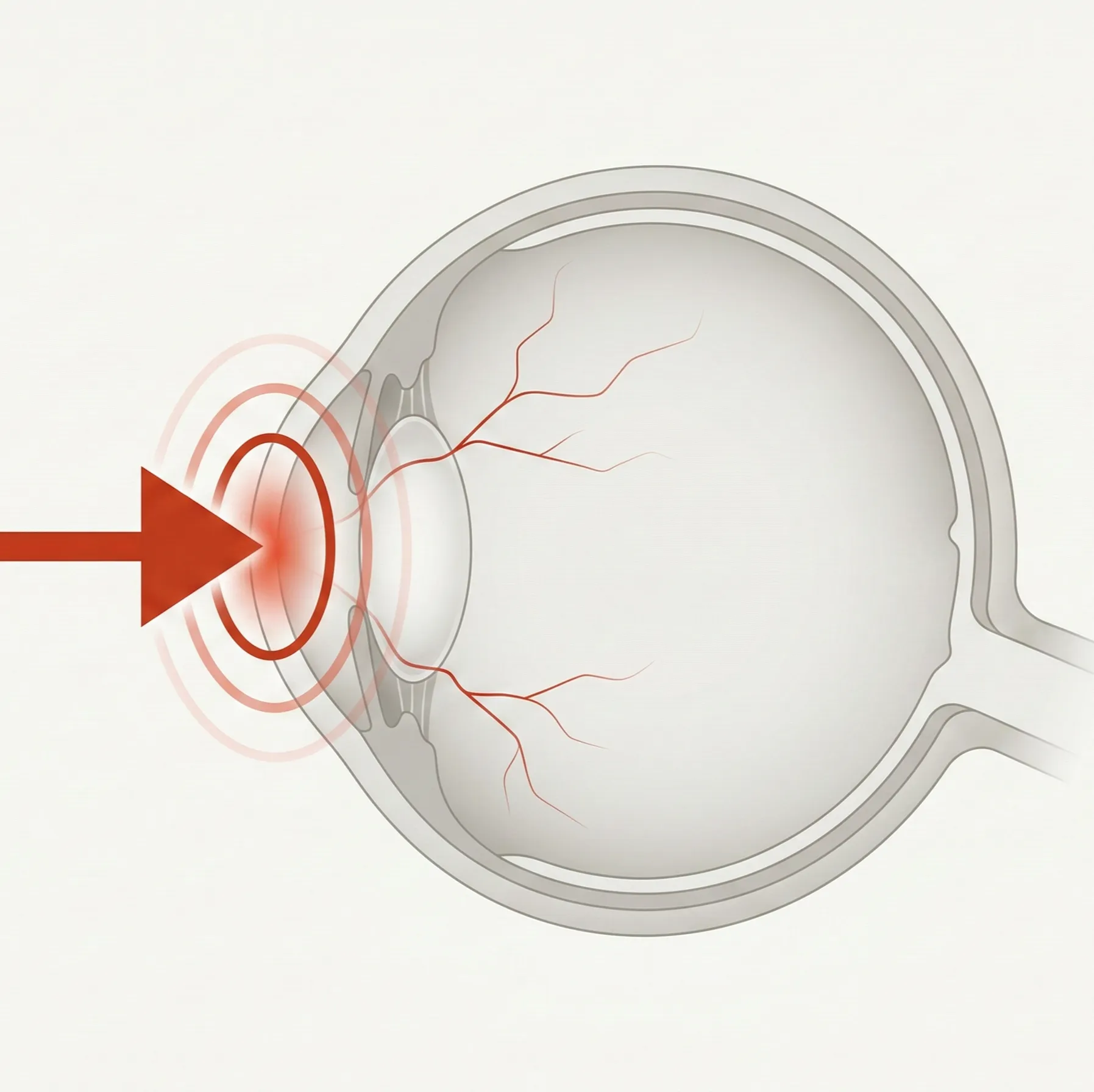
Eye Trauma reference image

Eye Trauma

The eye is exposed to the outside environment and can be injured by blunt trauma, penetrating injury, foreign bodies, chemicals, heat, or radiation. This category covers classification and management principles for eye trauma.

26 English articles

Frequently referenced diseases

A

1 articles

C

2 articles

E

1 articles

I

2 articles

L

2 articles

M

1 articles

O

6 articles
Ocular Burns (Thermal Burns)

This article explains the classification of ocular burns caused by high-temperature substances (first to third degree), the Kinoshita classification for evaluating corneoconjunctival damage, and treatment from acute-phase cooling to ocular surface reconstruction.

Ocular Trauma from Firearms

This article explains the epidemiology, diagnosis, treatment, and prevention of ocular and orbital trauma caused by firearms (handguns, rifles, airsoft guns, etc.).

Orbital Compartment Syndrome

An ophthalmic emergency in which a rapid increase in intraorbital pressure compromises blood flow to the optic nerve and retina, leading to irreversible blindness if urgent decompression is not performed. Immediate decompression via lateral canthotomy and inferior cantholysis is the mainstay of treatment.

Orbital Emphysema

A condition caused by abnormal accumulation of air within the orbit. The most common cause is nose blowing after an orbital wall fracture. In most cases, it resolves spontaneously within 7–10 days, but severe cases can lead to orbital compartment syndrome and potential blindness.

Orbital Foreign Body

This article explains the definition, classification, diagnosis, treatment, and prognosis of orbital foreign bodies, including imaging diagnosis centered on CT and management strategies based on material type.

Orbital Roof Fracture

Orbital roof fracture is a relatively rare orbital fracture caused by trauma to the forehead. In adults, it is often associated with high-energy trauma and severe head injury. Multidisciplinary collaboration with neurosurgery and otolaryngology is necessary.

P

1 articles

R

3 articles

T

5 articles
Traumatic Cataract

Classification of traumatic cataract following ocular trauma (blunt, sharp, foreign body, non-mechanical), clinical findings such as Vossius ring, diagnosis, preoperative planning, surgical techniques, amblyopia management in children, and prognosis. Detailed description of prognosis prediction using OTS score and selection criteria for primary vs. secondary extraction.

Traumatic Lens Dislocation

Classification, symptoms, diagnosis, and surgical indications (CTR, intrascleral fixation, vitrectomy) of traumatic lens dislocation/subluxation caused by rupture of the zonules of Zinn due to blunt ocular trauma, along with differential diagnosis from systemic diseases.

Traumatic Macular Hole

This article explains the definition, epidemiology, OCT diagnosis, possibility of spontaneous closure, vitrectomy (with or without ILM peeling), and prognosis of traumatic macular hole caused by blunt ocular trauma or laser injury. It also details the differentiation from idiopathic macular hole and management of choroidal neovascularization.

Traumatic Mydriasis (Sphincter Pupillae Rupture)

A dilated pupil caused by rupture of the sphincter pupillae muscle due to blunt trauma. Main symptoms are decreased near vision and photophobia. The diagnosis is suggested by the absence of miosis after instillation of 1% pilocarpine. Differentiation from oculomotor nerve palsy is important.

Traumatic Retinal Detachment

Rhegmatogenous retinal detachment caused by open or closed ocular trauma. For open injuries, vitrectomy is the basic approach; for closed injuries, scleral buckling surgery is the standard. It is common in young people and children, and attention must be paid to progression to proliferative vitreoretinopathy.

U

1 articles

Z

1 articles