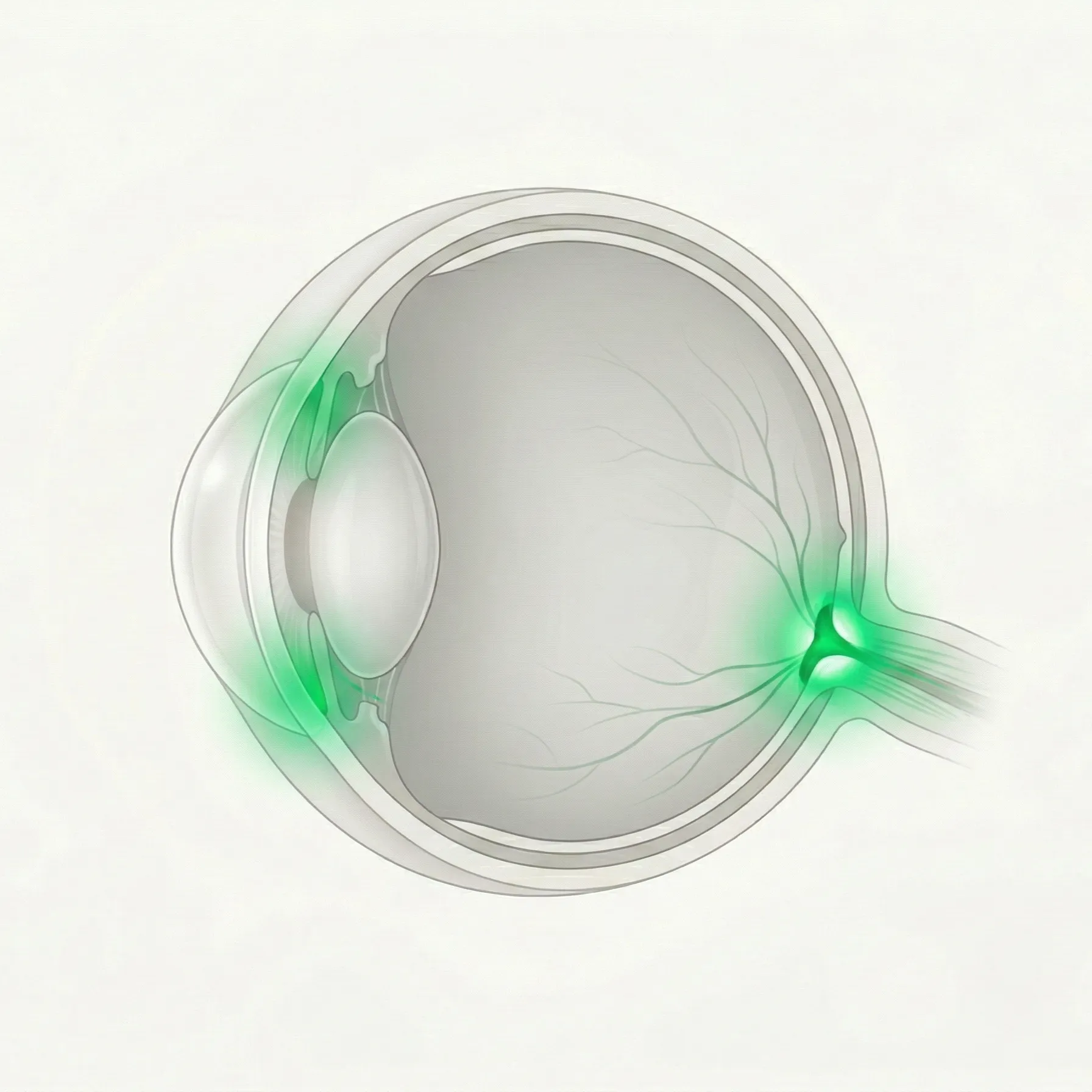
Glaucoma
Glaucoma is a group of progressive optic nerve diseases related to eye pressure and other risk factors. This category covers disease types, angle findings, pressure patterns, and treatment approaches.
119 English articles
Glaucoma is a group of progressive optic nerve diseases related to eye pressure and other risk factors. This category covers disease types, angle findings, pressure patterns, and treatment approaches.
119 English articles
Acquired uveal eversion (AEU) is a condition in which the iris pigment epithelium prolapses anteriorly, secondary to neovascular glaucoma, ICE syndrome, and others. This article explains the causes, symptoms, diagnosis, and treatment.
Definition of acute glaucoma attack (APACA/acute primary angle closure attack), triad (eye pain, headache, vomiting), diagnosis, and emergency treatment. Covers evidence from the 5th edition of the Glaucoma Clinical Practice Guidelines and APGS 2025 guidelines: mannitol infusion, pilocarpine eye drops, laser iridotomy, ALPI, anterior chamber paracentesis, lens reconstruction, and contralateral eye management.
Ahmed ClearPath is a non-valved glaucoma drainage device approved by the FDA in 2019. It features a low-profile design and includes a ripcord, used for intraocular pressure management in refractory glaucoma.
Overview of alternative and complementary therapies for glaucoma. Explains the current evidence and limitations of supplements such as marijuana (cannabinoids), ginkgo biloba, vitamins, omega-3 fatty acids, melatonin, and lifestyle adjustments.
A bleb leak is a condition in which aqueous humor leaks from the filtering bleb wall to the outside of the eye after glaucoma filtration surgery, confirmed by Seidel test. It is a significant risk factor for hypotony maculopathy and bleb infection, and management according to the condition is necessary, ranging from conservative treatment (autologous blood injection, bandage contact lens) to surgical treatment (conjunctival advancement, transconjunctival scleral flap suture).
An autosomal dominant genetic disorder characterized by anterior segment dysgenesis and systemic abnormalities. Glaucoma complicates approximately 50–60% of cases, and mutations in PITX2 or FOXC1 are the main causes.
Bleb-related infection (BRI) is an infectious complication that occurs after glaucoma filtration surgery, classified into blebitis and bleb-related endophthalmitis. The cumulative incidence over 5 years postoperatively is approximately 2.2%, and early diagnosis and aggressive treatment determine visual prognosis.
Blue-on-yellow perimetry (SWAP) is a non-standard perimetry that selectively evaluates the blue cone system using a blue stimulus on a yellow background to detect visual field abnormalities in early glaucoma.
Canaloplasty is a non-penetrating glaucoma surgery that dilates Schlemm's canal to restore physiological aqueous outflow. In addition to the conventional ab externo approach, modified techniques such as ab interno canaloplasty (ABiC) and the OMNI system have been developed.
This article explains the intraocular pressure-lowering effects of cannabinoids and their potential application in glaucoma treatment, covering the endocannabinoid system, receptors, effects by route of administration, neuroprotective effects, side effect profile, and the opinions of major ophthalmology societies.
A comprehensive explanation of glaucoma eye drops by drug class. Covers prostaglandin analogs (PGAs), EP2 receptor agonists (Eybelis), beta-blockers, CAIs, alpha-2 agonists, ROCK inhibitors, and fixed combinations, including their mechanisms of action, side effects, contraindications, list of approved drugs in Japan, and treatment steps. Also provides a comprehensive description of target intraocular pressure setting and adherence improvement strategies.
This article explains the latest research trends in the application of computational fluid dynamics (CFD) to ophthalmology, including analysis of aqueous humor dynamics, simulation of intravitreal drug distribution, evaluation of shear stress after laser iridotomy, and heat transfer models of the lens.
Explains the etiology, symptoms, clinical findings, diagnosis, differential diagnosis, treatment, and prognosis of congenital ectropion uveae (CEU). A rare disease characterized by unilateral anterior chamber dysgenesis and secondary glaucoma.
This article explains the impact of the COVID-19 pandemic on glaucoma care, including the introduction and challenges of telemedicine, limitations of clinical examinations, changes in treatment adherence, and transformations in surgical implementation systems.
This article explains the indications, surgical techniques, complications, and mechanisms of action of transscleral cyclophotocoagulation (TS-CPC), micropulse transscleral cyclophotocoagulation (MP-CPC), slow coagulation continuous-wave TSCPC (SC-TSCPC), endoscopic cyclophotocoagulation (ECP), and high-intensity focused ultrasound circular cyclocoagulation (HIFU-UCCC), including the latest case reports and histological findings.
Comprehensive explanation of cyclodialysis cleft: pathophysiology, causes, diagnosis (gonioscopy, UBM, AS-OCT), pharmacotherapy, laser treatment, surgery (cyclodialysis repair), and mechanism of intraocular pressure elevation after closure.
A comprehensive guide to precautions that glaucoma patients should take in daily life, including strategies to improve eye drop adherence, management of exercise, diet, and sleep, safety in driving and mobility, assessment of daily functional impairment, and low vision care.
This article explains the definition of developmental glaucoma (congenital glaucoma), Japanese classification (early-onset and late-onset), CGRN international classification, epidemiology, symptoms (buphthalmos, Haab striae), diagnostic criteria, goniotomy, trabeculotomy, tube shunt surgery, genes (CYP1B1), MIGS, and amblyopia management.
Explains the indications, contraindications, clinical pharmacology, insertion technique, clinical trial results (post-cataract surgery, allergic conjunctivitis, post-corneal transplant), and adverse reactions of Dextenza. Also details the efficacy and patient satisfaction of dropless therapy.
Explains causative drugs (mydriatics, anticholinergics, SSRIs, topiramate), mechanisms of pupillary block/non-pupillary block, symptoms and clinical findings, diagnosis (gonioscopy, UBM, AS-OCT), and treatment (acetazolamide, LPI, lens extraction) for drug-induced acute angle-closure glaucoma.
This article describes the incidence, risk factors, pathophysiology, and management of secondary intraocular pressure elevation occurring after pars plana vitrectomy (PPV), scleral buckling, panretinal photocoagulation, intravitreal anti-VEGF injection, triamcinolone injection, silicone oil, and intraocular gas injection, by surgical procedure.
Explains the principles, indications, and techniques (limbal/pars plana approach) of endoscopic cyclophotocoagulation (ECP), combined cataract surgery (phaco-ECP), complications, and outcomes. Includes comparison with the transscleral method and results of the latest meta-analysis.
This article explains the pathophysiology, epidemiology, risk factors, diagnosis (argon laser test), and management (en bloc excision, drainage device, intravitreal methotrexate injection) of epithelial downgrowth that occurs after penetrating ocular trauma or anterior segment surgery, and its relationship with glaucoma.
Explains the pathology, diagnosis, and treatment of exfoliation glaucoma (pseudoexfoliative glaucoma, PXG). Covers association with LOXL1 gene, clinical findings of Sampaolesi line and exfoliation material, differentiation from POAG, diurnal intraocular pressure variation, role of SLT, trabeculectomy, zonular weakness during cataract surgery, OCTA vessel density studies, and wipe-out syndrome.
The EyeWatch (eW) is the world's first adjustable glaucoma drainage device, allowing non-invasive fine-tuning of postoperative intraocular pressure via external magnetic control. It is gaining attention as a new treatment option for refractory glaucoma.
Ghost cell glaucoma is a secondary open-angle glaucoma caused by obstruction of the trabecular meshwork by degenerated red blood cells (ghost cells) after vitreous hemorrhage, and most cases resolve with appropriate treatment.
This article explains the definition, incidence by surgical type, difficulties in intraocular pressure measurement, precautions for drug therapy, and stepwise treatment strategies including tube shunt surgery for secondary glaucoma occurring after corneal transplantation (PKP, DSAEK, DMEK).
Secondary glaucoma complicating congenital aniridia. Caused by angle abnormalities due to PAX6 gene mutations, occurring in 50–75% of cases. Stepwise intraocular pressure management from medication to surgery is required.
This article explains the etiology of secondary open-angle glaucoma due to elevated episcleral venous pressure (EVP) (CCF direct/dural type, Sturge-Weber syndrome, Radius-Maumenee syndrome, superior vena cava syndrome, cavernous sinus thrombosis, thyroid eye disease), clinical findings of tortuous episcleral vessels and Medusa head, pathophysiology based on the Goldmann formula, diagnosis (gonioscopy, MRI flow void, cerebral angiography 4-vessel angiography), and treatment (aqueous suppressants, Rho kinase inhibitors, Baerveldt valve, age-specific Sturge-Weber treatment algorithm).
Definition, three pathogenic mechanisms (angle closure due to excessive vault, pigment dispersion type, steroid-induced type), diagnosis, and treatment of glaucoma occurring after ICL (phakic intraocular lens) surgery. Based on the 8th edition of the Refractive Surgery Guidelines and the 5th edition of the Glaucoma Practice Guidelines.
This article explains the characteristics, pathogenesis, diagnosis, and treatment of secondary glaucoma caused by infectious diseases (viruses, bacteria, parasites, prions) by pathogen. It details the mechanisms of glaucoma development and treatment strategies for each pathogen, including HSV, CMV, VZV, syphilis, and tuberculosis.
Peters anomaly is a congenital anterior segment dysgenesis characterized by central corneal Descemet membrane and endothelial defects, with glaucoma complicating 50-70% of cases. Treatment of glaucoma follows that of primary congenital glaucoma, with trabeculotomy as the first choice, but good postoperative intraocular pressure control is achieved in only about one-third of cases.
A general term for secondary glaucoma that occurs in association with retinal detachment itself or its surgery. It encompasses multiple conditions such as Schwartz syndrome, ghost cell glaucoma, silicone oil glaucoma, angle rotation glaucoma, and postoperative inflammatory intraocular pressure elevation. This article explains the diagnosis and treatment for each condition.
Glaucoma data standards are standard specifications for sharing and integrating clinical data and imaging data of glaucoma across systems, including DICOM, SNOMED-CT, LOINC, OMOP CDM, etc.
A glaucoma drainage device (GDD) is an implant consisting of a tube and a plate, serving as a surgical option for refractory glaucoma when trabeculectomy is difficult. This article explains domestically approved devices such as Baerveldt® and Ahmed®, surgical techniques, evidence from TVT/PTVT studies, and pediatric indications.
This article explains the definition, classification, risk factors, pathophysiology, diagnosis, and treatment of glaucoma following cataract surgery in childhood (GFCS). It covers incidence, the need for lifelong follow-up, and surgical treatment.
An overview of the epidemiology, diagnostic challenges, and treatment strategies for glaucoma in developing countries. Discusses barriers to healthcare access, surgery-first treatment policies, and the potential of AI screening and telemedicine.
This article explains the etiology, diagnosis, and treatment of pseudophakic glaucoma and aphakic glaucoma that occur after cataract surgery. It covers various mechanisms of intraocular pressure elevation, including retained ophthalmic viscosurgical devices (OVD), steroid-induced glaucoma, UGH syndrome, iris chafing, lens particles, pupillary block, and pigment dispersion. It details pharmacotherapy, including contraindications for Eybelis, and surgical indications.
Glaucoma management during pregnancy and postpartum is a multidisciplinary strategy that includes selection of glaucoma medications, laser therapy, and surgery according to the stage of pregnancy, aiming to balance the risk of drugs to the fetus/newborn with protection of the mother's visual function.
Glaucoma screening is a testing program to detect glaucoma early at an asymptomatic stage and prevent irreversible vision loss. Although mass screening of the general population is not recommended, targeted screening for high-risk groups is useful.
This article explains the pathophysiology, diagnosis, and treatment of secondary glaucoma caused by intraocular tumors. It details the mechanisms of open-angle and angle-closure glaucoma, imaging diagnostics, and the selection of medical and surgical treatments.
This article explains the definition, pathophysiology, causes (JIA), diagnosis, drug therapy, and surgical treatment of secondary glaucoma due to pediatric uveitis. It covers the rate of glaucoma complicating JIA-associated uveitis, differentiation from steroid-induced ocular hypertension, and outcomes of angle surgery, filtering surgery, and GDD.
This article explains the pathology, diagnosis, and treatment of secondary glaucoma associated with uveitis. Intraocular pressure rises due to combined mechanisms of open-angle and angle-closure, leading to glaucomatous optic neuropathy.
Explains the incidence, risk factors, pathophysiology, diagnosis, and repair of tube shunt exposure after glaucoma drainage device (GDD) surgery. Also details preventive measures such as patch graft coverage and scleral tunnel techniques.
Indications, technique, and complications of Nd:YAG laser goniopuncture. Detailed description of the perforation procedure of the trabecular meshwork and Descemet's membrane as an additional treatment for intraocular pressure elevation after non-penetrating glaucoma surgery (NPGS), and its management.
This article provides a comprehensive explanation of gonioscopy: indications, techniques (static/dynamic/indentation), Shaffer/Scheie/Spaeth classifications, van Herick method, representative abnormal findings (PAS, neovascularization, angle recession, pediatric glaucoma), and comparison with imaging diagnostics.
Explains intraocular pressure fluctuations during hemodialysis and the pathophysiology, risk factors, diagnosis, and treatment of ocular dialysis disequilibrium syndrome (ODD). Details the effects of osmotic gradients on aqueous humor dynamics, optimization of dialysis prescriptions, and management in glaucoma patients.
This article explains the historical evolution of the recognition, diagnosis, and treatment of glaucoma, from the ancient Greek term "glaukos" to modern MIGS. It details the invention of the ophthalmoscope, development of the tonometer, advances in pharmacotherapy (miotics, beta-blockers, prostaglandin analogs), surgical treatments (iridectomy, trabeculectomy, tube shunt, MIGS), and the prospects of gene therapy.
This article explains the background, principles, devices, and clinical significance of home intraocular pressure measurement (home tonometry). It details the features and limitations of the iCare HOME rebound tonometer, Triggerfish contact lens sensor, and EyeMate implantable sensor, as well as the importance of out-of-office intraocular pressure monitoring.
This article details the pathophysiology of ICE syndrome (iridocorneal endothelial syndrome), its three clinical types (progressive iris atrophy, Chandler syndrome, and Cogan-Reese syndrome), diagnosis using specular microscopy, and treatment strategies ranging from aqueous suppressants to tube shunt surgery and DMEK/DSAEK.
Explains imaging of the aqueous humor outflow pathway in glaucoma. Covers evaluation of the anterior chamber angle, Schlemm's canal, and collector channels using ultrasound biomicroscopy (UBM) and anterior segment optical coherence tomography (AS-OCT), as well as gonioscopy, AS-OCTA, and deep learning applications.
Explanation of imaging techniques for the optic nerve and retinal nerve fiber layer (RNFL) in glaucoma. Covers OCT (SD-OCT, SS-OCT), HRT, GDx, fundus photography, RNFL thickness, BMO-MRW, GCC analysis, limitations of normative databases, progression detection, and latest technologies (PS-OCT, AI).
This article explains the genetic background, clinical features, and treatment of glaucoma associated with immunogenetic diseases (Aicardi-Goutières syndrome, Singleton-Merten syndrome). It also details the pathophysiology due to RIG-I receptor dysfunction and the potential of JAK inhibitors.
Explains the relationship between intracranial pressure (ICP) and glaucoma. Details the concept of translaminar pressure gradient (TLPG), the cerebrospinal fluid theory of glaucoma, low ICP in normal-tension glaucoma, development of glaucoma after normal pressure hydrocephalus and VP shunt, changes in lamina cribrosa depth, and mechanisms of axonal transport impairment.
This article explains the physiological significance of intraocular pressure (IOP) and various methods of IOP measurement. It details the principles and measurement techniques of the Goldmann applanation tonometer (GAT), as well as the characteristics of non-contact tonometers, rebound tonometers, and dynamic contour tonometers. The effects of central corneal thickness and corneal biomechanics on measurement values, target IOP setting, and continuous IOP monitoring are also discussed.
This article explains the mechanisms, risk factors, and management of acute and chronic intraocular pressure elevation following intravitreal injection of anti-VEGF drugs.
Explains challenges and solutions for intraocular pressure measurement after refractive surgery (LASIK, PRK, RK). Covers accuracy comparison of various tonometers (GAT, DCT, ORA), mechanism of underestimation due to corneal thinning, interface fluid syndrome, and clinical considerations.
This article explains the indications, technique, treatment outcomes, and complications of argon laser peripheral iridoplasty (ALPI). It details the actual laser treatment for acute primary angle closure and plateau iris syndrome.
Iridoschisis is a rare degenerative disease in which the anterior and posterior layers of the iris stroma separate, and the anterior layer fibers become free in the aqueous humor. It is frequently associated with angle-closure glaucoma and corneal endothelial damage, and cataract surgery requires special considerations.
Explanation of indications, procedure, laser settings, complications, and treatment outcomes of laser peripheral iridotomy (LPI). Includes evidence from ZAP trial and EAGLE trial, differentiation between Nd:YAG laser and argon laser, and rare complications (decompression retinopathy, ciliochoroidal detachment).
This article explains the principles, indications, technique, lenses used, laser settings, complications, and timing of laser suture lysis (LSL) after trabeculectomy. It includes the latest knowledge on stepwise adjustment of filtration volume in postoperative intraocular pressure management.
Explanation of the principles, indications, irradiation conditions, procedures, complications, and treatment outcomes of laser trabeculoplasty (ALT/SLT). Includes details of the 6-year results of the LiGHT trial, positioning in the 5th edition of the Japanese Glaucoma Guideline and the 6th edition of the EGS, and usage in exfoliation glaucoma.
This article explains the principles, techniques, efficacy, and safety of excimer laser trabeculotomy (ELT) and femtosecond laser image-guided high-precision trabeculotomy (FLIGHT). It also includes their positioning in MIGS and future prospects.
Classification (phacomorphic, phacolytic, lens-particle, phacoantigenic), pathophysiology, diagnosis, and treatment of lens-induced glaucoma. Includes positioning of secondary glaucoma based on the 5th edition of the Glaucoma Clinical Practice Guidelines, differentiation and management of intumescent cataract, phacolysis, lens cortex, and phacoanaphylactic glaucoma, dosage of hyperosmotic agents, and mechanism of contraindication for miotics.
Explains the impact of lifestyle on the onset and progression of glaucoma. Includes the relationship between intraocular pressure and diet (nitrates, omega-3, vitamin B3), exercise (aerobic exercise, weightlifting, yoga), sleep position, smoking, alcohol, and caffeine.
This article explains the evaluation of low vision in glaucoma patients, visual rehabilitation, selection of assistive devices, and psychological support. It includes difficulties with reading, mobility, and driving, as well as the effectiveness of low vision care.
Explains the principles, measurement parameters (GCC, GCIPL), diagnostic ability, progression detection, floor effect limitations, and OCTA prospects of macular OCT (optical coherence tomography) in glaucoma diagnosis. Includes the importance of comprehensive evaluation by combining with RNFL analysis.
A rare secondary angle-closure glaucoma in which aqueous humor is misdirected posteriorly, causing forward displacement of the iris-lens diaphragm, angle closure, and elevated intraocular pressure. It often occurs after filtration surgery.
This article explains the etiology (diabetic retinopathy, retinal vein occlusion, ocular ischemic syndrome), staging, diagnosis of iris rubeosis, anti-VEGF therapy, panretinal photocoagulation, trabeculectomy (with MMC), and tube shunt surgery for neovascular glaucoma (NVG).
Explains neuroprotective strategies in glaucoma. Covers clinical evidence for brimonidine, citicoline, nicotinamide, and neurotrophic factors, mechanisms of RGC death, and latest research trends in combination therapy, gene therapy, and NAD+ therapy.
Explains the mechanism of action, clinical trial results, and side effects of nitric oxide (NO)-donating prostaglandin analogs (latanoprostene bunod, NCX 470). Covers differences from conventional PGAs and evidence from VOYAGER, APOLLO, and LUNAR trials.
Anatomy, physiology, and regulatory mechanisms of the unconventional aqueous humor outflow pathway (uveoscleral outflow pathway). Covers comparison with the conventional pathway, mechanism of prostaglandin analogs, pressure insensitivity, elastic sponge model, and relevance to MIGS.
Explanation of indications, contraindications, surgical technique (superficial flap, deep flap, Schlemm's canal opening, TDM dissection), implants, goniopuncture, treatment outcomes, and complications of non-penetrating deep sclerectomy (NPDS). Also details the latest techniques such as XEN-DS.
Definition of normal-tension glaucoma (NTG), epidemiology based on the Tajimi Study, ocular perfusion pressure and vascular factors, diagnosis and differential diagnosis, evidence from CNTGS/LoGTS, first-line medication, and target intraocular pressure setting.
This article explains the principles and algorithms of optical coherence tomography angiography (OCTA), and its clinical significance in glaucoma diagnosis including vessel density assessment, microvascular dropout, longitudinal progression assessment, and postoperative evaluation.
Definition of ocular hypertension, risk stratification based on OHTS/EGPS, predictors of progression to POAG, central corneal thickness and corneal hysteresis, thresholds for follow-up and treatment initiation, SLT, preservative-free formulations, and management of secondary ocular hypertension.
This article explains the pathophysiology, prevalence, diagnosis, and management strategies for ocular surface disease (dry eye, superficial punctate keratitis, meibomian gland dysfunction) caused by glaucoma medications (especially those containing BAK).
Explains the mechanism of action, indications, surgical technique, comparison with mitomycin C, and outcomes of Ologen, used as an adjunct in glaucoma filtration surgery.
Explains the mechanism of action, clinical trials (AYAME, PEONY, RENGE, FUJI), side effects, and differences from conventional PGAs of omidenepag isopropyl (Eybelis®). Covers the dual intraocular pressure-lowering mechanism via EP2 receptors and the advantage of no prostaglandin-associated periorbitopathy (PAP).
Definition, epidemiology, mechanical and vascular hypotheses, association with glaucoma, diagnosis, and prognosis of optic disc hemorrhage (Drance hemorrhage). Based on evidence from major trials such as OHTS, CNTGS, and EMGT.
Definition and classification (superficial and buried types) of optic nerve head drusen (ONHD), differentiation from pseudopapilledema, diagnostic methods (ultrasound, OCT, autofluorescence), visual field defects, and association with glaucoma.
This article explains the causes, symptoms, and stepwise treatment (eye drops, cyclophotocoagulation, retrobulbar injection, enucleation) for chronic pain in an eye with no hope of visual recovery (painful blind eye).
Explains the structure, features, surgical technique, and clinical outcomes of the Paul Glaucoma Implant. Covers comparisons with Ahmed and Baerveldt, outcomes in adult and pediatric glaucoma, and complications.
This article explains the definition, pathophysiology, triad, risk factors, diagnosis, and treatment of pigmentary glaucoma (PG) and pigment dispersion syndrome (PDS). It covers the mechanism of pigment dispersion due to reverse pupillary block, Krukenberg spindle, trabecular meshwork pigmentation, precautions for laser treatment, and the latest cases of iatrogenic pigmentary glaucoma.
Pathophysiology, diagnosis, and treatment of plateau iris syndrome (PIS) are explained based on the Japan Glaucoma Treatment Guidelines 5th edition and the International PPP 2026. It covers UBM findings of anterior rotation of the ciliary body, double hump sign, and stepwise treatment including ALPI after LPI, pilocarpine, and lens extraction.
This article explains the definition, epidemiology, symptoms, diagnosis, differential diagnosis, treatment, CMV association, and pathophysiology of Posner-Schlossman syndrome (PSS). It covers acute management with steroids and intraocular pressure-lowering drugs based on the Uveitis Clinical Practice Guidelines, the 5th Edition of the Glaucoma Clinical Practice Guidelines, and TITAN Report 2, as well as ganciclovir and valganciclovir treatment for CMV-positive cases, and surgical indications.
This article explains the classification, pathophysiology, diagnosis, medical treatment (including specific prescription examples), and surgical treatment of secondary intraocular pressure elevation occurring after pars plana vitrectomy (PPV), scleral buckling, panretinal photocoagulation, silicone oil, and intraocular gas injection, including ghost cell glaucoma and Schwartz syndrome.
Comprehensive explanation of postoperative choroidal detachment (choroidal effusion) including pathophysiology, classification (serous vs hemorrhagic), risk factors, B-mode ultrasound differentiation, conservative treatment (atropine, steroids), surgical drainage (kissing choroid, cases with shallow anterior chamber), association with hypotony maculopathy, and uveal effusion syndrome.
Explains the structure, material, surgical technique, and clinical outcomes of the PreserFlo MicroShunt (Ab-Externo MicroShunt). Covers the characteristics of the SIBS material, comparison with XEN and trabeculectomy, and complication management.
Explains the staging, diagnosis, and treatment of primary angle closure glaucoma (PACG), primary angle closure (PAC), and primary angle closure suspect (PACS). Covers the 5th edition of the Glaucoma Clinical Practice Guidelines, the EAGLE study, laser iridotomy, lens extraction, and management of plateau iris.
This article explains the definition, risk factors, diagnosis, treatment, and pathophysiology of primary open-angle glaucoma (POAG). It covers evidence based on the 5th edition of the Japanese Glaucoma Guideline, the Tajimi Study, AAO PPP, and the 6th edition of EGS, including 6-year results of the LiGHT Trial, surgical strategies for MIGS and refractory POAG, and the latest research on optic disc hemorrhage.
Overview of the epidemiology, risk factors, and laser treatment prospects for primary open-angle glaucoma (POAG) in Africa. Covers evidence for SLT as first-line therapy (LiGHT trial), treatment outcomes in African populations, and new MIGS such as HFDS.
Explains the differentiation, pathophysiology, and treatment of primary angle-closure glaucoma (PACG) and secondary angle-closure glaucoma. Covers mechanisms of pupillary block and plateau iris, topiramate-induced ACG, cases with retinitis pigmentosa, and acetazolamide idiosyncratic reactions.
Explains the reliability and limitations of intraocular pressure measurement methods (Goldmann applanation tonometer, non-contact tonometer, Tonopen, iCare, DCT). Covers the influence of central corneal thickness (CCT), diurnal variation, and the latest information on continuous IOP monitoring devices.
Explains the principle, algorithm, and glaucoma detection ability of Retinal Nerve Fiber Layer Optical Texture Analysis (ROTA). Covers comparison with conventional OCT RNFL thickness measurement, early detection in ocular hypertension, and ability to differentiate from non-glaucomatous optic neuropathy.
Explains the structure, surgical technique, clinical outcomes, and mechanism of action of the retrobulbar shunt. Covers the characteristics of this new glaucoma drainage device that guides aqueous humor from the anterior chamber to the retrobulbar space, comparison with conventional GDDs, and its usefulness in refractory glaucoma.
Definition, pathophysiology, diagnosis, and treatment of Schwartz syndrome (Schwartz-Matsuo syndrome). It is a secondary open-angle glaucoma caused by obstruction of the trabecular meshwork by shed photoreceptor outer segments following rhegmatogenous retinal detachment, leading to elevated intraocular pressure. Retinal reattachment via scleral buckling is the first-line treatment; steroids are ineffective.
This article explains clinical evaluation methods for the optic disc in glaucoma diagnosis. It covers observation techniques using slit-lamp microscopy and direct ophthalmoscopy, evaluation indices such as cup-to-disc ratio (C/D ratio), rim-to-disc ratio (R/D ratio), and the ISNT rule, ancillary testing with OCT, and key points for differential diagnosis.
Explains the principles, measurement parameters, diagnostic ability, and progression detection of spectral domain OCT (SD-OCT) in glaucoma. Covers RNFL thickness, ONH, and GCA analysis usage, causes of misinterpretation, floor effect, and GPA progression analysis program.
Explains the principles, measurement algorithms, result interpretation, and progression assessment of standard automated perimetry (SAP). Covers the SITA algorithm, Anderson-Patella criteria, GHT, MD, VFI, PSD indices, event analysis, trend analysis, and comparisons with SWAP and FDT.
This article explains the pathophysiology, risk by route of administration, classification of steroid responders, diagnosis, standard treatment, and evidence for outflow reconstruction surgery of steroid-induced glaucoma (secondary open-angle glaucoma caused by corticosteroids).
Explanation of the surgical technique, clinical outcomes, and safety of the STREAMLINE Surgical System. Covers its positioning as a MIGS for transluminal dilation of Schlemm's canal, outcomes when combined with cataract surgery, and comparison with other MIGS devices.
This article explains the pathology, diagnosis, and treatment of glaucoma associated with Sturge-Weber syndrome (SWS). It covers GNAQ somatic mosaic mutations, differences between early-onset and late-onset types, mechanisms of angle dysgenesis and elevated episcleral venous pressure, selection of trabeculotomy and tube shunt surgery, and complications related to choroidal hemangioma.
Explanation of types, surgical techniques, clinical outcomes, and safety of suprachoroidal devices. Includes the background of CyPass market withdrawal, comparison of MINIject, GMS, and STARflo, and pathophysiology of the uveoscleral outflow pathway.
Explains the types, clinical outcomes, and safety of sustained release glaucoma drug delivery systems. Covers devices such as Durysta, iDose TR, bimatoprost ocular insert, punctal plugs, and drug-eluting contact lenses.
Explains the relationship between systemic medications and glaucoma. Covers increased glaucoma risk with steroids, topiramate, and anticholinergics; decreased risk with beta-blockers, metformin, and statins; and conflicting reports on antihypertensives and antidepressants.
Explains the role of central corneal thickness (CCT) and corneal hysteresis (CH) in glaucoma management. Covers the impact on intraocular pressure measurement accuracy, evidence as a risk factor for POAG, measurement methods using ORA and Corvis ST, and clinical applications.
Explanation of the mechanism of action, intraocular pressure-lowering effect, side effects, combination drugs, and off-label use of topical carbonic anhydrase inhibitors (dorzolamide, brinzolamide). Comprehensive clinical information based on EGS, AAO PPP, and the Japanese Glaucoma Treatment Guidelines.
Indications, surgical technique, complications, and clinical outcomes of trabecular bypass surgery (MIGS) using iStent and Hydrus microstents. Covers intraocular pressure lowering effect and safety profile when combined with cataract surgery.
Comprehensive explanation of trabeculectomy indications, surgical technique (MMC 0.04% for 4 minutes), antimetabolites (MMC, 5-FU), postoperative management (laser suture lysis, needling), complications (hypotony maculopathy, bleb infection), bleb evaluation using Moorfields classification, and long-term outcomes.
Explanation of trabeculotomy and minimally invasive glaucoma surgery (MIGS) including surgical classification, techniques, indications, outcomes, complications, and pathophysiology. Covers clinical evidence for ab externo trabeculotomy, microhook, KDB, GATT, iStent inject W, Hydrus, and usage requirements in Japan.
Comprehensive explanation of traumatic glaucoma. Covers mechanisms of blunt and penetrating trauma, acute management of hyphema, pathophysiology of angle recession, cyclodialysis, and ghost cell glaucoma, diagnosis using gonioscopy, UBM, and anterior segment OCT, and standard treatment from atropine eye drops, intraocular pressure-lowering medications, anterior chamber washout, to glaucoma implants.