
BVMD
Best vitelliform macular dystrophy: The most common subtype. Autosomal dominant inheritance. Onset in childhood to adolescence (3–15 years). Prevalence 1/5,000 to 1/67,000. Characterized by classic “fried egg” macular lesions.
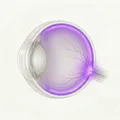
Bestrophinopathy is a group of inherited retinal diseases caused by mutations in the BEST1 gene (formerly VMD2). It primarily affects the retinal pigment epithelium (RPE) and is characterized by the accumulation of yolk-like material in the macula. First reported by J.E. Adams in 1883, Friedrich Best described it in detail in 1905 as an autosomal dominant familial disease.
The BEST1 gene is located on chromosome 11q12.3 and consists of 11 exons. It encodes a 585-amino acid transmembrane protein (Best1) that functions as a Ca²⁺-activated chloride channel (CaCC) with a homopentameric structure, localized to the basolateral membrane of RPE cells9). Over 250 pathogenic mutations have been reported, and BEST1 mutations are detected in 3.9% (approximately 3,000 families) to 7.8% (approximately 7,000 cases) of all inherited retinal dystrophy (IRD) patients. Among pediatric IRD patients, this rate reaches 18–36%10).
The main subtypes of bestrophinopathy are the following four.
BVMD
Best vitelliform macular dystrophy: The most common subtype. Autosomal dominant inheritance. Onset in childhood to adolescence (3–15 years). Prevalence 1/5,000 to 1/67,000. Characterized by classic “fried egg” macular lesions.
ARB
Autosomal recessive bestrophinopathy: Autosomal recessive inheritance. Onset between 4 and 40 years. Bilateral symmetric multifocal subretinal yellow deposits. Associated with hyperopia and shortened axial length, with risk of angle-closure glaucoma. Prevalence approximately 1/1,000,000.
AVMD
Adult-onset vitelliform macular dystrophy: Onset at 30–50 years. Lesions are smaller and progression slower than in BVMD.
ADVIRC
Autosomal dominant vitreoretinochoroidopathy: Lacks vitelliform lesions. Characterized by a pigment band from the equator to the ora serrata. Prevalence approximately 1/1,000,000.
BVMD is inherited in an autosomal dominant pattern but shows incomplete penetrance and variable expressivity. Some individuals with the mutation may not develop the disease. In contrast, ARB is autosomal recessive; if both parents are carriers, the child has a 25% chance of developing the disease. In either case, genetic counseling is recommended.
BVMD typically presents in childhood to adolescence (ages 3–15). Initially, visual acuity is minimally affected, and vision remains relatively good despite dramatic fundus findings.
BVMD has six clinical stages. The table below shows fundus findings and visual acuity estimates for each stage.
| Stage | Fundus findings | Visual acuity |
|---|---|---|
| I Previtelliform stage | RPE changes only/normal | Normal |
| Stage II: Vitelliform | ”Fried egg” lesion | Normal to mildly decreased |
| Stage III: Pseudohypopyon | Lipofuscin layer formation | Same as stage II |
| IV Yolk rupture stage | Scrambled egg appearance | Normal to mildly decreased |
| V Atrophic stage | RPE/retinal atrophy | 20/30 to 20/200 |
| Stage VI (CNV stage) | Choroidal neovascularization | ≤20/200 |
Stage I (previtelliform stage) shows normal visual acuity with only EOG abnormalities. In stage II (vitelliform stage), a classic “fried egg”-shaped vitelliform lesion appears, and 30% of patients have ectopic lesions. In stage III (pseudohypopyon stage), yellow material settles only inferiorly due to gravity, resembling pseudohypopyon. Stage IV (vitelliruptive stage) shows a “scrambled egg” appearance as the lesion breaks up, also called the “scrambled egg stage.” Stage V (atrophic stage) involves atrophy of the central RPE and retina. In stage VI (CNV stage), choroidal neovascularization occurs in about 20% of patients. Visual loss often occurs in adulthood and rarely worsens to worse than 0.1.
Additional findings from multimodal imaging are known as follows1).
Clinical findings of ARB9): Bilateral symmetric multifocal subretinal yellow deposits, hyperautofluorescence on FAF, subretinal fluid/intraretinal cysts/elongation of photoreceptor outer segments on OCT, risk of angle-closure glaucoma due to short axial length, normal electroretinogram, and loss of light peak on EOG.
In the early stages of BVMD, cone photoreceptors still maintain function. Visual acuity is preserved as long as ONL thickness and EZ integrity are maintained on OCT. The dissociation between fundus findings and visual acuity is a clinical feature of BVMD and provides a clue for diagnosis.
The causative gene for bestrophinopathy is BEST1 (VMD2)9). BVMD is an autosomal dominant disorder characterized by incomplete penetrance and variable expressivity. ARB is an autosomal recessive disorder caused by homozygous or compound heterozygous mutations9).
Representative mutations reported include the following.
Vitelliform patterns can also occur due to mutations in genes other than BEST1, and differential diagnoses include PRPH2, IMPG1, IMPG2, and THRB 3), 7). In particular, mutations in the THRB gene (thyroid hormone receptor beta) have been reported to cause vitelliform macular dystrophy, with high intrafamilial phenotypic variability 3).
ARB is often associated with hyperopia and shortened axial length, and attention should be paid to the risk of developing angle-closure glaucoma 9). Additionally, hormonal changes during puberty may contribute to the risk of CNV development 6).
Diagnosis of Bestrophinopathy combines electrophysiological, morphological, and genetic testing.
EOG
Arden ratio: uniformly decreased (≤1.5) in all Bestrophinopathies. The combination with a normal electroretinogram is characteristic. In ARB, the light peak of EOG is absent. This is the most important screening test for this disease.
OCT/FAF
OCTA
Details of each examination are described below.
Currently, there is no curative treatment for BVMD and Best vitelliform macular dystrophy. The main goal of treatment is early detection and management of complications (especially CNV) and preservation of visual function.
When exudative MNV (choroidal neovascularization) is confirmed, anti-VEGF therapy is indicated. For non-exudative MNV, observation without treatment is recommended because treatment may accelerate atrophic changes 1).
The results of anti-VEGF treatment are shown in the table below.
| Case | Drug/Number of injections | Outcome |
|---|---|---|
| 12-year-old girl, choroidal neovascularization | Bevacizumab | 20/125 → 20/206) |
| 12-year-old boy, MNV | Ranibizumab 2 injections | MNV regression for 2 years8) |
| 28-year-old female, CME | Aflibercept 3 injections | 20/20, maintained for 15 months 5) |
Of particular note, there is a case in which MNV regressed after two injections of ranibizumab (0.5 mg/0.05 mL) and remained stable for two years 8). In the same case, temporary resolution of vitelliform deposits was observed after ranibizumab injection. This is the first such report 8).
For cystoid macular edema (CME) associated with ARB, three injections of aflibercept 2.0 mg/0.05 mL resulted in recovery of visual acuity to 20/20, which was maintained for 15 months 5).
Currently, there is no curative treatment, and management focuses on addressing complications. When CNV is present, anti-VEGF therapy is effective and has been reported to improve vision. Regarding gene therapy, treatment with AAV vectors has shown dramatic effects in canine models, and Phase 1/2 clinical trials are planned. For details, see the section “Latest Research and Future Prospects”.
Best1 is a homopentamer located on the basolateral plasma membrane of the RPE, forming a central ion pore 9). It functions as a Ca²⁺-activated chloride channel (CaCC) and is involved in ion transport and fluid homeostasis of the RPE 9).
Studies in canine models have revealed that underdevelopment of RPE apical microvilli leads to incomplete coverage of cone outer segments, resulting in microdetachments 2). These microdetachments dynamically change in response to light, expanding in light conditions and shrinking in darkness 2).
Lipofuscin accumulation is not a primary effect of BEST1 gene abnormalities but occurs as a result of loss of adhesion between photoreceptors and the RPE 1). Loss of RPE pump function is the main driving force promoting the accumulation of yolk-like material 1).
Continuous mechanical, ischemic, and oxidative stress on Bruch’s membrane leads to VEGF production and the development of MNV 8). Exudative MNV grows rapidly, whereas non-exudative MNV follows a slow course 1).
Gene therapy research using a canine model of Best disease has made significant progress.
In a study where gene therapy using the AAV2/2-hVMD2-cBEST1 vector was administered to a canine model of BVMD, lesions in the pseudohypopyon stage shrank within two weeks, and restoration of RPE-photoreceptor contact and interface repair were confirmed2). The therapeutic effect was stably maintained for over 33 months2).
Based on these results, a Phase 1/2 human clinical trial is planned2). Gene therapy is currently at the preclinical stage, and its application to humans requires waiting for the results of future clinical trials.
With the widespread use of OCTA (optical coherence tomography angiography), quiescent (non-exudative) MNV that was difficult to detect with conventional fluorescein angiography (FA) or ICGA has become detectable 4). This has led to an upward revision of the estimated prevalence of MNV in Best disease patients to up to 65% 1), significantly changing the understanding of the natural course of the disease.
Mutations in the THRB gene (thyroid hormone receptor beta) have been reported to cause vitelliform macular dystrophy, providing new insights that may explain some patients who are negative for BEST1 gene mutations 3). In addition, it has been clarified that IMPG2 mutations can cause both ARB and AVMD phenotypes 7), revealing the diversity of genetic causes.
OCT-based lesion classification (vitelliform type, mixed type, SRF type, atrophy type) has been systematized 1), and the foundation for its use in predicting disease progression and determining treatment indications is being established. The integrity of the EZ (ellipsoid zone) has been identified as the most important predictor of visual prognosis 1).