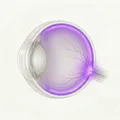
Primary vitreoretinal lymphoma (PVRL) is a rare malignant tumor that originates in the eye, particularly in the vitreous, retina, and retinal pigment epithelium (RPE). It is classified as a subtype of primary central nervous system lymphoma (PCNSL), and over 95% of cases are diffuse large B-cell lymphoma (DLBCL). 3, 4)
PVRL accounts for less than 1% of all intraocular tumors, making it extremely rare. 1) The age of onset is typically between 50 and 70 years, and women are affected about twice as often as men. 1) At presentation, bilateral involvement is seen in 80–90% of cases, and even when unilateral, progression to the other eye during the course of the disease is common. 1)
CNS involvement is observed in 60–90% of cases at diagnosis or during the disease course. 1, 3) This systemic involvement determines the prognosis, with a 5-year survival rate of less than 5%. 1) Intraocular recurrence often occurs within an average of 3 years after initial treatment. 1)
Because it presents with findings similar to uveitis, it is known as a representative disease of “uveitis masquerade syndrome,” and reports indicate that an average of 2.1 surgical interventions are required before a definitive diagnosis is made. 1)
QHow rare is PVRL?
A
It is a rare disease accounting for less than 1% of all intraocular tumors. 1) Because it is difficult to differentiate from uveitis, the actual number of diagnoses is low, and opportunities to encounter it in ophthalmology practice are limited.
The most common subjective symptoms are blurred vision (approximately 90%) and floaters (approximately 30%). 3) Symptoms progress slowly, and because clinical differentiation from common uveitis is difficult, diagnosis is often delayed. Diagnostic delays of up to 21 months have been reported. 3) The mean visual acuity at initial presentation was 20/100 (equivalent to decimal visual acuity of 0.2). 3)
Blurred vision: Most frequent symptom. Hazy vision due to vitreous opacities.
Floaters: Caused by tumor cells floating in the vitreous body.
Vision loss: Associated with progression of vitreous opacity and retinal lesions.
Eye pain and redness: May be observed in cases with inflammatory reactions.
Vitreous opacity is observed in nearly all cases (100%) at diagnosis. 3) Large tumor cells float in a “streaks” pattern within the opacity, showing characteristics distinct from typical inflammatory uveitis. 1)
Fundus findings are characterized by yellowish-white multifocal deposits formed beneath the retinal pigment epithelium. 1) As the disease progresses, leopard-spotting pigmentation develops in the pigment epithelium. 1)
Findings at initial onset
Vitreous opacity: Observed in almost all cases (100%). Characteristic large tumor cells in streaks. 3)
Yellow-white lesions under the retinal pigment epithelium: Multifocal yellow-white deposits. May be accompanied by subretinal fluid. 1)
Leopard-spot pigmentation: Characteristic pigment changes due to tumor infiltration into the retinal pigment epithelium. 1)
Stellate keratic precipitates: Deposits on the corneal endothelium. Relatively specific finding for PVRL. 4)
Findings at recurrence
Intraretinal deposits: Observed in 47% of recurrences, significantly more than at initial onset (7%). 4)
Unilateral recurrence: 64.3% of recurrences occur unilaterally. 4)
Vitreous re-opacification: Opacities that cleared with initial treatment reappear.
Subretinal infiltration worsening: Enlargement or new appearance of subretinal pigment epithelial lesions.
Fluorescein angiography (FA) and/or indocyanine green angiography (ICGA) are useful for diagnostic assistance, with reported positive predictive value of 89% and negative predictive value of 85%. 1)
QWhat is stellate keratic precipitates? Is it specific to PVRL?
A
Stellate keratic precipitates (KP) are deposits formed on the posterior surface of the cornea, derived from lymphoma cells or inflammatory products. They have been reported as a relatively specific finding for PVRL 4) and are useful for differentiation from uveitis. However, a definitive diagnosis cannot be made based on this finding alone.
The tumor cells of PVRL are classified as activated B-cell type DLBCL. The molecular mechanisms of onset are detailed in the “Pathophysiology” section.
Immunosuppressed states (e.g., after organ transplantation, HIV infection) are considered risk factors, but the disease also occurs in immunocompetent elderly individuals.
The following risk factors for intraocular recurrence have been identified: 4)
Younger age at onset: For each 1-year decrease in age, the odds ratio for recurrence is 0.90 (increased recurrence risk).
Sporadic (no CNS lesions): Odds ratio 35.3, the greatest risk factor for recurrence
PVRL is a representative disease of “uveitis masquerade syndrome,” and an average of 2.1 surgical interventions are required before a definitive diagnosis is made. 1) If PVRL is clinically suspected, prompt invasive testing for definitive diagnosis should be pursued.
This is the fundamental diagnostic test. A sample is collected via 25G low-cut rate vitrectomy (PPV), and multiple testing methods are combined. 1)
The sensitivity and specificity of the main testing methods are shown below.
Test Method
Sensitivity
Specificity
Cytology
30–50%
High (reported value 1.0)2)
Flow cytometry
88.0%3) (another report 36%2))
1.02)
PCR (IgH rearrangement)
85.1%3) (another report 64%2))
1.02)
Cytology: Sensitivity is low at 30–50%, but specificity is high.1, 2) Tumor cells are identified as atypical B cells with large nuclei and prominent nucleoli.
Flow cytometry: Detects B-cell markers such as CD19, CD20, and CD22 on the tumor cell surface.5)
Interleukin (IL)-10 and IL-6 levels in the vitreous humor or aqueous humor are measured. If the IL-10/IL-6 ratio exceeds 1.0, it strongly suggests PVRL.1, 3)
In the review by Kaya M et al., the sensitivity of the IL-10/IL-6 ratio was 89.4%. 1) Another report states that the sensitivity and specificity of this ratio are both approximately 75%. 5)
MYD88 L265P mutation is detected in approximately 70% of all cases. 3) The sensitivity of mutation detection tends to be lower in younger patients 4), and a negative result does not rule out the mutation.
In cases with subretinal pigment epithelial lesions, subretinal fluid biopsy using a 40G needle may be useful. While specificity of IgH rearrangement detection is reported as 1.0, sensitivity varies from 0.24 to 0.64 depending on the test method. 2)
Experience in Hong Kong reports that a composite diagnostic criteria combining six items—cytology, flow cytometry, PCR, IL-10/IL-6 ratio, MYD88 mutation, and cell-free DNA—has a sensitivity of 97.5% and specificity of 100%. 3)
QWhat to do if cytology sensitivity is low?
A
The sensitivity of cytology alone is low, at 30–50%. 1) Therefore, it is recommended to combine multiple tests such as IL-10/IL-6 ratio measurement, flow cytometry, and MYD88 mutation PCR. If the diagnosis remains unclear, repeat biopsy should be considered. The six-item composite criteria have been reported to have a sensitivity of 97.5%. 3)
Intravitreal methotrexate (MTX) injection is the first-line local ocular treatment. 3) The dose is 400 μg per injection, administered in three phases: induction, consolidation, and maintenance. 1)
The standard protocol for intravitreal MTX injection is shown below.
Phase
Frequency
Duration
Induction phase
Twice a week
4 weeks
Consolidation phase
Once a week
8–12 weeks
Maintenance phase
Once a month
9 months
Complete regression is reported in 98.5% of cases during the induction phase. The intraocular recurrence rate ranges from 2.5% to 59.6% depending on the institution and report. 4)
Intravitreal injection of the anti-CD20 monoclonal antibody rituximab is used as an addition or alternative to MTX. A response rate of 65% has been reported. 4)
External beam radiotherapy (typically 30–36 Gy) is effective for ocular local lesions, but attention should be paid to late complications such as cataracts, radiation retinopathy, and dry eye.
If CNS involvement is present, systemic chemotherapy (e.g., high-dose intravenous methotrexate) or radiotherapy is added. The median overall survival is reported to be 60.1 months. 4)
QIs local ocular treatment alone sufficient?
A
In isolated PVRL, local ocular treatment alone may be used for management, but the risk of CNS recurrence remains. Isolated disease is the greatest risk factor for recurrence, with an odds ratio of 35.3 4), making neuro-ophthalmic follow-up and regular head MRI evaluation essential.
Tumor cells in PVRL are classified as activated B-cell type (ABC type) DLBCL. The central mechanism of its pathogenesis is the constitutive activation of the NF-κB signaling pathway due to the MYD88 L265P mutation.
The following hypotheses have been proposed regarding why tumor cells selectively accumulate in the eye. 5)
Tumor transformation outside the CNS: Tumor cells that have transformed into DLBCL in peripheral lymphoid tissues migrate and accumulate into the eye, an immune-privileged site.
Utilization of the immune-privileged environment: The eye is an immune-privileged site protected by the blood-retinal barrier (BRB) and Bruch’s membrane, making it easier to evade immune surveillance.
Confinement by Bruch’s membrane and BRB: Tumor cells that have invaded the eye are prevented from spreading outside by Bruch’s membrane and the BRB, and proliferate within the eye. 5)
IL-10 is a cytokine produced by the tumor cells themselves and functions as an autocrine factor that promotes tumor cell survival and proliferation. Tumor cells express B-cell markers such as CD19, CD20, and CD22. 5)
The MYD88 L265P mutation is a point mutation in the MYD88 gene encoding an adaptor protein for Toll-like receptor (TLR)/IL-1 receptor signaling, and it constitutively activates NF-κB, promoting tumor cell proliferation and survival. In young-onset cases, the mutation rate tends to be lower, suggesting the existence of a different pathogenic mechanism. 4)
7. Latest Research and Future Perspectives (Research-stage Reports)
A minimally invasive diagnostic method that detects MYD88 mutations from cell-free DNA in vitreous fluid is attracting attention. It has been reported to have approximately 30% higher sensitivity than cytology, 3) and may enable diagnosis even when the sample volume is small.
For cases with subretinal pigment epithelial lesions, subretinal fluid biopsy using a 40G needle has been reported to be useful for diagnosis. 2)
Inami et al. (2022) confirmed IgH rearrangement positivity by subretinal fluid biopsy using a 40G needle in a 77-year-old female with PVRL. The specificity of cytology, flow cytometry, and AIGHR was all 1.0, and the sensitivity was 0.24, 0.36, and 0.64, respectively. 2)
The current three-phase protocol of induction, consolidation, and maintenance varies among institutions, and standardization of the optimal dosing schedule is a research topic. The wide range of reported intraocular recurrence rates of 2.5–59.6% 4) may reflect the heterogeneity of treatment protocols.
Kaya M, Özdamar Y, Atalay K, et al. Primary vitreoretinal lymphoma: a review. Turk J Ophthalmol. 2021;51:317-325.
Inami W, Shibuya M, Kumagai T, Makita J, Shinoda K. A Case of Intraocular Lymphoma Diagnosed by Subretinal Fluid Biopsy. Int Med Case Rep J. 2022;15:111-115. doi:10.2147/IMCRJ.S345149.
Chee ASH, Mak ACY, Kam KW, et al. Diagnostic challenges and treatment outcomes of primary vitreoretinal lymphoma in Hong Kong. Hong Kong Med J. 2026;32(1):41-45. doi:10.12809/hkmj2412293.
Wan MJ, Thurik KJ, Yeh S, et al. Prognosis, Risk Factors, and Clinical Features of Intraocular Recurrence in Primary Vitreoretinal Lymphoma. Ophthalmol Retina. 2024;8(3):254-260. doi:10.1016/j.oret.2023.11.004.