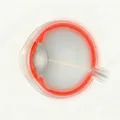
When malignant lymphoma first occurs in the eye without systemic lymphoma, it is called primary intraocular lymphoma (PIOL). It is known as one of the classic masquerade syndromes because the malignant lymphocytes infiltrate the eye and present with uveitis-like ocular findings1).
Since lesions often form in the retina and vitreous, it is also recently referred to as vitreoretinal lymphoma (VRL). Most primary intraocular lymphomas are diffuse large B-cell lymphoma (DLBCL) and are highly malignant. Many cases are complicated by central nervous system lymphoma (PCNSL) and often follow a fatal course.
It is reported to occur in 1–2% of uveitis cases at university hospitals. The average age at diagnosis is 63 years, with a slight female predominance. It is classified as a special type of central nervous system lymphoma, with an annual incidence of approximately 1 per 100,000 population 4).
Intraocular lymphoma is classified into four types based on the site of origin.
Type
Characteristics
Frequency
Ocular plus central nervous system type
Most common. Closely associated with PCNSL
Approximately 60%
Ocular only (narrowly defined intraocular lymphoma)
Localized type
—
Eye + other organ type
Dissemination to organs other than CNS
—
Eye + other organ + CNS type
Most extensive lesions
—
The type that occurs in the eye and central nervous system is the most common, accounting for about 60% of all cases. It is reported that approximately 80% of patients eventually develop CNS lesions 4).
QHow is intraocular lymphoma different from uveitis?
A
Intraocular malignant lymphoma is a neoplastic disease, and its pathogenesis is fundamentally different from immune-mediated uveitis. However, clinically it presents with intraocular inflammation that closely resembles uveitis, so it is called “masquerade syndrome.” The decisive differences from uveitis are that it does not respond to steroid treatment, vision is relatively well preserved despite severe vitreous opacity, and it directly affects life prognosis. When suspected, vitreous biopsy and IL-10/IL-6 measurement are used for differentiation.
Blurred vision (haze over the entire visual field due to vitreous opacity)
Floaters (due to cellular infiltration in the vitreous)
Slowly progressive painless vision loss
Vision remains relatively good despite severe vitreous opacity (characteristic finding)
Characteristics of subjective symptoms
Blurred vision: Haziness of the entire visual field due to vitreous opacity. This is the most common subjective symptom.
Preserved vision: Good vision disproportionate to the severity of opacity is key to diagnosis.
Painless: It progresses slowly without eye pain, making detection often delayed.
Bilateral: Even if it starts in one eye, it often becomes bilateral over time.
Characteristics of Clinical Findings
Vitreous opacity: Presents a band-like or cord-like pattern, radiating from the posterior pole to the periphery in a unique pattern. Irregularly sized, high-density cellular infiltration described as “aurora-like” is observed.
Subretinal lesions: Yellow-white patchy lesions form beneath the retinal pigment epithelium or Bruch’s membrane. They may start as small dots or patches and coalesce to form larger lesions.
Peripapillary infiltration: Tumor cell infiltration occurs beneath the retina around the optic disc, sometimes presenting as papillitis-like findings.
Vasculitis-like findings: White sheathing suggestive of retinal vasculitis may be observed.
During intraocular recurrence, the frequency of keratic precipitates increases compared to the initial onset (47.4% vs 29.4%)2). Stellate or mutton-fat keratic precipitates appear as findings during recurrence.
QWhy is it a serious disease even though vision is preserved?
A
In intraocular malignant lymphoma, tumor cells mainly infiltrate the vitreous cavity, subretinal pigment epithelium, and sub-Bruch membrane, so direct infiltration of the macula or optic nerve is minimal in the early stage, and vision may be preserved. However, the disease is a high-grade hematologic malignancy, and many cases are complicated by primary central nervous system lymphoma (PCNSL), leading to a poor prognosis. Even with good vision, early diagnosis and treatment are extremely important.
The histopathology of intraocular malignant lymphoma is almost always diffuse large B-cell lymphoma (DLBCL), which is extremely aggressive. While low-grade MALT lymphoma accounts for most lymphomas in the ocular adnexa, an important difference is that primary intraocular lymphoma (PIOL) corresponds to high-grade DLBCL.
Approximately 60% of all cases. Associated with PCNSL
Annual incidence
Approximately 1 per 100,000 population
Mean age at diagnosis
63 years (commonly occurs in middle-aged and elderly)
Sex difference
Slightly more common in women
Main risk factors:
Advanced age: average onset at 63 years; increases sharply after middle age
Immunodeficiency: conditions such as HIV infection
Immunosuppression: after organ transplant or during immunosuppressant use
The association with the CNS is also important. Up to 25% of patients with central nervous system lymphoma have ocular involvement, and the majority of patients who present with ocular involvement alone later develop CNSL 2). Ultimately, about 80% develop CNS lesions 4).
Tumor cell transformation is thought to occur outside the CNS, after which the cells migrate into the immune-privileged intraocular environment 4). The presence of the blood-retinal barrier (BRB) plays a key role in the pathology of PIOL, limiting the intraocular penetration of systemic chemotherapy and making control of intraocular lesions difficult. This is the rationale for the need for intravitreal chemotherapy 2, 4).
A definitive diagnosis requires a vitreous biopsy performed similarly to vitrectomy1). Cytology alone may not be sufficient for diagnosis; it is important to combine it with PCR for immunoglobulin gene rearrangement and cytokine measurement.
Cytology: Identify tumor cells with pleomorphic large cells, hyperchromatic nuclei, and scant basophilic cytoplasm 3). After steroid administration, lymphoma cells may lyse and become false-negative, so steroids should be discontinued before the procedure if possible 3).
IL-10 measurement: High IL-10 (>50 pg/mL) with IL-10/IL-6 ratio >1 has high diagnostic value1). Sensitivity 85.7%, specificity 81.1%2)
PCR for immunoglobulin gene rearrangement: Confirms B-cell clonal proliferation
Flow cytometry and chromosome analysis: Useful ancillary tests for evaluating monoclonal proliferation
MYD88 mutation detection (cell-free DNA): Detection rate approximately 30% higher than cellular DNA; a minimally invasive diagnostic method also applicable to aqueous humor samples3)
Test
Findings/Significance
Characteristics
Cytology
Large pleomorphic cells, hyperchromatic nuclei
Risk of false negative with prior steroid administration
After the diagnosis of intraocular lymphoma is confirmed, imaging studies (gadolinium-enhanced head MRI and whole-body PET) should be performed regularly to detect central nervous system lymphoma early. MRI is essential for detecting asymptomatic CNS lesions, and PET is used to assess the distribution of systemic tumor lesions.
QWhy is PIOL diagnosis often delayed?
A
PIOL may temporarily respond to steroids, so treatment as uveitis is often continued. Steroid administration can lyse lymphoma cells, making vitreous biopsy cytology prone to false negatives 3). Even with severe vitreous opacity, vision may be preserved, delaying the patient’s visit. For diagnosis, ancillary tests such as IL-10 measurement and MYD88 mutation detection are important.
Treatment of PIOL is based on a combination of local ocular therapy and systemic chemotherapy. The goal is to control intraocular lesions and prevent progression to PCNSL 1).
External beam radiation therapy was previously the mainstay, but due to severe side effects such as radiation retinopathy, optic neuropathy, and cataracts, it is now limited to patients with bilateral disease, elderly patients, or those who cannot tolerate frequent injections3).
High-dose MTX systemic administration: Methotrexate 100–200 mg/kg (5–10 g per dose in adults) intravenous infusion
Leucovorin rescue: Starting the next day, leucovorin injection 5 ampoules/100 mL normal saline, 4 doses every 4 hours intravenously. Administer according to protocol with strict management of fluid intake, urine output, and urine pH.
High-dose MTX therapy is administered, and whole-brain irradiation is performed as needed 1).
Combination of systemic chemotherapy and intravitreal chemotherapy may reduce the risk of intraocular recurrence. A history of no prior intravitreal chemotherapy has been reported as an independent risk factor for intraocular recurrence (OR 7.72; 95% CI 1.37-43.6) 2), highlighting the importance of aggressive local ocular treatment.
The intraocular recurrence rate during follow-up is approximately 27.5% (14 of 51 cases with a mean follow-up of 42.5 months) 2), and the most common finding at recurrence is vitreous opacity (84%). Regular IL-10 measurement is recommended for early detection of recurrence 2).
QWhat is the risk of recurrence after treatment?
A
PIOL is a disease with a relatively high frequency of intraocular recurrence. In one study, intraocular recurrence was observed in approximately 27.5% of cases 2). Young age at onset, isolated PVRL (no CNS involvement), and no history of intravitreal chemotherapy are risk factors for recurrence. Regular ophthalmologic examinations and IL-10 measurement for early detection are important. Additionally, regular head contrast-enhanced MRI is essential to monitor for systemic PCNSL development.
Most primary intraocular lymphomas correspond to diffuse large B-cell lymphoma (DLBCL) and are highly malignant. While low-grade MALT lymphoma accounts for the majority of lymphomas found in the ocular adnexa, PIOL is a high-grade malignancy in contrast.
The main sites of tumor cell infiltration are as follows:
Vitreous cavity (main site of lymphoma cell proliferation)
Retinal pigment epithelium (RPE) (starting point of subretinal invasion)
Sub-Bruch membrane (lesion formation between RPE and Bruch membrane)
Vitreous opacities often appear band-like or cord-like, showing a unique pattern radiating from the posterior pole to the periphery. Lymphoma cells that have infiltrated the retina gradually form yellowish-white patchy lesions, which may coalesce and enlarge to form large lesions.
The ratio of IL-10 (derived from tumor cells) to IL-6 (derived from inflammatory cells) serves as an indicator of tumor presence. An IL-10/IL-6 ratio >1 strongly suggests tumor and has high diagnostic value. While IL-6 is elevated in inflammatory uveitis, IL-10 is produced by lymphoma cells themselves, so the discrepancy in the ratio is useful for differential diagnosis.
Blood-ocular barrier and intraocular transfer restriction
Because the blood-retinal barrier (BRB) limits the intraocular penetration of systemic chemotherapy, local treatments (intravitreal injection, ocular radiotherapy) are essential for controlling intraocular lesions 2, 4). Tumor cell transformation is thought to occur outside the CNS, after which cells migrate into the immune-privileged eye 4). The intraocular environment is an immune-privileged site, allowing tumor cells to evade immune surveillance.
The MYD88 L265P mutation (constitutive activation of Toll-like receptor signaling) has been shown to contribute to tumor cell proliferation and survival 3). This mutation constitutively activates the NF-κB pathway, maintaining proliferative signals in tumor cells. BTK (Bruton’s tyrosine kinase) is also located downstream of this pathway and is a focus as a therapeutic target.
Visual prognosis is often relatively good if there is no infiltration of tumor cells into the macula or optic nerve and if retinopathy or optic neuropathy due to treatments such as radiotherapy does not occur. On the other hand, if retinal lesions are extensive or recurrent, leading to atrophy or scarring of the retina including the macula, visual function may be significantly reduced. Visual loss due to optic atrophy is also common.
The life prognosis after PCNSL is poor. In elderly-onset cases, the prognosis remains poor in many cases, but life prognosis has improved compared to the past with high-dose MTX chemotherapy.
7. Latest Research and Future Prospects (Investigational Reports)
Detection of MYD88 mutations using cell-free DNA in vitreous fluid and aqueous humor is attracting attention. It has been reported that the detection rate is approximately 30% higher than using cellular DNA, and it is effective even in highly diluted samples 3). Detection in aqueous humor samples is also possible, and it is expected to be a minimally invasive diagnostic tool. This may be applicable to cases where vitreous biopsy is difficult and for early detection of recurrence during follow-up.
Optimization of Combined Systemic and Ocular Local Therapy
A retrospective study by Liu et al. (2024) involving 51 patients suggested that combining systemic chemotherapy with intravitreal chemotherapy may reduce the risk of intraocular recurrence 2). Further prospective studies are needed to determine the optimal dosing schedule.
Intravitreal administration of anti-CD20 antibody (rituximab) is being investigated for application in PIOL, but it is currently at the research stage and not included in standard treatment. BTK inhibitors (ibrutinib) have shown efficacy in relapsed/refractory PCNSL, and their application to MYD88-mutation-positive PIOL is being studied.