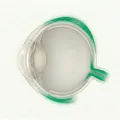
Marfan syndrome (MFS) is an autosomal dominant systemic connective tissue disorder caused by mutations in the fibrillin-1 (FBN1) gene. The FBN1 gene is located on the long arm of chromosome 15 (15q21.1) and encodes microfibrils, a major component of the extracellular matrix.
The prevalence is estimated at 1 in 3,000 to 5,000 individuals, with a worldwide incidence of approximately 20 per 100,000 people2). Although it is autosomal dominant, about 25% of cases result from de novo mutations and should not be overlooked even in the absence of a family history1).
Extracellular matrix fragility leads to multisystem involvement including the cardiovascular system (aortic aneurysm, aortic dissection), skeletal system (tall stature, arachnodactyly, scoliosis), and ocular system (ectopia lentis, myopia, retinal detachment, glaucoma). The most critical complication affecting life prognosis is aortic dissection, and close collaboration with cardiology is essential.
QWhat kind of disease is Marfan syndrome?
A
An autosomal dominant connective tissue disorder caused by mutations in the FBN1 gene, occurring in 1 in 3,000 to 5,000 individuals 1). In addition to systemic features such as aortic aneurysm/dissection, tall stature, and arachnodactyly, approximately 60% develop ectopia lentis, with high risks of high myopia, retinal detachment, glaucoma, and cataract. About 25% of cases result from de novo mutations 1).
Frequency: Approximately 60%. Most important ocular feature of MFS.
Direction of dislocation: Often upward or upward-temporal. Useful for differentiation from homocystinuria (downward dislocation).
Difficult to detect under miosis. Slit-lamp examination under mydriasis is essential.
May be accompanied by lens shape abnormalities (spherophakia). The degree varies from subluxation to complete dislocation (into the anterior chamber); dislocation into the anterior chamber is associated with corneal opacity and elevated intraocular pressure.
Myopia
Axial myopia: Many cases present with high myopia.
Fibrillin-1 abnormality causes scleral thinning and dilation, leading to axial elongation8).
92% are managed with spectacle correction4).
Retinal Diseases
Lattice degeneration: Frequently occurs in the peripheral retina.
Aortic aneurysm/aortic dissection (most important complication), mitral valve prolapse
Respiratory system
Spontaneous pneumothorax
Skin
Striae distensae
As for sex differences, aortic root dilation (92.1%) is prominent in males, while mitral valve prolapse (65.0%), arachnodactyly (54.2%), and scoliosis (60.4%) are more noticeable in females 1).
QIn Marfan syndrome, in which direction does the lens dislocate?
A
Dislocation is often upward or upward-temporally. This is an important distinguishing point from homocystinuria (downward dislocation) and Weill-Marchesani syndrome (downward dislocation). It is difficult to detect under miosis, so slit-lamp microscopy under mydriasis is essential.
The causative gene is FBN1 (15q21.1), which encodes fibrillin-1, a major structural protein of microfibrils. Fibrillin-1 is essential for maintaining the structure of the Zinn zonule (ciliary zonule), and FBN1 mutations weaken the zonule, leading to lens dislocation.
Mutant fibrillin inhibits the multimer formation of normal fibrillin (dominant negative effect). Furthermore, FBN1 mutations are also involved in the enhancement of TGF-β signaling 3), causing abnormal remodeling of connective tissues throughout the body.
It is an autosomal dominant disorder, with a 50% probability of transmission to offspring. Approximately 25% of cases are due to de novo mutations, so the condition can occur even without a family history 1). There is variable expressivity within the same family, meaning severity can differ. Neonatal Marfan syndrome (neonatal MFS) is the most severe form, with rapid progression in multiple organs.
Clinical diagnosis is based on the revised Ghent criteria (2010)3). The presence of both aortic root dilation (Z-score ≥2) and ectopia lentis confirms the diagnosis. Ophthalmologically, slit-lamp examination under mydriasis evaluates lens position and zonular fibers. FBN1 genetic testing is also useful and aids in family screening.
Regular dilated eye examinations should be performed from childhood throughout life.
Refractive correction: Prescribe glasses or contact lenses for high myopia and irregular astigmatism. 92% of cases can be managed with glasses4). In children, early correction is important to prevent amblyopia.
Mild dislocation: Conservative management (refractive correction) is the standard. Keep in mind the risk of permanent functional amblyopia4)
Severe dislocation (involving the visual axis): Lens extraction is required
Surgical method: Pars plana lensectomy with anterior vitrectomy is standard 1). IOL insertion is performed with scleral-fixated IOL. Capsular stabilization using a capsular tension ring (CTR) is also useful
Surgical outcomes: Multiple reports have achieved BCVA of 20/30 to 20/40 after PPV with lensectomy 1)
Vitrectomy (PPV): Combined with silicone oil tamponade and endolaser photocoagulation1)
Scleral buckling: Selected for cases with clear lens and anterior retinal tears
Surgical success rate: Reported success in 86% of cases1)
Difficult surgical factors: Thin sclera, tendency for miosis, multiple tears1)
Prophylactic laser photocoagulation: Consider indication for prophylactic coagulation for lattice degeneration
QWhen is surgery performed for lens dislocation?
A
Surgery is indicated when lens displacement affects the visual axis causing significant visual impairment, or when anterior chamber dislocation leads to corneal opacity or elevated intraocular pressure. In young patients, surgical risks (such as pupil capture) are high, so careful judgment is required. The standard procedure is pars plana lensectomy, with expected postoperative BCVA of 20/30 to 20/40 1).
FBN1 mutations cause abnormalities in fibrillin-1 protein, leading to disruption of microfibril structure.
Zonules of Zinn → Lens Displacement
Fibrillin-1 is a major component of the zonules of Zinn (ciliary zonules). FBN1 mutations weaken microfibrils, causing zonular rupture. The lens shifts upward and superotemporally, progressing from subluxation to complete dislocation.
Mutant fibrillin inhibits multimer formation of normal fibrillin (dominant negative effect).
Sclera and Axial Length → Myopia and Retinal Detachment
Fibrillin-1 is also distributed in the sclera, and FBN1 mutations cause thinning and dilation of the sclera8). The axial length of the eye increases, leading to axial myopia, and the retina is stretched. Lattice degeneration forms in the peripheral retina, becoming a starting point for rhegmatogenous retinal detachment (RRD).
Enhanced TGF-β signaling: FBN1 mutations reduce the sequestration capacity of TGF-β, leading to enhanced TGF-β signaling 3). This promotes abnormal connective tissue remodeling, contributing to weakening of the aortic wall and skeletal abnormalities.
Mechanism of glaucoma: Abnormalities in the angle structure and changes in aqueous humor dynamics increase the risk of glaucoma. In pigmentary glaucoma, pigment dispersion associated with iridodonesis is thought to obstruct the trabecular meshwork.
A 10-year follow-up study of Marfan syndrome patients by Sandvik et al. (2019) reported long-term progression patterns of lens dislocation and retinal detachment5), highlighting the importance of regular ophthalmic management starting from childhood.
Fan et al. (2014) reported risk factors for complications after lensectomy-vitrectomy (age, IOL insertion status) 6). Application of femtosecond laser-assisted cataract surgery in cases with zonular weakness has also been reported, with some achieving postoperative BCVA of 20/20 to 20/25 1).
Since TGF-β signaling enhancement is central to the pathology, clinical trials of losartan (ARB) for suppressing aortic dilation are ongoing3). Basic research on treatments targeting TGF-β-related pathways is also being conducted for application in ophthalmology.
Adji AS, Billah A, Fadila F, et al. A systematic review of case series of Marfan syndrome: ocular findings and complications. 2025.
Groth KA, Hove H, Kyhl K, et al. Prevalence, incidence, and age at diagnosis in Marfan syndrome. Orphanet J Rare Dis. 2015;10:36.
Milewicz DM, Braverman AC, De Backer J, et al. Marfan syndrome. Nat Rev Dis Primers. 2021;7:24.
Esfandiari H, Ansari S, Mohammad-Rabei H, Mets M. Management strategies of ocular abnormalities in patients with Marfan syndrome: current perspective. J Ophthalmic Vis Res. 2019;14(1):36-42.
Sandvik GF, Vanem TT, Rand-Hendriksen S, et al. Ten-year reinvestigation of ocular manifestations in Marfan syndrome. Clin Exp Ophthalmol. 2019;47(2):212-218.
Fan F, Luo Y, Liu X, et al. Risk factors for postoperative complications in lensectomy-vitrectomy with or without intraocular lens placement in ectopia lentis associated with Marfan syndrome. Br J Ophthalmol. 2014;98(10):1338-1342.
Akram H, Aragon-Martin JA, Chandra A. Marfan syndrome and the eye clinic: from diagnosis to management. Ther Adv Rare Dis. 2021;2:26330040211055738.
Gehle P, Goergen B, Pilger D, et al. Biometric and structural ocular manifestations of Marfan syndrome. PLoS One. 2017;12(9):e0183370.
Copy the article text and paste it into your preferred AI assistant.
Article copied to clipboard
Open an AI assistant below and paste the copied text into the chat box.