

Conjunctival cytology and culture (infection and allergy testing)
1. What conjunctival scraping cytology and culture are
Section titled “1. What conjunctival scraping cytology and culture are”Conjunctival scraping cytology and microbial culture are tests used to identify the causative organism in infectious eye disease, perform drug susceptibility testing, and confirm eosinophils in allergic conjunctival disease (definitive diagnosis). By identifying the causative organism early and selecting an effective antibiotic, improvement in the signs of infection can be expected.
The Guidelines for the Diagnosis and Treatment of Infectious Keratitis (3rd edition) strongly recommend performing smear microscopy and culture when infectious keratitis is suspected (strength of evidence: C)1). These are considered essential tests, especially in cases of urgent keratitis or endophthalmitis, or when the presence of an unusual causative organism is suspected.
In the Guidelines for the Diagnosis and Treatment of Allergic Conjunctival Disease (3rd edition), eosinophil testing (Hansel stain) is clearly stated as the basis for definitive diagnosis, and it is an indispensable test for upgrading a clinical diagnosis to a definitive diagnosis2).
Indications
Section titled “Indications”When infection is suspected
Section titled “When infection is suspected”- Bacterial keratitis and conjunctivitis (especially urgent)
- Gonococcal conjunctivitis (early diagnosis is important because it can lead to corneal perforation)
- Acanthamoeba keratitis (culture is difficult in general facilities, so microscopic examination is recommended)
- Fungal keratitis
- Cases in which an unusual causative organism is suspected (such as refractory or treatment-resistant keratitis)
Definitive diagnosis of allergic eye disease
Section titled “Definitive diagnosis of allergic eye disease”- Allergic conjunctivitis (definitive diagnosis by eosinophil testing)
- Vernal keratoconjunctivitis (vernal keratoconjunctivitis: VKC)
- Atopic keratoconjunctivitis (atopic keratoconjunctivitis: AKC)
It is performed mainly for two purposes. First, when infectious keratitis or conjunctivitis is suspected; it is an essential test especially in urgent infections such as keratitis and endophthalmitis, or when special causative organisms such as gonococcus, Acanthamoeba, or fungi are suspected. Second, it is used to confirm allergic conjunctival disease; if even one eosinophil is identified with Hansel stain, the diagnosis is confirmed. Clinical findings alone only allow a clinical diagnosis, so eosinophil testing is done when a definitive diagnosis is needed.
2. Specimen collection technique
Section titled “2. Specimen collection technique”The principle is to collect the specimen firmly from the area where the causative organism is suspected to be present. The timing of collection greatly affects the positivity rate. The culture positivity rate before antibiotics is 77.3%, whereas it is said to drop to 37.8% after treatment 1). Be sure to collect the specimen before giving antibiotics.
Preparation and procedure
Section titled “Preparation and procedure”- Anesthesia: Use topical eye drops for anesthesia. A preservative-free preparation is preferred (to avoid the effects of preservatives on microorganisms)
- Collection tool: Kimura spatula or golf knife (for scraping the conjunctiva and cornea). Or a synthetic-fiber swab
- Collection site: Scrape the border between the lesion and normal tissue. Because bacteria are present at the border between the inflamed area and normal cornea, that border zone is the most suitable
- Preventing dryness: When collecting with a swab, moisten the swab beforehand with sterile saline. Drying lowers specimen quality
- Swab material: Use synthetic-fiber swabs. Natural materials may affect microbial growth and the test method
Precautions
Section titled “Precautions”- In some cases, the lesion is extremely fragile. Do not scrape forcefully
- It has been reported that the culture positivity rate for lesion scraping with a swab is about 50%, and 35% with a 23G needle 1)
- If the sample volume is small, clearly note the test priority to the laboratory
The most important point is to collect it before administering antibiotics. After antibiotics, the culture positivity rate drops markedly from 77.3% to 37.8%. The sampling site should be the border area between the lesion and normal tissue; scrape the margin rather than the center of inflammation. Moisten the swab beforehand with sterile saline to prevent drying. Use a synthetic-fiber swab or a Kimura spatula or golf knife, and perform the procedure under topical anesthesia. If the lesion is fragile, do not scrape forcefully.
3. Smear and microscopic examination (staining methods and interpretation)
Section titled “3. Smear and microscopic examination (staining methods and interpretation)”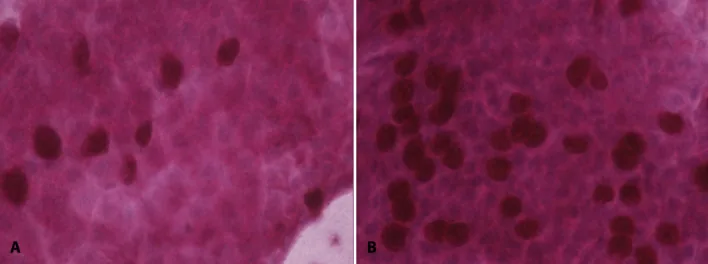
The collected specimen is smeared on a glass slide, stained, and observed under a light microscope. The positivity rate of smear microscopy is reported to be 58.1–73.7%1).
Specimen preparation procedure
Section titled “Specimen preparation procedure”- Clean the glass slide with alcohol, and mark the smear area on the back with a diamond pencil or a marker
- Spread the material thinly, extending it gently. For a swab, smear it by pressing lightly like stamping when the specimen is small, or by rolling it when there is a sufficient amount
- Fix with methyl alcohol or by flame
Selection of staining methods
Section titled “Selection of staining methods”Choose from five staining methods according to the purpose.
- Giemsa stain (Diff-Quik™): A multipurpose stain used for screening, including infectious and non-infectious causes. With the rapid staining kit (Diff-Quik™), staining equivalent to the conventional method can be obtained in about 15 seconds. All microorganisms stain blue, but Gram-positive and Gram-negative organisms cannot be distinguished1)
- Gram stain: A stain specialized for bacterial infections. It can distinguish Gram-positive from Gram-negative organisms and identify bacterial shape (cocci or bacilli). Using Faver G (Nissui Pharmaceutical), it can be completed in about 3 minutes1)
- FungiFloraY® stain: a fluorescent dye of the stilbene sulfonic acid type. It selectively stains β-linked polysaccharides (chitin and cellulose) and sensitively detects fungi (hyphae and yeast) and Acanthamoeba cysts. Observation with a fluorescence microscope is required1)
- Immunofluorescence: directly demonstrates viral antigens such as HSV (herpes simplex virus) and VZV (varicella-zoster virus)1)
- Hansel stain: a special stain used to detect eosinophils in allergic conjunctival disease
Microscopy magnification
Section titled “Microscopy magnification”- 400x: Used to identify the type of inflammatory cells (neutrophils are about 12-15 μm in diameter). In bacterial infection, neutrophils predominate; in viral infection, lymphocytes predominate
- 1000x oil immersion: used to observe microorganisms (bacterial bodies are about 1.0 μm in diameter)
Staining methods and characteristic findings by pathogen
Section titled “Staining methods and characteristic findings by pathogen”| Suspected pathogen | Recommended stain | Characteristic findings |
|---|---|---|
| Bacteria (general) | Gram stain | Gram-positive/negative cocci and bacilli |
| Gonococcus | Diff-Quik™ | Coffee bean-shaped diplococci; inside neutrophils |
| Fungi | Fungiflora Y® | Hyphae and conidia (fluorescent) |
| Acanthamoeba | Fungiflora Y® | Double-walled cysts (about 10×10 μm) |
| Viruses (such as HSV) | Fluorescent antibody method | Specific fluorescence in infected cells |
| Eosinophils (allergy) | Hansel stain | Positive even with a single eosinophil |
4. Culture testing
Section titled “4. Culture testing”In culture testing, the causative microorganism is grown on culture media, enabling identification and drug susceptibility testing. The positive culture rate varies by facility and conditions, from 37.6% to 74.3% 1). Because normal flora are present on the external eye, the isolated organism is not necessarily the cause. Make an overall judgment based on microscopy findings, eye findings, drug susceptibility, and treatment response.
Main types of culture media
Section titled “Main types of culture media”| Culture medium | Target microorganism | Culture conditions |
|---|---|---|
| blood agar medium | common bacteria (hemolysis can be assessed) | 37°C, aerobic |
| chocolate agar medium | Haemophilus species and gonococci (contains V and X factors) | 37°C, CO2 |
| Sabouraud/potato dextrose medium | fungi | cultured under two conditions: 37°C and room temperature |
| 1.5% NN agar plate | Acanthamoeba | 30°C |
| Transport medium (Seed Swab®, Transwab®, etc.) | Common bacteria (when the facility does not have solid medium) | Room-temperature transport (positivity rate 50–69%)1) |
Specimen storage
Section titled “Specimen storage”How the specimen is stored when transport to the laboratory will take time depends on the type of causative organism.
- Common bacteria: Store at 4°C (refrigerator)
- Gonococci and meningococci: Store at room temperature because they are sensitive to low temperatures and die easily
- If obligate anaerobes are suspected: Store in an anaerobic transport container
Key points when ordering the test
Section titled “Key points when ordering the test”- Write the clinical findings and target microorganism clearly on the request form. Adding selective media improves the detection rate.
- If the specimen amount is small, note the test priority (for example, culture > microscopy, bacteria > fungi).
Interpreting susceptibility testing
Section titled “Interpreting susceptibility testing”In drug susceptibility testing, a drug with a lower MIC among those judged S (sensitive) is often selected. However, even if judged R (resistant), it may still be clinically effective, so an overall assessment is needed. For fungal and Acanthamoeba drug susceptibility testing, note that interpretation criteria have not been established 1).
Culture positivity rates are 37.6–74.3%, and a negative result does not rule out infection. The most important factor is the timing of specimen collection; when collected after antimicrobial treatment, the positivity rate is about half. Also, the culture positivity rate is 42.7–47.1% in smear-negative cases and 57.1–82.4% in smear-positive cases, so combining the two tests improves diagnostic accuracy. Because Acanthamoeba is difficult to isolate and culture in general facilities, microscopy with Diff-Quik™ staining should be prioritized to confirm the double-walled structure of the cyst.
5. Eosinophil examination (definitive diagnosis of allergic conjunctival disease)
Section titled “5. Eosinophil examination (definitive diagnosis of allergic conjunctival disease)”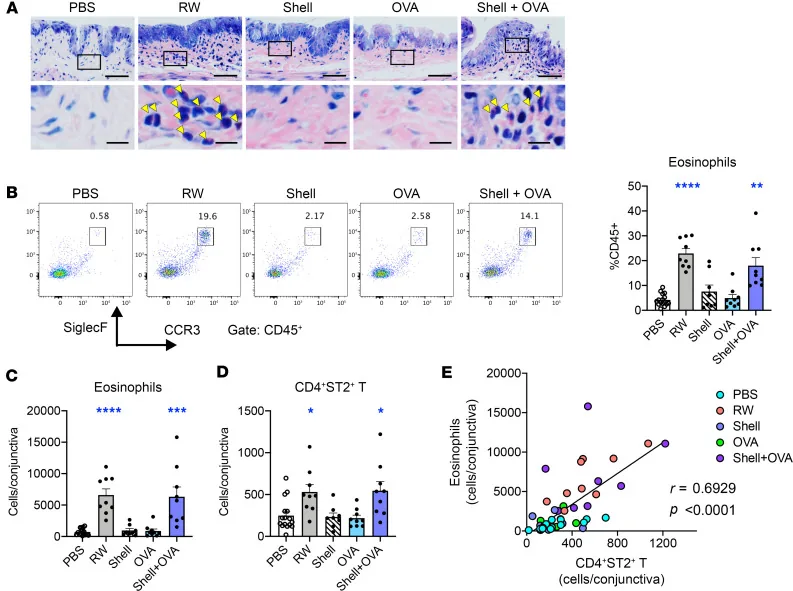
For a definitive diagnosis of allergic conjunctival disease, eosinophils must be detected in a Hansel-stained conjunctival scraping smear 2).
Collection technique
Section titled “Collection technique”- After topical anesthesia, evert the upper eyelid
- Gently massage the palpebral conjunctiva with a glass rod, and collect the mucus accumulated on the conjunctival surface with forceps or a spatula
- Smear on a slide, perform Hansel staining, and observe under a light microscope
Interpretation
Section titled “Interpretation”If even one eosinophil is seen under the microscope, the result is judged positive and confirms the definitive diagnosis of allergic conjunctival disease2). If bleeding is seen during sampling, eosinophils from the blood may mix in, so the other eye should be tested again.
Diagnostic framework for allergic conjunctival disease
Section titled “Diagnostic framework for allergic conjunctival disease”The three diagnostic stages based on the Clinical Practice Guidelines for Allergic Conjunctival Disease (3rd edition) are as follows2).
| Diagnostic category | Required criteria |
|---|---|
| Clinical diagnosis | Clinical findings only (allergic symptoms and signs) |
| Clinical definitive diagnosis | Clinical findings + confirmation of allergic predisposition (positive total tear IgE, skin test, positive serum antigen-specific IgE) |
| Definitive diagnosis | Clinical findings + positive eosinophil test (confirmation of a local ocular allergic reaction) |
Clinical definitive diagnosis only confirms a systemic allergic predisposition and does not directly prove an allergic reaction in the eye itself. Only when the eosinophil test directly proves a local ocular allergic reaction is it considered a definitive diagnosis2).
6. Interpretation of test results and overall assessment
Section titled “6. Interpretation of test results and overall assessment”Estimating the pathogen from the type of inflammatory cells
Section titled “Estimating the pathogen from the type of inflammatory cells”Even when no organisms are found, the type of inflammatory cells can provide clues to the likely pathogen.
- Neutrophil predominance → suggests bacterial infection
- Lymphocyte predominance → suggests viral infection
- Eosinophil predominance → suggests allergic or parasitic infection
Overall assessment of the causative organism
Section titled “Overall assessment of the causative organism”Whether the isolated organism is the causative organism is judged comprehensively.
- Consistency between the microscopy findings and the cultured isolate (whether the organism seen on microscopy matches the organism that grew in culture)
- Consistency with ocular findings (whether the specimen was collected from the lesion)
- Consistency between the drug susceptibility test results and the actual treatment response
Caution with special pathogens
Section titled “Caution with special pathogens”- Gonococcus: It is vulnerable to drying and temperature changes and dies easily. Immediate processing after collection is essential. Refrigerated storage is inappropriate (store at room temperature)
- Acanthamoeba: Isolation and culture are difficult in general facilities. With Dif-Quik™ staining, priority should be given to confirming cysts with double walls
Combination of smear microscopy and culture testing
Section titled “Combination of smear microscopy and culture testing”Even in cases negative on smear microscopy, the culture positivity rate can reach 42.7–47.1%1). On the other hand, in smear-positive cases, the culture positivity rate is 57.1–82.4%, and doing both tests at the same time increases sensitivity. PCR testing is useful as an aid to smear microscopy and culture testing, but diagnosing bacterial keratitis based on PCR alone is not recommended1).
7. Latest research and future prospects
Section titled “7. Latest research and future prospects”- Metagenomic analysis (next-generation sequencing): It is becoming possible to comprehensively analyze the ocular surface microbiome, including organisms that cannot be cultured. It is expected to detect pathogens that cannot be identified with conventional culture testing
- Multiplex PCR: Development is progressing on systems that can rapidly detect multiple pathogens (bacteria, fungi, viruses, and Acanthamoeba) at the same time in a single test. Improvements in the accuracy and speed of diagnosing infectious keratitis are expected3)
- MALDI-TOF mass spectrometry: A mass spectrometry technique that can identify cultured bacteria in just a few minutes. It can greatly reduce the time needed compared with conventional biochemical identification methods, and its use in ophthalmic infections is being studied4)
- Refining the sensitivity and specificity of eosinophil testing: Development is progressing for highly sensitive methods to detect eosinophils using electron microscopy and fluorescently labeled antibodies. The conventional Hansel stain has limits in detection sensitivity, and if a more sensitive method is established, diagnostic accuracy may improve
8. References
Section titled “8. References”- 日本眼感染症学会感染性角膜炎診療ガイドライン第3版作成委員会. 感染性角膜炎診療ガイドライン(第3版). 日眼会誌. 2023;127(10):859-895.
- 日本眼科アレルギー学会診療ガイドライン作成委員会. アレルギー性結膜疾患診療ガイドライン(第3版). 日眼会誌. 2021;125(8):741-785.
- Liu HY, Hopping GC, Vaidyanathan U, Ronquillo YC, Hoopes PC, Moshirfar M. Polymerase Chain Reaction and Its Application in the Diagnosis of Infectious Keratitis. Med Hypothesis Discov Innov Ophthalmol. 2019;8(3):152-155. PMID:31598517; PMCID:PMC6778471.
- Taravati P, Lam D, Van Gelder RN. Role of molecular diagnostics in ocular microbiology. Curr Ophthalmol Rep. 2013;1(4):170-178.