

Eye Dock (Comprehensive Eye Examination and Eye Dock)
Key Points at a Glance
Section titled “Key Points at a Glance”1. What is Eye Dock (Ophthalmology Checkup)?
Section titled “1. What is Eye Dock (Ophthalmology Checkup)?”Eye Dock (ophthalmology checkup) is a comprehensive eye examination program for asymptomatic healthy individuals, paid out-of-pocket, aimed at early detection and prevention of eye diseases. It is positioned as an ophthalmology-specific version of a general health checkup and differs from regular insurance-covered medical care.
Insurance-covered ophthalmology visits assume the presence of some symptoms or disease. In contrast, Eye Dock aims to comprehensively evaluate the eye condition from a stage with no subjective symptoms and detect diseases in the asymptomatic phase.
The main screening target diseases are as follows:
- Glaucoma: By the time visual field defects are noticed, approximately 40% of retinal ganglion cells (cells responsible for vision) have been lost2)
- Age-related macular degeneration (AMD): Early detection is important because it takes several to over ten years from precursor lesions (drusen) to progression8)
- Diabetic retinopathy: Even in the asymptomatic stage, regular examinations can suppress progression3)
- Cataracts: Clouding of the lens can be detected before it is perceived as decreased visual acuity
- Retinal detachment and macular hole: The risk of developing these conditions is particularly high in people with high myopia4)
Epidemiological Background
Section titled “Epidemiological Background”Data on the prevalence of eye diseases support the need for eye health checkups.
The prevalence of glaucoma is about 5% in people aged 40 and older (Tajimi Study)12). Approximately 90% have been reported to be undiagnosed1). The Hisayama Study (9-year follow-up) reported an age-standardized cumulative incidence of late AMD of 1.4%8). These data highlight the need for regular eye examinations.
In the early stages of glaucoma, there is almost no awareness of visual field defects. In many cases, symptoms are only noticed when damage to the optic nerve progresses and affects central vision. By the time visual field loss is perceived, a considerable loss of retinal ganglion cells has already occurred, making regular checkups virtually the only means of early detection2).
An eye health checkup is a comprehensive, self-funded eye examination program targeting healthy individuals without symptoms, aimed at detecting glaucoma, age-related macular degeneration, diabetic retinopathy, and other conditions at an asymptomatic stage. In contrast, a regular eye clinic visit under insurance is conducted based on eye symptoms (such as blurred vision, redness, pain) or existing eye diseases. The key difference is that an eye health checkup combines multiple tests such as visual acuity, intraocular pressure, fundus examination, OCT, and visual field testing for a comprehensive evaluation.
2. Target Population and Recommended Timing
Section titled “2. Target Population and Recommended Timing”The target population for eye health checkups is broad. Regular checkups are especially recommended for those who meet the following conditions:
Recommended Examination Frequency
Section titled “Recommended Examination Frequency”| Target group | Recommended frequency |
|---|---|
| General adults aged 40 and over | Once a year |
| Individuals at risk for glaucoma (myopia, family history) | Once a year or more |
| Patients with diabetes | Once a year or more (fundus examination) |
| Individuals with high myopia | Once a year or more |
Generally, age 40 is considered the standard. The Glaucoma Practice Guidelines (5th edition)2) recommend regular fundus and intraocular pressure examinations for individuals aged 40 and over. However, if you have high myopia (-6D or more) or a family history of glaucoma or age-related macular degeneration, it is advisable to consider regular examinations before age 40. If diagnosed with diabetes, regardless of age, a fundus examination should be performed immediately after diagnosis3).
3. Details of Examination Content
Section titled “3. Details of Examination Content”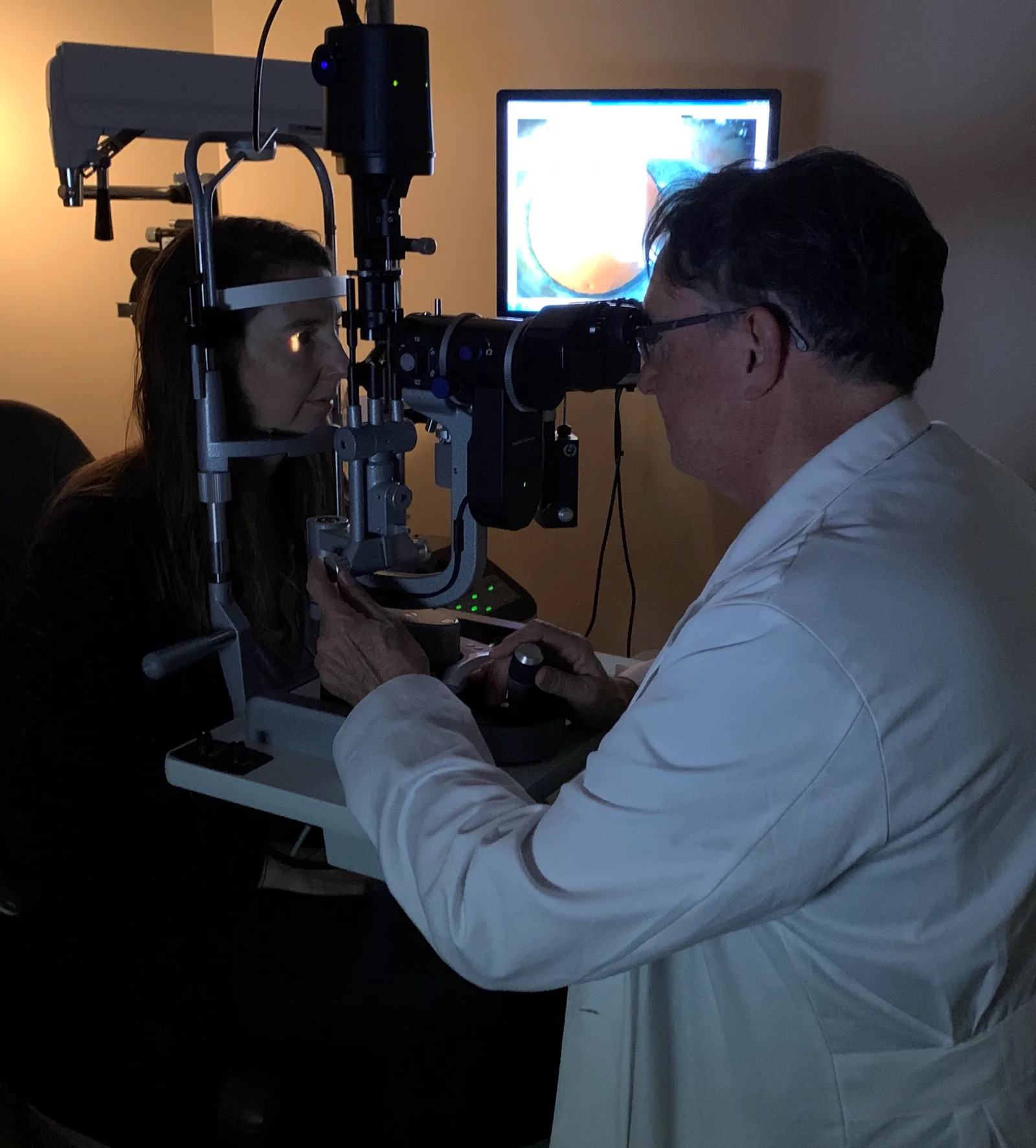

Eye examinations are divided into “basic examinations” and “extended examinations.” Although the combination varies by facility, the following items are generally included.
| Examination Item | Description / Evaluation Target | Category |
|---|---|---|
| Visual Acuity Test (Uncorrected / Corrected) | Best corrected visual acuity, evaluation of refractive error | Basic |
| Intraocular Pressure Measurement | Measured with non-contact or Goldmann applanation tonometer | Basic |
| Slit Lamp Examination | Evaluation of anterior segment (cornea, conjunctiva) and lens | Basic |
| Dilated fundus examination | Direct observation of optic disc, macula, and peripheral retina | Basic |
| Fundus photography | Documentation of retina and optic disc; wide-angle imaging for peripheral evaluation6) | Enhanced |
| OCT examination | Cross-sectional imaging of macula and optic disc; RNFL thickness measurement5) | Enhanced |
| Visual field test | Humphrey static perimetry is standard2) | Enhanced |
| Corneal thickness measurement | Necessary for intraocular pressure correction and glaucoma risk assessment2) | Enhanced |
| Corneal curvature radius measurement | Corneal shape and myopia assessment | Expanded |
| Color vision test | Screening for congenital color vision deficiency and acquired color vision disorders | Expanded |
| Contrast sensitivity test | Assessment of visual quality decline due to cataracts and neurological diseases | Expanded |
| AI fundus screening | Automated diagnosis using deep learning 7) | Expanded (some facilities) |
Details of major tests
Section titled “Details of major tests”OCT (Optical Coherence Tomography) is a non-invasive test that uses light interference to produce cross-sectional images of the retina and optic nerve 5). It can quantitatively assess the layered structure of the macula and the thickness of the retinal nerve fiber layer (RNFL) with a resolution of 10 μm or less. It is particularly useful for early diagnosis of glaucoma and detection of precursor lesions of age-related macular degeneration.
Humphrey static perimetry is a standard visual field test that uses a computer to quantify light sensitivity at various points in the visual field 2). It is the most reliable method for diagnosing and monitoring glaucoma progression, and it forms the core of the expanded tests at iDoc.
Wide-field fundus photography can record the peripheral retina in a single shot, unlike conventional fundus cameras 6). It is excellent for detecting peripheral retinal lesions such as retinal tears and lattice degeneration, and is particularly useful for examining high myopes.
AI fundus screening is a system that uses deep learning algorithms to automatically detect diabetic retinopathy, suspected glaucoma, AMD, and other conditions from fundus images 7). High sensitivity and specificity have also been reported in validations involving multi-ethnic diabetic cohorts 7). In the United States, multiple autonomous AI screening systems for diabetic retinopathy have received FDA clearance, and the American Diabetes Association’s Standards of Care (2025) states that “FDA-cleared AI algorithms are an appropriate screening strategy for diabetic retinopathy.” However, this is contingent on having a system to ensure that cases requiring detailed examination are connected to ophthalmological care, and since pharmaceutical approval and insurance coverage have not progressed in Japan, its positioning domestically differs.
4. Interpretation of test results and next steps
Section titled “4. Interpretation of test results and next steps”If an abnormality is detected in the eye check, the patient will transition to detailed examination and treatment within the framework of insurance-covered medical care. The main flow for each disease is shown below.
| Disease | Findings in eye check | Next steps |
|---|---|---|
| Suspected glaucoma | Optic disc cupping enlargement, RNFL thinning, high intraocular pressure | Detailed visual field test (Humphrey), corneal thickness measurement, start eye drops if necessary 2) |
| Suspected age-related macular degeneration | Drusen, pigment abnormalities, exudative findings | Detailed OCT analysis, fluorescein fundus angiography (FAG/ICGA) 8) |
| Suspected diabetic retinopathy | Microaneurysms, dot hemorrhages, hard exudates | Detailed dilated fundus examination, FAG if necessary 3) |
| Cataract | Nuclear sclerosis, cortical opacity, posterior subcapsular opacity | Assess degree of visual impairment and impact on daily life to determine surgical indication |
| Retinal tear, lattice degeneration | Peripheral retinal degeneration and tear | Follow-up with laser photocoagulation4) |
Meaningful visit even if results are “within normal range”
Section titled “Meaningful visit even if results are “within normal range””Even if no abnormalities are found, an eye exam is meaningful because the current condition of the eyes is recorded. Recording baseline values of the optic disc and retina allows comparison and tracking of future changes. Especially for glaucoma, which is evaluated by comprehensive changes in intraocular pressure, optic nerve, and visual field, multiple records improve diagnostic accuracy2).
Eye exams are only screenings; diagnosis and treatment are performed under health insurance. If an abnormality is noted, you will undergo a detailed examination under health insurance at the facility where the eye exam was performed or at a specialized facility. If glaucoma is suspected, detailed visual field testing and detailed OCT analysis will be added; if age-related macular degeneration is suspected, fluorescein angiography will be added. Once the disease is confirmed by detailed examination, standard treatment for that disease will be initiated. Early detection and intervention can help preserve visual function.
5. Cost of eye exam and where to go
Section titled “5. Cost of eye exam and where to go”Eye exams are self-pay and not covered by health insurance. Costs vary depending on the facility and tests, but generally range from 5,000 to 30,000 yen.
Estimated costs
Section titled “Estimated costs”- Basic course (visual acuity, intraocular pressure, slit lamp, fundus): approximately 5,000–10,000 yen
- Extended course (above + OCT, visual field, fundus photography): approximately 15,000–25,000 yen
- Full course (including all advanced tests): approximately 25,000–50,000 yen
The cost varies because the types of examination equipment (e.g., OCT generation, presence of wide-field fundus camera) and the number of test items differ by facility.
Facilities where you can receive the examination
Section titled “Facilities where you can receive the examination”- Eye checkup programs at university hospitals and general hospitals
- Comprehensive examination courses at ophthalmology clinics
- Optional eye examinations at health checkup centers and comprehensive medical checkups (Ningen Dock)
- May also be offered as an optional test in corporate health checkups or life insurance examinations
Economic significance of early detection
Section titled “Economic significance of early detection”The increasing prevalence of visual impairment imposes a substantial economic burden on healthcare. In the United States, the annual economic loss due to major visual impairment in adults is estimated to exceed $35 billion 9). Regular eye checkups (I-Dock) for early detection and treatment are cost-effective, as they can prevent expensive treatments and productivity loss caused by visual impairment.
The cost varies by facility and examination content, but generally ranges from 5,000 to 30,000 yen. Courses range from basic four-item tests (visual acuity, intraocular pressure, slit-lamp examination, and dilated fundus examination) to full courses including OCT, visual field testing, and wide-field fundus photography. All are self-pay services and not covered by health insurance. However, if an abnormality is detected, subsequent detailed examinations and treatments can be covered by insurance.
6. Background and significance of screening
Section titled “6. Background and significance of screening”The major eye diseases detected by I-Dock share a common feature: the disease progresses before symptoms appear. The scientific basis for screening is summarized below.
Glaucoma: A progressive disease with a long asymptomatic period
Section titled “Glaucoma: A progressive disease with a long asymptomatic period”In glaucoma, approximately 40% of retinal ganglion cells are lost by the time visual field defects become noticeable 2). According to the Tajimi Study, the prevalence of glaucoma in people aged 40 and older is about 5%12). Approximately 90% have also been reported to be undiagnosed1). Among Japanese people with primary open-angle glaucoma, 92% had an intraocular pressure of 21 mmHg or lower1). Therefore, evaluation should combine fundus examination, OCT, and visual field testing rather than relying on intraocular pressure measurement alone.
Age-Related Macular Degeneration: Progression from Drusen Takes Years
Section titled “Age-Related Macular Degeneration: Progression from Drusen Takes Years”Age-related macular degeneration progresses from early lesions (drusen and pigment epithelial abnormalities) to exudative or atrophic forms over a period of several years to more than a decade 8). The Hisayama Study reported an age-standardized cumulative incidence of late AMD of 1.4% over 9 years of follow-up, and the number of affected individuals is expected to increase with aging 8). If precursor lesions (drusen, retinal pigment epithelial abnormalities) can be detected by OCT and fundus photography at an early stage, early intervention with anti-VEGF therapy becomes possible.
Diabetic Retinopathy: Regular Examinations Linked to Blood Glucose Control
Section titled “Diabetic Retinopathy: Regular Examinations Linked to Blood Glucose Control”Diabetic retinopathy is one of the three major complications of diabetes, and its progression can be suppressed by a combination of regular fundus examinations and blood glucose control 3). Detection at an asymptomatic early stage (simple diabetic retinopathy) has the greatest impact on treatment efficacy. It is recommended that patients with diabetes undergo a fundus examination immediately after diagnosis and continue to have fundus examinations at least once a year thereafter 3).
High Myopia: Addressing Diverse Risks
Section titled “High Myopia: Addressing Diverse Risks”High myopia (pathological myopia with excessive elongation of the axial length) increases the risk of various complications such as glaucoma, macular degeneration, cataracts, and retinal detachment 4). Macular lesions associated with pathological myopia follow a unique progression pattern (diffuse atrophy → patchy atrophy → macular neovascularization, etc.), and regular monitoring with OCT is useful for evaluating progression 4).
Importance of Early Detection as Shown by Epidemiological Data
Section titled “Importance of Early Detection as Shown by Epidemiological Data”| Disease | Prevalence/Incidence | Source |
|---|---|---|
| Glaucoma (age 40 and over) | Approximately 5% (of which about 90% undiagnosed) | Tajimi Study 1, 12) |
| Age-Related Macular Degeneration (late AMD) | Age-standardized 9-year cumulative incidence 1.4% | Hisayama Study 8) |
| Diabetic retinopathy (diabetes patients) | Approximately 40-50% develop within 10 years after diagnosis | National statistics 3) |
| Cataract (age 70 and older) | Prevalence approximately 70-80% | National statistics |
These data support the importance of continuing regular eye screening from the asymptomatic stage, rather than waiting for specific symptoms to appear. Vision is a function directly linked to daily life, work, and quality of life (QOL), and preserving visual function through early detection greatly contributes to patients’ long-term quality of life 9).
7. Latest Research and Future Prospects
Section titled “7. Latest Research and Future Prospects”Diagnostic Performance and Challenges of AI Fundus Image Analysis
Section titled “Diagnostic Performance and Challenges of AI Fundus Image Analysis”The diagnostic performance of fundus image analysis using deep learning has been evaluated for multiple eye diseases. A study by Ting et al. (2017) using a multi-ethnic diabetic cohort showed that a deep learning system could automatically detect diabetic retinopathy, suspected glaucoma, AMD, and other conditions with high accuracy 7). Further research is needed regarding its applicability in clinical settings and its usefulness for improving visual outcomes 7). Factors on the reader side cannot be ignored either; a study comparing the accuracy of fundus image interpretation in glaucoma screening among physician groups found differences in inter-rater agreement 13).
Teleophthalmology
Section titled “Teleophthalmology”Remote fundus image reading using telemedicine has accumulated experience, particularly in diabetic retinopathy screening. The guidelines by Horton et al. (2020) define implementation standards and quality assurance frameworks for teleophthalmology 10), and future application to the field of eye exams is anticipated.
Biomarker Research for AMD Risk Assessment
Section titled “Biomarker Research for AMD Risk Assessment”Research by the EYE-RISK and European Eye Epidemiology Consortium has shown that high levels of high-density lipoprotein (HDL) cholesterol are associated with an increased risk of developing AMD 11). If AMD risk stratification using blood and tear biomarkers becomes feasible, it could be incorporated into eye exams to efficiently identify high-risk individuals 11).
8. References
Section titled “8. References”-
Iwase A, Suzuki Y, Araie M, Yamamoto T, Abe H, Shirato S, et al. The prevalence of primary open-angle glaucoma in Japanese: the Tajimi Study. Ophthalmology. 2004;111(9):1641-8. doi:10.1016/j.ophtha.2004.03.029. PMID:15350316.
-
日本緑内障学会緑内障診療ガイドライン改訂委員会. 緑内障診療ガイドライン(第5版). 日眼会誌. 2022;126(2):85-177.
-
日本糖尿病眼学会. 糖尿病網膜症診療ガイドライン(第1版). 日眼会誌. 2020;124(12):955-981.
-
Ohno-Matsui K, Lai TY, Lai CC, Cheung CM. Updates of pathologic myopia. Progress in retinal and eye research. 2016;52:156-87. doi:10.1016/j.preteyeres.2015.12.001. PMID:26769165.
-
David Huang, Eric A. Swanson, Charles P. Lin, Joel S. Schuman, William G. Stinson, Warren Chang, Michael R. Hee, Thomas Flotte, et al. Optical Coherence Tomography. Science. 1991;254(5035):1178-1181. doi:10.1126/science.1957169.
-
Nagiel A, Lalane RA, Sadda SR, Schwartz SD. ULTRA-WIDEFIELD FUNDUS IMAGING: A Review of Clinical Applications and Future Trends. Retina (Philadelphia, Pa.). 2016;36(4):660-78. doi:10.1097/IAE.0000000000000937. PMID:27014860.
-
Ting DSW, Cheung CY, Lim G, Tan GSW, Quang ND, Gan A, et al. Development and Validation of a Deep Learning System for Diabetic Retinopathy and Related Eye Diseases Using Retinal Images From Multiethnic Populations With Diabetes. JAMA. 2017;318(22):2211-2223. doi:10.1001/jama.2017.18152. PMID:29234807; PMCID:PMC5820739.
-
Yasuda M, Kiyohara Y, Hata Y, et al. Nine-year incidence and risk factors for age-related macular degeneration in a defined Japanese population: the Hisayama Study. Ophthalmology. 2009;116(11):2135-2140. doi:10.1016/j.ophtha.2009.04.017. PMID:19744734.
-
Rein DB, Zhang P, Wirth KE, Lee PP, Hoerger TJ, McCall N, et al. The economic burden of major adult visual disorders in the United States. Archives of ophthalmology (Chicago, Ill. : 1960). 2006;124(12):1754-60. doi:10.1001/archopht.124.12.1754. PMID:17159036.
-
Horton MB, Brady CJ, Cavallerano J, et al. Practice guidelines for ocular telehealth-diabetic retinopathy, third edition. Telemed J E Health. 2020 Apr;26(4):495-543. doi:10.1089/tmj.2020.0006. PMID:32209018; PMCID:PMC7187969.
-
Colijn JM, den Hollander AI, Demirkan A, Cougnard-Grégoire A, Verzijden T, Kersten E, et al. Increased High-Density Lipoprotein Levels Associated with Age-Related Macular Degeneration: Evidence from the EYE-RISK and European Eye Epidemiology Consortia. Ophthalmology. 2019;126(3):393-406. doi:10.1016/j.ophtha.2018.09.045. PMID:30315903.
-
Yamamoto T, Iwase A, Araie M, Suzuki Y, Abe H, Shirato S, et al. The Tajimi Study report 2: prevalence of primary angle closure and secondary glaucoma in a Japanese population. Ophthalmology. 2005;112(10):1661-1669. doi:10.1016/j.ophtha.2005.05.012. PMID:16111758.
-
Wada-Koike C, Terauchi R, Fukai K, Sano K, Nishijima E, Komatsu K, et al. Comparative Evaluation of Fundus Image Interpretation Accuracy in Glaucoma Screening Among Different Physician Groups. Clin Ophthalmol. 2024;18:583-589. doi:10.2147/OPTH.S453663. PMID:38435375; PMCID:PMC10908285.