

Presbyopia (Age-related Farsightedness)
Key Points at a Glance
Section titled “Key Points at a Glance”1. What is Presbyopia (Age-Related Farsightedness)?
Section titled “1. What is Presbyopia (Age-Related Farsightedness)?”Presbyopia is a condition in which near vision becomes difficult due to age-related decline in accommodative ability. The main cause is reduced accommodative function due to hardening of the lens, and pupillary and convergence functions are also involved.
Full-blown presbyopic symptoms appear after age 40. With the aging of the population, the number of patients suffering from presbyopia is increasing.
Differences in Refractive Errors and Onset Timing
Section titled “Differences in Refractive Errors and Onset Timing”When viewed under spectacle correction, hyperopic eyes tend to develop symptoms earlier, while myopic eyes tend to develop them later. This is because the accommodative demand required for near vision under spectacle correction is greater in hyperopic eyes and smaller in myopic eyes. However, this difference almost disappears with contact lens (CL) correction.
Accommodative power begins to decline from the teenage years and decreases rapidly around age 45. Full-fledged presbyopic symptoms, making near vision difficult, begin to appear after age 40, and complaints of difficulty in clear vision become prominent after age 45. Hyperopic eyes tend to have earlier onset, while myopic eyes tend to have later onset.
2. Main symptoms and clinical findings
Section titled “2. Main symptoms and clinical findings”Subjective Symptoms
Section titled “Subjective Symptoms”The most common initial symptoms of presbyopia are fatigue during near vision and decreased vision in the evening. Progression to full-blown presbyopia with difficulty in near vision typically occurs after age 45. Keep in mind that early complaints of eye strain (from the late 30s onward) are an early sign of presbyopia onset 11).
Common clinical episodes:
- When shifting gaze from distance to near, it takes some time to achieve clear vision.
- When shifting gaze from reading a newspaper to a TV screen, vision is momentarily blurry
- Headache, eye fatigue, and shoulder stiffness occur
- Eye fatigue and discomfort appear during near vision, which improve somewhat after rest
- Reading becomes particularly difficult under low illumination (evening, dimly lit rooms)
After age 45, clear difficulty seeing near objects appears as follows.
- Must hold books or documents farther away to see them clearly
- Difficulty seeing small print at normal reading distance (30–40 cm)
- Eye strain, headache, and shoulder stiffness occur with prolonged reading
Clinical Findings
Section titled “Clinical Findings”Evaluation of accommodative function is central. For patients aged 40 years or older with complaints, accommodative function tests should be performed. This age also corresponds to a period when changes in the axis and amount of astigmatism (from with-the-rule to against-the-rule) are likely to occur, so it is important to carefully perform refraction testing and confirm whether appropriate astigmatism correction has been achieved.
The initial complaints of presbyopia most often manifest as asthenopia, and checking accommodative function is essential from the late 30s onward.
3. Causes and Risk Factors
Section titled “3. Causes and Risk Factors”Main cause: age-related changes in the lens
Section titled “Main cause: age-related changes in the lens”The main cause of presbyopia is the decline in accommodative function due to hardening of the lens. The following changes occur with aging:
- Hardening of the lens nucleus: Lens proteins (crystallins) undergo denaturation and cross-linking, causing the lens to harden
- Loss of elasticity: The hardened lens does not change shape easily even when the ciliary muscle contracts
- Decreased accommodative power: The ability of the lens to change thickness when focusing from distance to near decreases.
Age-related changes in accommodative power:
| Age | Approximate accommodative power | Clinical features |
|---|---|---|
| 10s | 12–14 D | Accommodation is sufficient |
| Around age 30 | 8–10 D | Temporarily stable |
| Around age 40 | Approximately 5D | Presbyopia symptoms begin to appear |
| 45–50 years | 2–3D | Difficulty seeing near objects becomes noticeable |
| 50 years and older | Around 1D | Accommodation extremely low, though varies individually |
Secondary cause: changes in pupil and convergence function
Section titled “Secondary cause: changes in pupil and convergence function”Although lens hardening is the main cause, the involvement of pupillary and accommodative functions is also significant. The pupillary reflex is inseparable from accommodative function. The difficulty in reading in the evening or under low light conditions during presbyopia is largely due to the shallowing of the depth of focus associated with pupil dilation.
Risk Factors
Section titled “Risk Factors”- Aging (the greatest risk factor)
- Hyperopia: Because a greater amount of accommodation is required for near vision, presbyopic symptoms appear earlier.
- Female: Hormonal changes may be involved
- High-illumination tasks (near work under bright light): Pupil constriction alters depth of focus
- Systemic diseases (diabetes, cardiovascular disease)
4. Diagnosis and Examination Methods
Section titled “4. Diagnosis and Examination Methods”Evaluation of Accommodative Function
Section titled “Evaluation of Accommodative Function”If a person over 40 complains of difficulty with near vision or fatigue, an accommodative function test is necessary.
① Near point measurement: With full correction, occlude one eye, bring a target from 50 cm toward the eye, and measure the distance at which the target starts to blur (near point distance). Accommodative amplitude = 1 / near point distance (m). If repeated near point measurements show recession of the near point, accommodative weakness is suspected.
② Accommodative function analyzer: This allows objective observation of insufficient accommodation required for near vision. In technostress eye syndrome, the response to a near target shows accommodative spasm or excessive accommodation. This is useful when explaining the need for near vision correction to the patient.
③ Clinical evaluation of accommodative amplitude:
| Test | Procedure | Interpretation |
|---|---|---|
| Near point measurement | Measurement of near point distance (monocular) | Comparison with age-appropriate accommodative amplitude |
| Repeated near point measurement | Repeated multiple times | Large variability suggests accommodative dysfunction |
| Accommodation function analyzer | Dynamic analysis using infrared optometer | High HFC = accommodative spasm/cramp |
Sloan’s principle
Section titled “Sloan’s principle”Sloan’s principle is used as a guideline for prescribing reading glasses. It recommends reserving half of the currently available accommodation as a reserve, and using the remaining accommodation to cover near work. The clinical limit of available accommodation is 4 to 5 D.
Example: If the available accommodation is 2 D, the usable accommodation is 1 D. If near work requires 3 D, an addition of 2 D is needed.
Refraction test
Section titled “Refraction test”This period corresponds to an age when changes in the axis and amount of astigmatism (from with-the-rule to against-the-rule) are likely to occur. Perform a careful refraction test to confirm whether appropriate astigmatic correction is being applied. If only the addition power is increased without proper astigmatic correction, visual correction may become insufficient.
Setting the Addition Power
Section titled “Setting the Addition Power”The addition power is determined according to the working distance. It is typically set based on reading distance (approximately 30–40 cm), but for VDT work (computer use), consideration is also given to intermediate distance (approximately 60–70 cm). Since the addition power increases with age, prescription changes are generally needed every 2–3 years.
Differences in Onset Age by Refractive Error
Section titled “Differences in Onset Age by Refractive Error”| Refractive status | Age of onset of presbyopic symptoms | Reason |
|---|---|---|
| Hyperopic eye with spectacle correction | Early | Large amount of accommodation required for near vision |
| Myopic eye with spectacle correction | Late | Small amount of accommodation required for near vision |
| CL correction | Almost no difference | With CL, the difference in required accommodation for distance and near disappears |
There is no cure for presbyopia, and the reduced accommodative power is compensated symptomatically with glasses or contact lenses. However, myopic individuals may be able to see near objects without glasses. For hyperopic and emmetropic individuals, early consideration of reading glasses can prevent eye strain. Even if there is resistance to wearing them, appropriate correction can improve symptoms.
Presbyopia and Refractive Surgery
Section titled “Presbyopia and Refractive Surgery”When patients who have undergone refractive surgery (such as LASIK or PRK) reach the age of presbyopia, management must consider not only distance vision but also intermediate and near vision. In such cases, options include undercorrection (leaving mild myopia) or monovision settings. Overcorrection leading to hyperopia can cause eye strain during near work, so caution is needed.
Additionally, phakic intraocular lenses (ICL) are an option from the perspective of presbyopia risk, as they preserve accommodative power after myopia correction.
Practical Points for Presbyopia Prescription
Section titled “Practical Points for Presbyopia Prescription”Explanation and Consent for Patients:
- Many patients are resistant to wearing reading glasses. Carefully explain that appropriate correction can reduce symptoms such as headaches, eye strain, and shoulder stiffness.
- Starting near vision correction around age 40–45 can prevent symptoms caused by inappropriate correction in the future.
- Inform that the addition power needs to be reviewed every 2 to 3 years.
Prescription Practice:
- Perform visual acuity and refraction tests at distance, near, and intermediate distances (50–70 cm).
- Carefully inquire about work tasks (e.g., going out, desk work, VDT work) and select lens types according to lifestyle.
- Progressive addition lenses must be prescribed after trial fitting with test lenses.
- Accurately measure the interpupillary distance (PD) and align the optical center of the lens with the pupil center.
- Misalignment of the fitting point can cause eye strain and diplopia due to prismatic effects.
Follow-up:
- Perform subjective confirmation 1–2 weeks after the initial prescription
- If the patient is not accustomed, change the addition power gradually
- Changes in the axis of astigmatism (from with-the-rule to against-the-rule) are common in the pre-presbyopic period (40s), so regular refraction checks are necessary
5. Standard treatment methods
Section titled “5. Standard treatment methods”There is no cure for presbyopia, and the reduced accommodative power is compensated symptomatically with eyeglasses or contact lenses. Reading glasses consist of lenses for refractive error correction plus an additional near addition lens for the loss of accommodative power due to presbyopia. The required near addition power varies depending on the working distance for near tasks.
The main methods for presbyopia correction are as follows:
5-1. Progressive addition lenses (most common)
Section titled “5-1. Progressive addition lenses (most common)”
The most commonly used method for presbyopia correction is progressive addition lenses, which account for over 80% of all reading glasses. They are designed so that the refractive power changes continuously from the distance center to the near center. The transition zone is called the progression zone, and the difference in refractive power between distance and near is called the addition power. The change in refractive power inevitably causes aberrations in the peripheral area, but the lenses are designed to minimize these.
When prescribing, it is important to use test lenses for progressive addition lenses to allow the patient to experience the visual sensation before writing the prescription.
The three types of progressive addition lenses are shown below.
| Type | Main target | Features | Distance portion | Near portion |
|---|---|---|---|---|
| Distance-near type | Mainly outdoor workers | Distance vision priority | Wide | Narrow |
| Intermediate-near type | Mainly for indoor workers | Intermediate to near emphasis | Narrow | Wide |
| Near type | Long-time VDT workers | Near vision emphasis | None | Wide |
Near-type lenses need to be used separately from distance-near type as everyday glasses. For those whose main work involves prolonged near work and reading, it is also necessary to have single-vision lenses (glasses) dedicated to near use.
It is extremely important to accurately measure the interpupillary distance (PD) and correctly align the PD with the distance center of the lens.
Choose according to your lifestyle. For those who go out or drive frequently, the distance-near type is suitable; for indoor or desk work, the intermediate-near type is appropriate; and for prolonged computer work, the near-type is suitable. It is also common to use multiple types separately, and they are prescribed after trial fitting at an eye clinic.
5-2. Correction with Single Vision Lenses
Section titled “5-2. Correction with Single Vision Lenses”Progressive addition lenses and multifocal lenses are convenient because they eliminate the need to switch glasses, but it is undeniable that they are less sharp compared to single vision lenses. In particular, many patients report discomfort with near vision. For those whose primary work involves prolonged near tasks such as reading, it is also necessary to have dedicated single vision lenses (glasses) for near use.
Bifocal lenses are prescribed less frequently due to image jump and cosmetic issues, but they provide a clear, wide field of vision, making them a useful option for occupations that emphasize distance and intermediate vision, or for cases where corrected visual acuity is poor.
Key points for prescribing dedicated near vision glasses:
- Power setting according to near working distance (30–40 cm: reading, 50–70 cm: VDT work)
- Accurate measurement of interpupillary distance (PD) is essential
- If the optical center of the lens is not aligned with the pupil center, it may cause eye strain or diplopia due to prismatic effects
- Frame selection should consider size and position that allow effective use of the near portion
5-3. Bifocal/Multifocal Contact Lenses
Section titled “5-3. Bifocal/Multifocal Contact Lenses”Bifocal/multifocal contact lenses (CLs) are an option for patients who do not wish to wear glasses.
Rigid gas permeable (RGP) CLs: There are several designs, including bifocal types (distance vision in the upper part, near vision in the lower part) and progressive addition types. There is no definitive way to determine which design is suitable other than by trial.
Soft CLs: There are various designs, including concentric ring types (often with near vision in the center and distance vision in the periphery), progressive power types, and extended depth of focus (EDOF) types. The choice is made based on the user’s needs, considering whether distance vision, intermediate vision, or near vision is more stable.
Both types have the disadvantage of lacking image sharpness compared to single-vision contact lenses. A decrease in contrast sensitivity may also occur. Caution is needed for night driving, as contrast sensitivity decreases particularly in dark environments where the pupil diameter increases. If multifocal contact lenses are not suitable, combining single-vision contact lenses with reading glasses may be useful 8).
When prescribing, it is often more successful to confirm the dominant and non-dominant eyes and adjust the dominant eye for distance and the non-dominant eye for near vision.
5-4. Monovision Method
Section titled “5-4. Monovision Method”This is a correction method in which one eye is corrected for distance and the other for near vision, covering both distance and near vision through monocular vision of each eye. It allows for correction without glasses, but while being cautious of reduced stereopsis, high satisfaction can be achieved with appropriate patient selection 3)4).
It does not succeed in all cases, and may be difficult in patients with binocular vision. The average success rate is 73%, and appropriate patient selection and clinical screening are important for success 5).
For details, refer to the article on “Monovision”.
5-5. Presbyopia-correcting IOL (Multifocal Intraocular Lens)
Section titled “5-5. Presbyopia-correcting IOL (Multifocal Intraocular Lens)”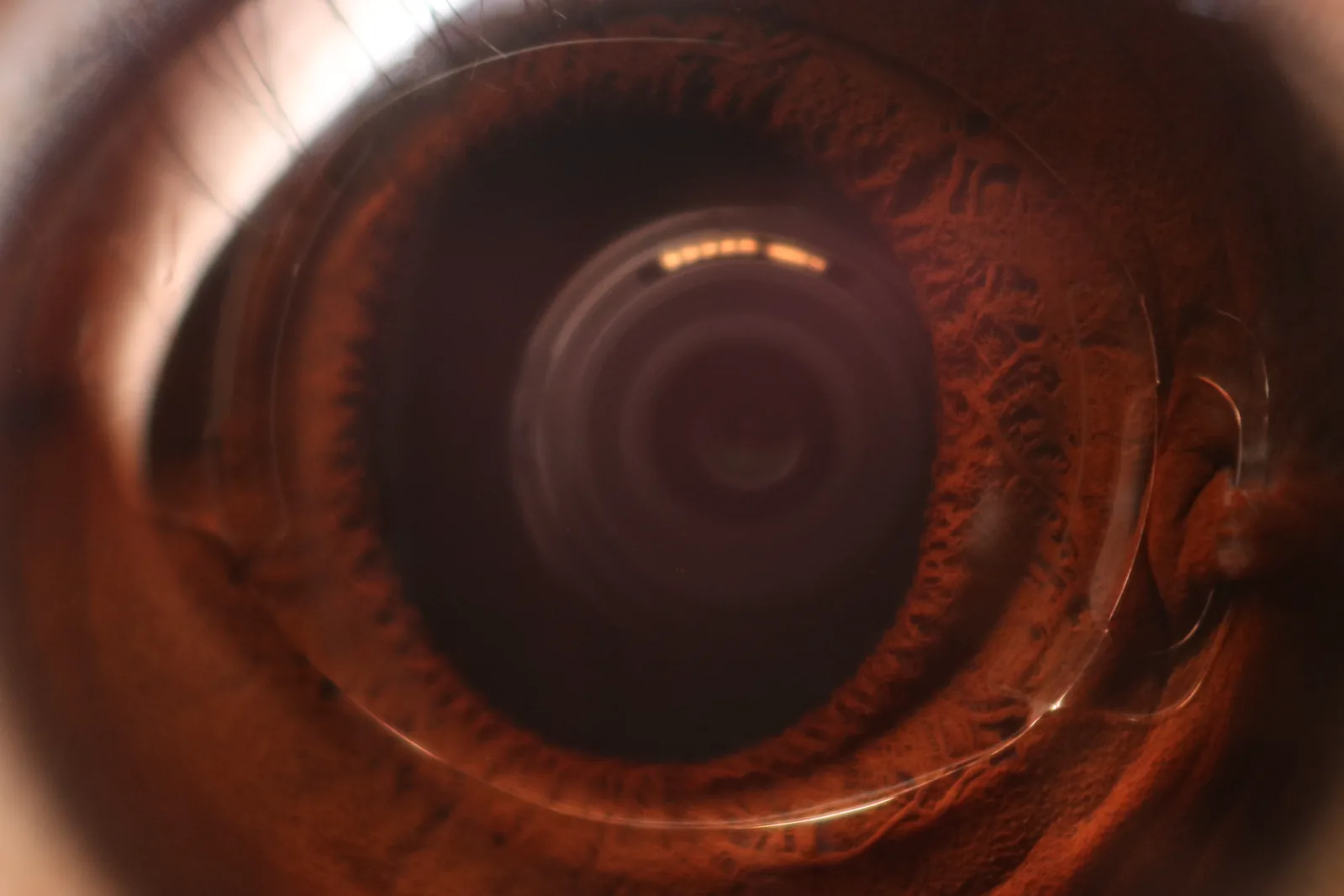
When performing cataract surgery, multifocal intraocular lenses (IOLs) that can simultaneously correct presbyopia are an option. Application to healthy crystalline lenses is considered elective or private-pay treatment, so careful patient selection is necessary.
Comparison of trifocal IOLs and EDOF IOLs (meta-analysis of 22 studies, 2,200 eyes)1):
| Parameter | Trifocal IOL | EDOF IOL | Significant difference |
|---|---|---|---|
| Uncorrected near visual acuity (UCNVA) | Excellent (MD 0.12 logMAR) | — | Yes (P<0.00001) |
| Corrected near visual acuity (DCNVA) | Excellent (MD 0.12) | — | Present (P=0.002) |
| Corrected distance visual acuity (CDVA) | — | Excellent (MD −0.01) | Yes (P=0.01) |
| Uncorrected distance visual acuity (UDVA) | No difference | No difference | None (P=0.84) |
| Uncorrected intermediate visual acuity (UIVA) | No difference | No difference | None (P=0.68) |
| Spectacle independence | Significantly superior (OR 0.26) | — | Yes (P=0.02) |
| QoV questionnaire | Significantly better (MD 1.24) | — | Yes (P=0.03) |
| Halo incidence | — | Suppressive tendency (OR 0.64) | None (P=0.10) |
Main trifocal IOLs: AcrySof IQ PanOptix, FineVision, AT LISA tri, TECNIS Synergy1)
Main EDOF IOLs: TECNIS Symfony, Eyhance, AcrySof IQ Vivity1)
A meta-analysis of 2,200 eyes showed that trifocal IOLs are superior in near visual acuity and spectacle independence, while EDOF IOLs are superior in corrected distance visual acuity and suppression of optical phenomena (e.g., halos)1). Which is more suitable depends on the patient’s lifestyle, occupation, and needs. For those who drive frequently at night, EDOF may be advantageous, while trifocal IOLs are often chosen when near vision is prioritized.
6. Pathophysiology and Detailed Mechanism of Onset
Section titled “6. Pathophysiology and Detailed Mechanism of Onset”Decreased Lens Elasticity and Accommodation Dysfunction
Section titled “Decreased Lens Elasticity and Accommodation Dysfunction”Accommodation is the function by which the thickness of the lens changes through contraction and relaxation of the ciliary muscle, allowing focus on both near and far objects. According to the Gullstrand exact schematic eye, the maximum accommodative power is about 12 D, but accommodative power decreases with age, leading to presbyopia.
The following changes occur with aging:
- Sclerosis of the lens nucleus: Lens proteins (crystallins) undergo denaturation and cross-linking, causing the lens to harden. The main cause of decreased accommodative power is reduced elasticity of the lens, particularly the loss of elasticity in the lens nucleus.
- Reduced elasticity: The hardened lens becomes less able to change shape even when the ciliary muscle contracts. Although there are reports of age-related decrease in muscle fibers and increase in connective tissue in the ciliary muscle, it is thought that considerable contractile force remains even after implantation of a presbyopia-correcting intraocular lens.
- Decrease in accommodative power: Accommodative power decreases from 12–14 D in the teenage years to about 5 D at age 40 and around 1 D at age 50, with a steep decline between ages 40 and 50.
Depth of focus and pupil diameter
Section titled “Depth of focus and pupil diameter”The depth of focus of the eye is influenced by various factors such as pupil diameter, axial length, aberrations, and potential visual acuity, but is generally considered to be ±0.3 to 0.5 D. In cases of presbyopia or intraocular lens implantation, prescribing glasses while taking depth of focus into account can be expected to increase the range of clear vision and improve the comfort of wearing glasses.
The smaller the pupil diameter, the deeper the depth of focus. The difficulty in reading in the evening or under low illumination during presbyopia is largely due to the shallowing of the depth of focus associated with pupil dilation. This is a major factor causing difficulty in reading in the evening or under low illumination for presbyopic patients.
Age-related changes in accommodative amplitude
Section titled “Age-related changes in accommodative amplitude”| Age | Accommodative amplitude (D) | Characteristics |
|---|---|---|
| 10 years old | 12–14 | Nearly maximum accommodative power |
| 20 years old | 10–12 | Gradually decreases |
| 30 years old | 8 to 10 | Temporary stable state |
| 40 years old | About 5 | Presbyopia symptoms appear |
| 45 years | 2 to 3 | Steep decline |
| 50 years and older | Around 1 | Individual variation |
Since the addition power increases with age, prescription changes are generally needed every 2 to 3 years. The widespread use of digital devices has led to an increase in digital eye strain (DES) among presbyopic age groups 9)10), making it important to address VDT environments alongside presbyopia correction.
Differences between hyperopia and myopia
Section titled “Differences between hyperopia and myopia”Because the required accommodative effort differs with spectacle correction, the onset of presbyopia varies. Hyperopic eyes require more accommodation for near vision, so symptoms appear earlier, while myopic eyes require less accommodation, delaying symptoms. This difference is nearly eliminated with contact lens correction.
Most initial complaints of presbyopia (eye strain from the late 30s onward) arise from eye strain, making it important to check accommodative function. Particularly in patients with long screen time, the risk of eye strain increases by an odds ratio of 1.15 for each additional hour of screen time 12), and this should be noted as a combined factor with presbyopia.
7. Latest Research and Future Prospects
Section titled “7. Latest Research and Future Prospects”Presbyopia-Correcting Eye Drops
Section titled “Presbyopia-Correcting Eye Drops”Low-concentration pilocarpine eye drops (brand name: Vuity® 1.25%) received FDA approval in the United States in 2021 as a presbyopia-correcting eye drop that uses miosis (constriction of the pupil) to increase depth of focus. It is not approved in Japan and has no pharmaceutical approval or insurance coverage. The effect appears 1 to 3 hours after instillation and lasts about 6 hours. The importance of intermediate vision in the digital device era is increasing, and the need for presbyopia correction with eye drops is growing2).
Corneal Inlay (Pinhole Device)
Section titled “Corneal Inlay (Pinhole Device)”The KAMRA corneal inlay is a method to improve near vision by implanting a 3.8 mm diameter pinhole device into the corneal stroma to increase depth of focus. Its use has been discontinued in some areas, and establishing long-term outcomes and safety remains a challenge.
PresbyLASIK (Presbyopia-Correcting Laser Surgery)
Section titled “PresbyLASIK (Presbyopia-Correcting Laser Surgery)”A laser refractive surgery technique that creates a multifocal profile on the cornea. There are two methods: center-near, which sets the central area for near vision, and center-distance, which sets it for distance vision. Long-term corneal shape stability and visual quality are still being evaluated. With the increased use of smartphones and tablets, vision at intermediate distances (50–80 cm) has become important 13), and assessing digital device usage is necessary when evaluating candidacy for presbyLASIK.
Light Adjustable Lens
Section titled “Light Adjustable Lens”A Light Adjustable Lens is an intraocular lens whose power can be finely adjusted postoperatively by UV irradiation. It has the feature of being able to correct postoperative refractive errors. Since the COVID-19 pandemic, the prevalence of digital eye strain in the presbyopic generation has increased due to the rapid rise in screen time from remote work and online learning 14)15). In future presbyopia correction, not only visual acuity but also the quality of visual function during digital device use is becoming important. The impact of increased screen time has also been reported in children and young adults 16), raising concerns that presbyopia-like symptoms (accommodative spasm) may occur at younger ages. Research is also progressing on the application of nutritional interventions (such as omega-3 fatty acids and macular carotenoids) for presbyopia-related eye strain 17).
Advances in Mini-Monovision IOLs
Section titled “Advances in Mini-Monovision IOLs”Research is progressing on a compromise approach that adopts a mini-monovision (addition of +0.75 to +1.00 D) setting during cataract surgery to secure some near vision while minimizing the impact on stereopsis6). Studies comparing multifocal IOLs with monovision using monofocal IOLs have shown that multifocal IOLs are superior in vision at all distances, but have a higher frequency of halos and glare7).
8. References
Section titled “8. References”-
Karam M, Alkhowaiter N, Alkhabbaz A, Aldubaikhi A, Alsaif A, Shareef E, et al. Extended Depth of Focus Versus Trifocal for Intraocular Lens Implantation: An Updated Systematic Review and Meta-Analysis. American journal of ophthalmology. 2023;251:52-70. doi:10.1016/j.ajo.2023.01.024. PMID:36736751.
-
Wolffsohn JS, Lingham G, Downie LE, et al. TFOS Lifestyle: Impact of the digital environment on the ocular surface. Ocul Surf. 2023 Apr;28:213-252. doi:10.1016/j.jtos.2023.04.004. PMID:37062428.
-
Greenbaum S. Monovision pseudophakia. Journal of cataract and refractive surgery. 2002;28(8):1439-43. doi:10.1016/s0886-3350(02)01218-x. PMID:12160816.
-
Evans BJ. Monovision: a review. Ophthalmic Physiol Opt. 2007;27(5):417-439. PMID: 17718882. doi:10.1111/j.1475-1313.2007.00488.x.
-
Jain S, Arora I, Azar DT. Success of monovision in presbyopes: review of the literature and potential applications to refractive surgery. Survey of ophthalmology. 1996;40(6):491-9. doi:10.1016/s0039-6257(96)82015-7. PMID:8724641.
-
Park ESY, Ahn H, Han SU, et al. Visual outcomes, spectacle independence, and patient satisfaction of pseudophakic mini-monovision using a new monofocal intraocular lens. Sci Rep. 2022;12(1):21716. PMID: 36522397. PMCID: PMC9755282. doi:10.1038/s41598-022-26315-7.
-
Zhang F, Sugar A, Jacobsen G, Collins M. Visual function and patient satisfaction: Comparison between bilateral diffractive multifocal intraocular lenses and monovision pseudophakia. Journal of cataract and refractive surgery. 2011;37(3):446-53. doi:10.1016/j.jcrs.2010.10.045. PMID:21333868.
-
Kaur K, et al. Digital Eye Strain- A Comprehensive Review. Ophthalmol Ther. 2022;11:1655-1680.
-
León-Figueroa DA, Barboza JJ, Siddiq A, Sah R, Valladares-Garrido MJ, Adhikari S, et al. Prevalence of computer vision syndrome during the COVID-19 pandemic: a systematic review and meta-analysis. BMC public health. 2024;24(1):640. doi:10.1186/s12889-024-17636-5. PMID:38424562; PMCID:PMC10902934.
-
Anbesu EW, Lema AK. Prevalence of computer vision syndrome: a systematic review and meta-analysis. Sci Rep. 2023;13:1801. PMID: 36720986. PMCID: PMC9888747. doi:10.1038/s41598-023-28750-6.
-
Song F, Liu Y, Zhao Z, Shang X, Wang Y, Lai M, et al. Clinical manifestations, prevalence, and risk factors of asthenopia: a systematic review and meta-analysis. Journal of global health. 2026;16:04053. doi:10.7189/jogh.16.04053. PMID:41648943; PMCID:PMC12879263.
-
Thakur M, Panicker T, Satgunam P. Refractive error changes and associated asthenopia observed after COVID-19 infection: case reports from two continents. Indian J Ophthalmol. 2023;71:2592-2594. PMID: 37322686. PMCID: PMC10418019. doi:10.4103/ijo.IJO_2581_22.
-
Wolffsohn JS, Lingham G, Downie LE, et al. TFOS Lifestyle: Impact of the digital environment on the ocular surface. Ocul Surf. 2023 Apr;28:213-252. doi:10.1016/j.jtos.2023.04.004. PMID:37062428.
-
Pavel IA, Bogdanici CM, Donica VC, et al. Computer vision syndrome: an ophthalmic pathology of the modern era. Medicina (Kaunas). 2023;59(2):412. doi:10.3390/medicina59020412.
-
Barata MJ, Aguiar P, Grzybowski A, Moreira-Rosário A, Lança C. A review of digital eye strain: binocular vision anomalies, ocular surface changes, and the need for objective assessment. J Eye Mov Res. 2025;18(5):39. PMID: 40989226. PMCID: PMC12452390. doi:10.3390/jemr18050039.
-
Bhattacharya S, Heidler P, Saleem SM, Marzo RR. Let there be light-digital eye strain (DES) in children as a shadow pandemic in the era of COVID-19: a mini review. Front Public Health. 2022;10:945082. PMID: 36033797. PMCID: PMC9403324. doi:10.3389/fpubh.2022.945082.
-
Lem DW, Gierhart DL, Davey PG. Can nutrition play a role in ameliorating digital eye strain? Nutrients. 2022;14(19):4005. PMID: 36235656. PMCID: PMC9570730. doi:10.3390/nu14194005.