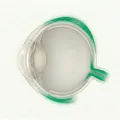
Neurofibromatosis type 1 (NF1), also called von Recklinghausen disease, is an autosomal dominant hereditary phakomatosis. It is characterized by multiple neurofibromas of the skin and nerves and distinctive pigmented spots (café-au-lait spots), and presents with various symptoms including bone and ocular lesions.
The responsible gene NF1 is located at 17q11.2 and encodes neurofibromin, a tumor suppressor protein. NF1 and neurofibromatosis type 2 (NF2) are completely different diseases; NF2 is characterized by bilateral vestibular schwannomas due to Merlin protein abnormality.
The incidence is 1 in 3,000 people, with nearly 100% penetrance, but the phenotype varies even within families. About 50% of cases result from de novo mutations, so it is important not to overlook the condition even in the absence of a family history.
Ocular complications such as iris Lisch nodules, optic gliomas, glaucoma, and eyelid/orbital neurofibromas occur frequently, and findings increase with age, so regular ophthalmologic examinations from childhood are necessary.
QHow common are NF1 and its ocular complications?
A
NF1 occurs with a frequency of 1 in 3,000 people. The most common ocular finding is iris Lisch nodules, appearing in over 90% of NF1 patients. Optic gliomas occur in about 15% of cases. In patients with café-au-lait spots on the eyelids, 50% have glaucoma.
Lisch nodules are melanocytic hamartomas of the iris stroma and do not directly affect vision. However, they are an important finding for the diagnosis of NF1, and the presence of two or more nodules has high diagnostic value. They are one of the seven items in the NIH diagnostic criteria, and confirmation by slit-lamp microscopy is important.
The responsible gene NF1 is a large gene (60 exons or more) located at 17q11.2 and encodes neurofibromin. Neurofibromin functions as a Ras-GTPase activating protein (RasGAP) and is a tumor suppressor gene product that suppresses cell proliferation signals.
The established pathogenic pathway is: NF1 mutation → loss of neurofibromin function → accumulation of Ras-GTP (active form) → constitutive activation of the Ras-MAPK signaling pathway → proliferation of hamartomas in the nervous system, skin, and bones.
Diagnosis is made when 2 or more of the 7 NIH diagnostic criteria (café-au-lait spots, neurofibromas, axillary/inguinal freckling, optic glioma, Lisch nodules, bone lesions, family history) are met. Ophthalmologists play an important role in evaluating two items: Lisch nodules (item 5) and optic glioma (item 4).
If systemic NF1 diagnosis is confirmed and there is no visual impairment or diplopia due to compression of the optic nerve or oculomotor nerve, observation is recommended.
Complete surgical resection is difficult and recurrence is common.
Surgery mainly involves debulking of the tumor.
If ptosis is causing amblyopia, early surgical intervention in childhood should be considered.
Asymptomatic, no progression: Observation is the standard approach
Progressive visual impairment: Surgical resection may be considered, but visual function is often lost and postoperative complications are common
Infiltration of the optic chiasm: Chemotherapy is indicated (standard regimen: carboplatin + vincristine)
QWhy is glaucoma in NF1 difficult to treat?
A
Glaucoma associated with NF1 develops through a complex mechanism involving angle dysgenesis, infiltration of the angle by neurofibromas, and ciliochoroidal thickening. Standard goniotomy or trabeculotomy often fails to achieve sufficient intraocular pressure reduction, and tube shunt surgery is frequently chosen. However, some cases present surgical approach difficulties due to orbital lesions, and the visual prognosis is generally poor.
The NF1 gene is a large gene with over 60 exons located at 17q11.2, and its product, neurofibromin, functions as a Ras-GTPase-activating protein (RasGAP). Normally, it converts Ras-GTP to Ras-GDP, suppressing cell proliferation signals, but loss of neurofibromin function due to NF1 mutations leads to constitutive accumulation of Ras-GTP and hyperactivation of the MAPK (MEK-ERK) pathway. This results in hamartomatous growth in the nervous system, skin, and bones.
Lisch nodules: Melanocytes in the iris stroma undergo excessive proliferation due to enhanced Ras signaling from NF1 mutations, forming hamartomas.
Optic glioma: NF1 is involved in the regulation of glial cell (especially astrocyte) proliferation. Loss of NF1 function leads to glial cell proliferation, forming low-grade astrocytoma (pilocytic astrocytoma; WHO grade I). Diffuse infiltration from the optic nerve to the optic chiasm may occur.
Pathological classification of neurofibroma:
Plexiform type: Spreads along peripheral nerves. Characteristic of von Recklinghausen disease.
Life prognosis is good. However, it is a progressive disease with increasing findings over time, and management of optic glioma and glaucoma determines visual prognosis.
A molecular targeted drug that targets MEK1/2 downstream of the Ras-MAPK pathway, approved by the FDA in 2020 for inoperable plexiform neurofibromas in patients aged 2 years and older. Its efficacy for NF1-associated optic pathway gliomas is also being investigated.
In 2021, the International NF Diagnostic Criteria Committee revised the NIH criteria, adding genetic testing (identification of NF1 mutations) to the diagnostic criteria. Choroidal abnormalities (characteristic choroidal hamartomas detected by near-infrared imaging) were also added as a new diagnostic criterion, further increasing the importance of ophthalmic examination.
The association between NF1 mutations and childhood glaucoma has been genetically confirmed, and it has been reported that unilateral involvement accounts for 50% of childhood glaucoma cases with NF1 mutations 2). Elucidating the pathogenesis of glaucoma and developing new therapeutic approaches remain future challenges.