

Proper Use of Eye Drops and Intervals Between Multiple Eye Drops (How-to-Use-Eye-Drops-Correctly-and-Multiple-Drop-Intervals)
Key points at a glance
Section titled “Key points at a glance”1. What is the correct way to use eye drops?
Section titled “1. What is the correct way to use eye drops?”Eye drops are a basic treatment for eye diseases, and correct technique is directly tied to their effectiveness and safety. If they are not used properly, many problems can occur, such as reduced treatment effect, increased systemic side effects, and poorer adherence.
Why only one drop at a time
Section titled “Why only one drop at a time”The conjunctival sac can hold about 7–10 μL of fluid1). By contrast, one drop from a commercial eye drop bottle is about 30–50 μL3), far exceeding the holding capacity of the conjunctival sac. The excess either spills out of the eyelid or is absorbed systemically through the nasolacrimal duct1). Adding a second drop does not increase the effect of the medicine; it only increases the risk of systemic side effects and exposure to preservatives1).
Basic rules for using eye drops
Section titled “Basic rules for using eye drops”The key points of correct eye drop use are: one drop at a time, leave at least 5 minutes between multiple eye drops, and press the lacrimal sac after instilling the drops.
Overview of the pharmacokinetics of eye drops:
| Absorption route | Details |
|---|---|
| Through the cornea | Main route of intraocular penetration. The concentration in the anterior chamber reaches its peak 5–10 minutes after instillation |
| Through the conjunctiva and sclera | Absorption from around the cornea. Important for some drugs |
| Through the nasolacrimal duct (systemic) | High bioavailability because it is not subject to first-pass hepatic metabolism. Main cause of side effects |
Understanding how the medicine is absorbed after instillation makes it possible to give patients proper instructions on how to use eye drops1).
One drop at a time is enough. The conjunctival sac holds only about 7–10 μL, so only part of one drop (about 30–50 μL) is absorbed into the eye. Even if two or more drops are used, the effect does not change; it only increases the risk of side effects and exposure to preservatives.
2. Basic technique for eye drops
Section titled “2. Basic technique for eye drops”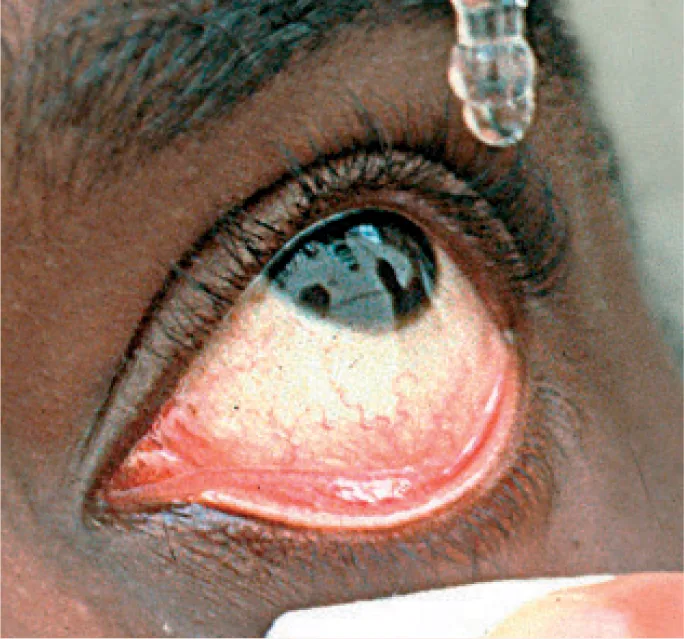
Show the correct eye drop instillation steps step by step. Mistakes in technique can greatly reduce the medicine’s effect1).
Standard procedure
Section titled “Standard procedure”- Handwashing: Wash your hands thoroughly with soap and running water, then dry them with a clean towel.
- Pulling down the lower eyelid: While looking in a mirror, gently pull down the lower eyelid to expose the conjunctival sac.
- Instilling the drop: Without touching the tip of the container to the eye, eyelashes, or fingers, instill one drop from a distance of 1–2 cm.
- Closing the eyes and pressing the lacrimal sac: Close the eyes quietly and gently press the inner corner of the eye (lacrimal sac area) with your index finger for 1–2 minutes.
- Handling excess liquid: Wipe away any overflowed medicine with a clean tissue, moving outward from the eye.
Why pressing the lacrimal sac matters
Section titled “Why pressing the lacrimal sac matters”It can reduce systemic absorption through the nasolacrimal duct by about 60%1). It is especially important for preventing systemic side effects (slow heart rate, bronchospasm) from beta-blocker eye drops (such as timolol). It is recommended to do this carefully in patients with heart disease or respiratory disease, older adults, and children.
Repeated blinking after instilling eye drops is counterproductive. Rapid opening and closing of the eyelids promotes movement of the medicine into the nasolacrimal duct and reduces the amount absorbed into the eye1).
Using eye-drop aids
Section titled “Using eye-drop aids”For older adults, people with reduced finger dexterity, and children, the use of eye-drop aids is effective2). Using an aid improves the success rate of instilling eye drops and also helps improve adherence. In children, it is effective to have them lie on their back with the eyes closed, instill one drop at the inner corner of the eye (lacrimal sac area), and then open the eyes.
No. If you blink repeatedly after putting in the drops, the medicine can drain out through the nasolacrimal duct, reducing how much is absorbed into the eye. After putting in the drops, gently close your eyes and press the inner corner of the eye for 1 to 2 minutes.
3. Timing and order for multiple eye drops
Section titled “3. Timing and order for multiple eye drops”Many patients are prescribed more than one eye drop, and keeping the proper interval and order is key to maximizing treatment effect.
The 5-minute rule
Section titled “The 5-minute rule”When using more than one eye drop, leave at least 5 minutes between each drop. It takes about 5 minutes for the first drop to be absorbed from and clear out of the conjunctival sac1), and if the interval is too short, the later drop can wash away the earlier one (dilution effect). Some references recommend a 10-minute interval1).
Principles of drop order
Section titled “Principles of drop order”Follow the order below based on the properties of the preparation.
| Order | Formulation type | Typical examples |
|---|---|---|
| First | Aqueous eye drops | Antibiotics, beta blockers, prostaglandin preparations |
| Second | Suspension | Fluorometholone suspension, olopatadine suspension |
| Third | Gel formulations | Timoptol XE®, Rysmon TG® |
| Fourth (last) | Eye ointment | Antibacterial eye ointment, erythromycin ointment |
Suspensions (such as fluorometholone suspensions) contain ingredients that settle, so shake well before use. Gel formulations can temporarily blur vision, so use them last. Eye ointments have an oily base that can block eye drops from reaching the cornea, so use them after all eye drops.
Reducing the burden of using combination eye drops
Section titled “Reducing the burden of using combination eye drops”Combination eye drops that combine multiple medicines into one bottle are useful for reducing the number of times you need to instill drops and improving adherence. For example, latanoprost/timolol combination eye drops (Xalacom®) can deliver two medicines with one instillation and also reduce exposure to preservatives2).
Examples of major combination glaucoma eye drops:
| Product name | Ingredients | Features |
|---|---|---|
| Xalacom® | Latanoprost + timolol | Prostaglandin analog + beta blocker |
| DuoTrav® | Travoprost + timolol | Prostaglandin analog + beta blocker |
| Azarga® | Brinzolamide + timolol | Carbonic anhydrase inhibitor + beta blocker |
| Cosopt® | dorzolamide + timolol | carbonic anhydrase inhibitor + beta blocker |
| Locoa® | tafluprost + timolol | prostaglandin analogue + beta blocker (preservative-free) |
For multiple medications, switching to combination eye drops is effective for improving adherence and reducing preservative exposure2).
No. You need to leave at least 5 minutes between them. If you instill them back to back, the first medicine may be washed out and not work properly. The basic order is solution → suspension → gel → eye ointment.
4. Storage and management of eye drops
Section titled “4. Storage and management of eye drops”Characteristics and precautions of major eye drop classes
Section titled “Characteristics and precautions of major eye drop classes”Understanding the pharmacological characteristics of eye drops makes it possible to guide patients and use them properly1).
Dry eye treatment drugs:
- Artificial tears: saline-based. Provide hydration only. Products containing preservatives should be used with caution while wearing SCL
- 3% diquafosol sodium (Diquas®) eye drops: promote water and mucin secretion. 6 times a day. Contains preservatives
- 2% rebamipide (Mucosta® ophthalmic UD): promotes mucin production. Shake before use
- Sodium hyaluronate eye drops: protect and lubricate the corneal surface. Available in 0.1–0.3% concentrations; higher concentrations are effective in severe cases
Anti-allergy eye drops:
- Antihistamines (olopatadine, ketotifen, etc.): fast-acting
- Mediator release inhibitors (cromoglycate, tranilast, etc.): used preventively
- Combination antihistamine + mediator release inhibitor drops: 2–3 times a day
Glaucoma drugs and daily dosing frequency:
- Prostaglandin-related drugs: once daily (before bedtime)
- Beta blockers: twice daily (some once daily)
- Carbonic anhydrase inhibitors: 3 times a day
- α2 agonists: 2 to 3 times a day
- Rho kinase inhibitors (ripasudil): 2 times a day
- Combination eye drops: 1 to 2 times a day (depends on ingredients)
Storage temperature and protection from light
Section titled “Storage temperature and protection from light”Typical storage conditions are shown below.
| Storage category | Conditions | Typical drugs |
|---|---|---|
| Room temperature storage | 1 to 30°C | Many eye drops (timolol, dorzolamide, etc.) |
| Refrigerated storage | 2–8°C | Latanoprost (before opening), some antibiotic eye drops |
| Store away from light | Keep away from light | Epinastine eye drops, some NSAID eye drops |
Do not leave it in a car or other hot place, because high temperatures can cause the medicine to deteriorate. For refrigerated products, bringing them back to room temperature just before use can reduce stinging when the drops are used.
Use period after opening
Section titled “Use period after opening”For products that contain preservatives, the guideline is to use them within about 1 month after opening. Preservative-free products (unit-dose type) should be used immediately after opening, and any remaining liquid should be discarded. Eye drops left unused for a long time should not be used because of the risk of microbial contamination.
Container hygiene
Section titled “Container hygiene”- Do not let the tip of the container touch the eye, eyelashes, or fingers (to prevent contamination).
- Tighten the cap immediately after use.
- Do not share eye drops with other people because there is a risk of spreading infection.
- If you use multiple eye drops, tell them apart by bottle color and shape so you do not mix them up.
5. Systemic Side Effects and Precautions for Eye Drops
Section titled “5. Systemic Side Effects and Precautions for Eye Drops”Systemic Absorption Pathway
Section titled “Systemic Absorption Pathway”After eye drops are used, the medicine is absorbed through the nasolacrimal duct, the blood vessels of the nasal mucosa, and then into the systemic circulation1). Because this route does not undergo first-pass metabolism in the liver, some drugs can have high systemic bioavailability. Pressing on the lacrimal sac blocks this route and reduces systemic absorption by about 60%1).
Major Systemic Side Effects by Drug Class
Section titled “Major Systemic Side Effects by Drug Class”| Drug class | Representative drugs | Main systemic side effects | Special notes |
|---|---|---|---|
| Beta blockers | Timolol, carteolol | Slow heart rate, low blood pressure, bronchospasm, worsening heart failure | Timolol is contraindicated in patients with asthma |
| Prostaglandin analogs | Latanoprost, bimatoprost | Iris pigmentation, periocular hypertrichosis, DUES/PAP | Contraindicated in pregnant women due to the risk of uterine contractions |
| Carbonic anhydrase inhibitors (eye drops) | Dorzolamide, brinzolamide | Taste disturbance, corneal endothelial damage | Use with caution in patients with severe renal impairment |
| Alpha-2 agonists | Brimonidine | Drowsiness, dry mouth, low blood pressure | Contraindicated in children under 2 years of age due to the risk of respiratory depression |
| Mydriatics | Atropine | Fever, tachycardia, dry mouth | Pay special attention to systemic side effects in children |
| Steroids | Fluorometholone, betamethasone | Increased intraocular pressure, posterior subcapsular cataract | Systemic side effects are relatively rare |
| Antibacterial eye drops | Levofloxacin, etc. | Hypersensitivity, contact dermatitis |
Beta-blocker eye drops (such as timolol) can be absorbed systemically through the nasolacrimal duct and may cause bradycardia, palpitations, or shortness of breath. Thoroughly pressing the tear ducts after instillation can reduce systemic absorption. If symptoms continue, consult your doctor.
6. Eye drops in special situations
Section titled “6. Eye drops in special situations”Contact lens wearers
Section titled “Contact lens wearers”Eye drops containing benzalkonium chloride (BAK) are generally contraindicated while wearing soft contact lenses (SCLs). BAK can adsorb to the lenses and may cause corneal epithelial damage.
- In principle: Remove contact lenses before instilling eye drops.
- Contact lens-compatible formulations: Preservative-free or BAK-free formulations may be usable even while wearing lenses (check the package insert).
- When to reinsert: Reinsert contact lenses at least 10–15 minutes after instilling the drops.
Eye drops for children
Section titled “Eye drops for children”Children often cannot instill eye drops themselves and need help from a parent or caregiver.
- Supine method: Have the child lie on their back and close their eyes; after placing one drop at the inner corner (the corner near the nose), ask them to open their eyes so the medicine enters the eye.
- Atropine eye drops: Watch for fever, rapid heartbeat, and facial flushing from systemic absorption, and make sure to press on the tear sac thoroughly.
- Assistive devices: Using eye-drop aids is effective2).
Eye drops in older adults
Section titled “Eye drops in older adults”In older adults, the following problems interact in combination.
- Decreased finger dexterity: Recommend using eye-drop aids (such as Auto-Drop®)2).
- Lower adherence with multiple medications: Since drop-out rates rise when using three or more eye drops2), consider switching to a combination eye drop.
- Cognitive decline: Assistance with eye drops by a caregiver and use of an eye-drop calendar are effective.
Preservatives in eye drops and corneal toxicity
Section titled “Preservatives in eye drops and corneal toxicity”Benzalkonium chloride (BAK) is the most commonly used preservative, and it damages corneal epithelial and endothelial cells through disruption of cell membranes. With long-term use, it can cause corneal epithelial damage, worsening dry eye, and conjunctival fibrosis. Preservative-free (PF) preparations and unit-dose preparations cause less ocular surface toxicity and are recommended for glaucoma patients using multiple medications long term and for patients before and after surgery2).
Types and characteristics of preservatives:
| Preservative | Features | Notes |
|---|---|---|
| Benzalkonium chloride (BAK) | Most widely used. Has corneal toxicity | Generally contraindicated while wearing soft contact lenses |
| Sorbate (Polysorbate 80) | Less toxic than BAK | Used in some products |
| Purite compound (e.g., Purite®) | Lower corneal toxicity than BAK | Used in latanoprost products |
| SofZia® | Zinc oxide-based. Low toxicity | Used in travoprost products |
| preservative-free | no corneal toxicity | unit-dose airless bottle |
Baudouin et al. systematically examined the corneal and conjunctival toxicity of preservatives and showed that BAK promotes apoptosis of corneal epithelial cells, reduces goblet cells, and increases inflammatory cytokine production4). Cationic emulsion formulations (containing cetrimide) have shown corneal safety equivalent to conventional eye drops in an experimental corneal wound-healing model and are attracting attention as a next-generation preservative alternative4). In patients with glaucoma, it has been reported that multi-drug, long-term eye drop therapy increases the prevalence of ocular surface disease4). The 5th edition of the Glaucoma Clinical Practice Guidelines recommends preservative-free formulations and fixed-combination eye drops for patients with ocular surface disorders5).
6b. Practical points for eye-drop instruction
Section titled “6b. Practical points for eye-drop instruction”Key points for patient-specific instruction
Section titled “Key points for patient-specific instruction”In ophthalmic care, eye-drop instruction is part of treatment, and it is important to individualize it according to the patient’s age, condition, and daily life.
Key points for adults (general):
- Explain why one drop at a time is recommended and why multiple drops are a problem
- Show the order of eye drops visually (solution → suspension → gel → ointment)
- Demonstrate the importance of nasolacrimal occlusion and the specific method (press the inner corner of the eye with a finger for 1–2 minutes)
- Emphasize that BAK-containing preparations are contraindicated for soft contact lens (SCL) wearers
- Explain the symptoms of side effects (especially palpitations and shortness of breath with beta-blockers)
Special considerations for older adults:
- Perform a comprehensive assessment of vision, hand function, and cognitive ability
- Show the actual eye drop aid and explain how to use it2)
- Consider reducing the number of bottles by switching to a combination eye drop2)
- Also provide instruction to caregivers and family
Support for adherence in glaucoma patients:
- Repeatedly explain the importance of continuing treatment while vision remains
- Link eye drop times to daily routines (brushing teeth, meals)
- At each regular visit, have the patient demonstrate their eye drop technique
- Encourage them to consult a doctor if side effects are strong (do not let them stop on their own)
Coordination with pharmacies and optical shops
Section titled “Coordination with pharmacies and optical shops”In addition to ophthalmologists, orthoptists, and nurses, collaboration with community pharmacists is also important for eye drop instruction. Ideally, the technique for using eye drops should also be checked during medication counseling at the pharmacy. Information on multiple eye drops should be recorded in the medication notebook, encouraging pharmacists and doctors to confirm it when the patient visits another department. The Glaucoma Clinical Practice Guidelines (5th edition) also note the importance of controlling intraocular pressure through cooperation between ophthalmology and pharmacies5).
7. Latest findings and ways to improve adherence
Section titled “7. Latest findings and ways to improve adherence”Current status of eye drop adherence
Section titled “Current status of eye drop adherence”Adherence to eye drops in chronic diseases (such as glaucoma) is lower than expected in real-world surveys. Objective evaluations using electronic monitoring systems (MEMS: Medication Event Monitoring System) show that only about 50-70% of patients use their eye drops as prescribed2). Reasons for non-adherence are classified as “forgetting,” “dislike of side effects,” “financial burden,” and “the complexity of technique due to multiple medications”2).
Studies using electronic monitoring often find that adherence to glaucoma eye drops is lower than self-reported, and even once-daily formulations may not be enough in some cases2).
Practical guidance to improve adherence:
| Intervention | Effect | Notes |
|---|---|---|
| Prescribing an eye drop aid | Improved success rate and self-efficacy2) | AutoDrop®, Rakuraku Tenyaku® |
| Optimizing eye drop schedule | Preventing missed doses | Tied to daily routines such as after breakfast and before bed |
| Switching to a combination eye drop | Reducing the number of eye drops2) | Once-daily formulations have a lower dropout rate than 2 to 3 times daily |
| Patient education and video instruction | Improving technique | Checking actual technique at visits is most effective |
| Smartphone reminders | Preventing missed doses | Using apps |
Good communication between the ophthalmologist and the patient, managing side effects, and considering cost burden are important factors in maintaining adherence to glaucoma treatment2).
Practical instructions for eye-drop use in patients with glaucoma
Section titled “Practical instructions for eye-drop use in patients with glaucoma”Glaucoma is basically managed long term with eye drops, and reduced adherence directly leads to disease progression and worsening visual field damage. Patient education and communication with healthcare professionals are important elements that support adherence to eye drops2). In particular, the following factors contribute to reduced adherence.
- Experience of side effects: eye redness, irritation, eyelash growth around the eyes (PG preparations), palpitations (beta-blockers)
- Cost burden: continued use of multiple expensive eye drops
- Few symptoms: glaucoma is often asymptomatic in the early stages, making it hard to feel the need for treatment
- Difficulty with technique: especially in older adults and patients with tremor
- ‘I don’t know if it’s working’: no objective feedback
It is important to recognize these barriers and provide adherence support tailored to each patient’s problems.
Patient education on systemic side effects of eye drops
Section titled “Patient education on systemic side effects of eye drops”It is important to explain fully to patients that eye drops can also cause side effects, just like systemic medications. In particular, specific explanations are needed for the following drug classes.
Systemic side effects of beta-blockers (timolol, carteolol, etc.):
- Cardiac effects: bradycardia (slow pulse), decreased heart rate, worsening heart failure
- Respiratory effects: bronchospasm (contraindicated or used with caution in patients with asthma or COPD)
- Other: fatigue, sexual dysfunction, and hypertriglyceridemia
Side effects of prostaglandin-related drugs (such as latanoprost and bimatoprost):
- Local eye effects: iris pigmentation (irreversible), increased hair around the eyes, longer eyelashes, and periorbital fat atrophy (DUES/PAP)
- Systemic: in pregnant women there is a risk of uterine contractions, so it is generally contraindicated
Side effects of alpha2 agonists (brimonidine):
- Central nervous system: drowsiness, fatigue, and dry mouth
- Children: contraindicated in children under 2 years because of the risk of respiratory depression and hypothermia
New drug delivery systems (DDS)
Section titled “New drug delivery systems (DDS)”Development is underway for formulations that eliminate the need for eye drops.
- Punctal plug-type DDS (such as Dextenza®): a sustained-release implant inserted into the punctum, used to manage postoperative inflammation.
- Intraocular injection-type sustained-release implant: efforts are underway to achieve drug release over several months.
- Nanoparticle eye-drop formulations: they aim to improve corneal penetration and reduce how often drops need to be used.
Some of these have been approved overseas, but at present they are not covered by insurance in Japan or are still in clinical trials.
Prospects for sustained-release contact lens DDS: A technology is being developed that continuously releases drugs from contact lenses impregnated with medication. By slowly releasing the drug while worn, it may prolong corneal exposure time compared with eye drops and reduce systemic absorption. Early clinical trials of contact lenses impregnated with glaucoma drugs (such as timolol) are under way.
How to Use Special Eye Drops
Section titled “How to Use Special Eye Drops”Some eye drops require special care.
Suspension eye drops (such as fluorometholone suspension, olopatadine suspension):
- Shake well before use (for at least 1 minute)
- If used while the medicine has settled, it will not be effective
Eye ointment (such as erythromycin eye ointment):
- Pull down the lower eyelid, squeeze out about 1 cm, and apply it into the conjunctival sac
- After use, vision is temporarily blurred (because it is oil-based)
- Use before bedtime is often recommended
- After instillation, gently close the eyes and wipe away any excess ointment with a clean tissue
Gel formulations (such as Timoptol XE):
- Explain in advance that vision may become temporarily blurred after instillation
- Use it last (so it does not interfere with absorption of other liquid drops)
- No need to shake it, but check the cap before use
Topical anesthetic eye drops (during examinations):
- Patients must not use it at home. There is a risk of corneal epithelial damage and perforation
- Use only immediately before the examination
Relevant regulations and insurance coverage
Section titled “Relevant regulations and insurance coverage”In Japan, prescription eye drops require a doctor’s prescription. Eye drops used for chronic eye diseases such as glaucoma, diabetic retinopathy, and age-related macular degeneration are often covered by insurance. Preservative-free and combination formulations may be more expensive than standard formulations, but they may be considered as options to reduce dosing frequency and side effects. Over-the-counter (OTC) eye drops (artificial tears, decongestants, antihistamines, etc.) can be purchased without a prescription, but as with prescription medicines, correct use is important.
Providing eye-drop instruction and assessing the patient
Section titled “Providing eye-drop instruction and assessing the patient”In the Japanese Ophthalmological Society’s “Proposal on the Proper Use of Eye Drops”1), healthcare professionals are recommended to check eye-drop technique and provide appropriate instruction. Shima et al. (2009) reported an evaluation of self-instillation in glaucoma patients using assistive devices6). A combination of proper assistive-device use and verbal instruction was most effective in improving technique.
Even when patients believe their eye-drop technique is correct, they often are using the wrong method. Regular hands-on checks in the outpatient clinic and re-instruction as needed are important for maintaining adherence2). Konstas AG et al. (2000) investigated views on patient compliance with eye drops and showed a large gap between patients’ self-perception and actual adherence7). A survey by Buller in developing countries also analyzed compliance with glaucoma eye drops and showed that this is a universal issue beyond healthcare settings8).
8. References
Section titled “8. References”- American Academy of Ophthalmology. Punctal Occlusion. Basic and Clinical Science Course skills resource. https://www.aao.org/education/basic-skills/punctal-occlusion
- Tatham AJ, Sarodia U, Gatrad F, Awan A. Eye drop instillation technique in patients with glaucoma. Eye (Lond). 2013;27:1293-1298. PMID:23970024. PMCID:PMC3831141. https://pmc.ncbi.nlm.nih.gov/articles/PMC3831141/
- Countess of Chester Hospital NHS Foundation Trust. Administration of eye drops and eye ointments. Clinical guideline. https://www.coch.nhs.uk/media/172805/11-eye.pdf
- Baudouin C, Labbé A, Liang H, Pauly A, Brignole-Baudouin F. Preservatives in eyedrops: the good, the bad and the ugly. Prog Retin Eye Res. 2010;29(4):312-334. doi:10.1016/j.preteyeres.2010.03.001.
- 緑内障診療ガイドライン(第5版)作成委員会. 緑内障診療ガイドライン(第5版). 日眼会誌. 2022;126(2):85-177.
- Shima C, Nakamura M, Harada T, et al. Evaluation of self-instillation technique in glaucoma patients using an eye drop instillation aid. Nihon Ganka Gakkai Zasshi. 2009;113(5):573-578.
- Konstas AG, Maskaleris G, Gratsonidis S, et al. Compliance and viewpoint of glaucoma patients in Greece. Eye (Lond). 2000;14(Pt 5):752-756.
- Buller AJ, Connell B, Spencer AF. Compliance with anti-glaucoma eye drops in a developing country. J Glaucoma. 2016;25(4):e370-e372.