Glaucoma is an optic neuropathy characterized by progressive degeneration of retinal ganglion cells and visual field loss 4). The optic nerve damage and visual impairment caused by glaucoma are irreversible, and the primary goal of treatment is to preserve current visual function. The prevalence in individuals aged 40 years or older is 5.0% (Tajimi Study), with an estimated 4.65 million affected individuals 1). Furthermore, the same epidemiological survey found that 89% of glaucoma cases were newly detected, indicating a large number of untreated glaucoma patients 1).
In primary open-angle glaucoma (POAG), lifelong medication is assumed. Treatment primarily focuses on lowering intraocular pressure, starting with monotherapy and limiting combination therapy to a maximum of two drugs when possible. Drug selection should consider target intraocular pressure, side effects, frequency of instillation, and patient preference. Even with slow progression, complete arrest is rare, and treatment plans must accommodate gradual long-term progression. Younger patients have longer life expectancy and require more aggressive treatment and management with a higher estimated severity.
While POAG alone rarely leads to extremely severe visual impairment, it has been reported that POAG patients constitute the highest proportion among glaucoma patients visiting low-vision clinics. Treatments targeting factors other than intraocular pressure, such as circulation improvement and neuroprotection, are also considered, but intraocular pressure reduction remains the most reliable treatment at present.
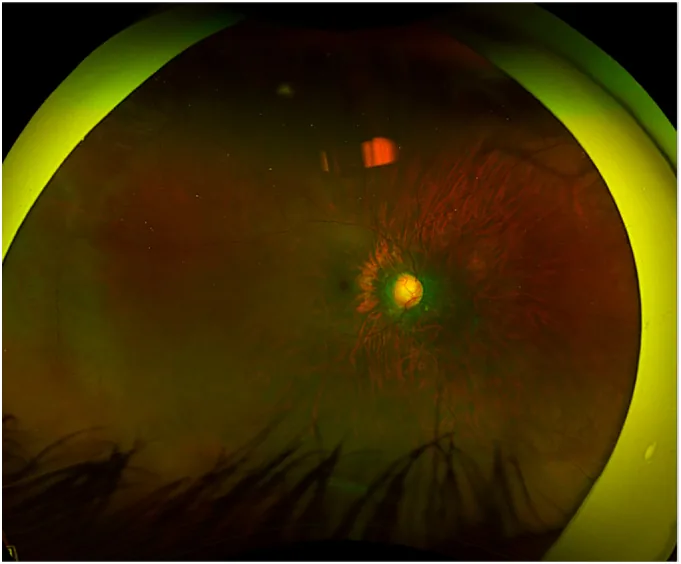
Wide-angle fundus photograph of the right eye showing enlarged optic disc cupping observed before repeat deep sclerectomy. It is included as an illustration of glaucomatous optic nerve damage.
Lifestyle factors including smoking, caffeine, alcohol, nutrition, exercise, and meditation have been studied for possible relationships with glaucoma through both pressure-dependent and pressure-independent mechanisms. However, findings are inconsistent, and strong lifestyle recommendations cannot currently be made2).
Most studies on the relationship between lifestyle and glaucoma are observational, and causality has not been established2). Accumulating high-quality evidence from randomized controlled trials remains a challenge.
Intraocular pressure is the only modifiable risk factor for glaucoma, and its management is fundamental to treatment 2)4). Other reported risk factors include 4)5):
Advanced age
Family history
Race
Myopia: classified as having “highly suggestive evidence” in an umbrella review9)
Systemic hypertension: low diastolic blood pressure may increase glaucoma risk through reduced perfusion pressure4)
Migraine
Obstructive sleep apnea syndrome5)
Arteriosclerosis: in a large cohort study (4,713 patients, follow-up 10.5 years), the highest quartile of aortic pulse wave velocity (aPWV) had a 2.62-fold increased risk of developing glaucoma compared to the lowest quartile (HR 2.62, 95% CI 1.52-4.52)7)
The relationship between systemic hypertension and glaucoma remains debated4). Diabetes mellitus may be associated with increased intraocular pressure and glaucoma risk5).
Beros et al. (2024) reported that arterial stiffness measured by a simple oscillometric device may predict the development of glaucoma. The HR per 1 standard deviation increase in aPWV was 1.36 (95% CI 1.14-1.62), suggesting that arteriosclerosis could be a new risk marker for glaucoma7).
QCan glaucoma be cured by changing lifestyle habits?
A
Glaucoma cannot be cured by lifestyle changes alone. Glaucoma is an irreversible optic neuropathy, and intraocular pressure management through medication, laser treatment, or surgery is the mainstay of treatment. However, moderate exercise and a balanced diet may contribute adjunctively to intraocular pressure control and are important as part of overall health management.
Non-adherence rates in glaucoma treatment are reported to be 30–80%. Approximately 40% of patients who are prescribed glaucoma eye drops for the first time discontinue treatment within about one year1). This is attributed to the lack of subjective symptoms and the absence of feedback on treatment effectiveness except during clinic visits1). Poor adherence is a major factor in glaucoma progression, and it is desirable to select medications and dosing frequencies that are not only effective but also easy to continue1).
In elderly patients, poor instillation technique and forgetting to instill are major causes of reduced adherence. Many elderly patients have difficulty tilting their head back due to spinal deformities, so instructing them to instill while lying down improves success rates.
Adjusting instillation posture: Instruct patients to instill while lying down.
Illustrated instructions: Use pictures to clearly show which eye drops to use at different times of the day.
Family explanation and cooperation: Check the home environment (living alone or with family, presence of a caregiver) and ask for help with reminders (directly, by phone, or using alarms).
Reducing the number of eye drops and frequency: Arrange them to be administered at times convenient for the caregiver.
The current first-line treatment is prostaglandin analogs (PGAs), which are the most widely used due to their excellent intraocular pressure-lowering effect and once-daily dosing 1). Second-line options include beta-blockers, but in cases where systemic side effects are a concern, such as in elderly patients, beta-blockers should be avoided and alternatives such as CAIs (carbonic anhydrase inhibitors), alpha-2 agonists, or ROCK inhibitors should be selected.
Five fixed-combination eye drops are available, allowing multiple medications to be administered without increasing the number of drops or frequency, which helps maintain adherence 1). However, forgetting to use a fixed-combination drop results in a greater loss of intraocular pressure-lowering effect compared to single agents, making adherence monitoring even more important.
To make it easier to continue eye drops, combine the following supports1):
Provide thorough explanation of the disease, treatment purpose, method, and side effects
Choose a treatment method that is minimal, less burdensome, and has fewer side effects
Tailor treatment to the patient’s individual lifestyle
Provide correct instruction on eye drop instillation
Collect information from the patient about their adherence status
Evidence shows that written explanations/delivery, visit management, and reminder notifications significantly improve treatment continuation rates1). The EGS 6th edition also recommends simplification, education, effective communication, and use of alarms/messages2).
Ask about the time of yesterday’s eye drop instillation: If the patient cannot answer smoothly, they may not be continuing the drops
Observe the instillation technique: Watch the patient actually instilling drops in the examination room to identify technical issues
Check eye drop consumption: If consumption is slower than expected, the drops may not be used
When intraocular pressure control is insufficient or visual function impairment progresses, it is necessary to reassess adherence 1). In cases where drug therapy cannot be properly administered due to side effects or poor adherence, laser treatment or invasive surgery may be options 1).
QCan fixed-combination eye drops help improve adherence?
A
Fixed-combination eye drops can deliver two drug components in a single bottle, reducing the number of eye drops and instillation frequency. They are considered useful for improving adherence when multiple medications are used. However, the loss of intraocular pressure-lowering effect when a dose is missed is greater than with single agents, making adherence monitoring even more important.
Walking and cycling: Mild intraocular pressure increase during activity, followed by sustained pressure reduction afterward
Running: Intraocular pressure decreases by approximately 2 mmHg, but returns to baseline within 30 minutes after exercise ends
Suppression of visual field progression: Each 5,000 steps of walking or 2.5 hours of non-sedentary activity per day reduces visual field progression by 10%
Retinal protective effect: Increased physical activity slows the thinning rate of the ganglion cell-inner plexiform layer
Exercises Requiring Caution
Weightlifting: Isometric holds cause temporary intraocular pressure elevation. Reports indicate it can reach approximately 41 mmHg during leg press
Yoga (inverted poses): Poses where the head is lower than the heart (e.g., downward dog) significantly increase intraocular pressure. Handstands can roughly double intraocular pressure
High-intensity workouts: Daily vigorous exercise is associated with a higher prevalence of glaucoma compared to three days per week. Increased free radicals and oxidative stress may be involved
Swimming goggles: Can cause temporary but marked intraocular pressure elevation while worn
In a study of patients newly diagnosed with glaucoma, a group that exercised for 30 minutes daily showed a significant reduction in intraocular pressure compared to a medication group. It has been reported that each 10-minute increase in evening activity reduces the odds of visual field progression in POAG patients by 15%. Increased physical activity has also been associated with a slower rate of thinning of the ganglion cell-inner plexiform layer, suggesting that exercise may have neuroprotective effects beyond lowering intraocular pressure.
However, the 6th edition of the EGS states that “there is currently no strong evidence that dietary or lifestyle factors affect glaucoma” 2), and lifestyle modifications are considered only adjunctive. It is important to consult with your doctor regarding the type, intensity, and timing of exercise, and to make decisions based on individual medical conditions.
QShould glaucoma patients avoid yoga?
A
It is not necessary to avoid all yoga, but poses where the head is lower than the heart, such as “downward dog,” “forward bend,” and “headstand,” are recommended to be avoided as they significantly increase intraocular pressure. Caution is especially needed in patients at high risk of progression. Poses performed while sitting or standing are usually not a problem.
Dietary nitrate, abundant in green leafy vegetables, is converted to nitric oxide in the body. Nitric oxide is thought to protect against glaucoma through vasodilation, increased aqueous humor outflow, and decreased episcleral venous pressure. Large cohort studies (e.g., Nurses’ Health Study) have shown that groups with higher dietary nitrate intake have a 20–30% lower risk of developing POAG.
Omega-3 fatty acids (EPA and DHA) regulate systemic microcirculation and ocular blood flow. A prospective study of patients with pseudoexfoliation glaucoma found a significant reduction in intraocular pressure after six months of oral DHA supplementation. However, a high ratio of omega-3 to omega-6 may increase glaucoma risk, and conclusions remain inconclusive.
Prevents mitochondrial dysfunction and provides neuroprotection
Flavonoids
Improvement in mean deviation of visual field
Vitamin A
Suggestive association between intake and glaucoma risk9)
Vitamin B3 (nicotinamide) reduces vulnerability to glaucoma in mouse models, and clinical trials have shown improvement in inner retinal function. However, there is currently insufficient evidence that any specific vitamin supplement reduces the risk of glaucoma. The EGS 6th edition states that evidence supporting the role of alternative therapies or neuroprotective agents in glaucoma management is insufficient2).
Alcohol consumption temporarily lowers intraocular pressure, but chronic intake may increase the risk of open-angle glaucoma by 1.18 times. It was classified as “weak evidence” in an umbrella review9). The certainty of the evidence is very low.
A systematic review of 10 studies also reported an association between chronic alcohol consumption and elevated intraocular pressure or higher prevalence of ocular hypertension, but these findings do not establish causality or an individual’s risk.
Caffeine intake is not associated with increased intraocular pressure in healthy individuals, but in patients with a history of glaucoma or ocular hypertension, it is associated with a temporary increase of about 2.4 mmHg one hour after consumption. In patients with a family history of glaucoma or genetic predisposition, an association between caffeine intake and glaucoma prevalence has been suggested.
QShould glaucoma patients avoid coffee?
A
Moderate coffee consumption is generally considered not a major problem. However, in patients with glaucoma or ocular hypertension, a temporary increase in intraocular pressure (about 2.4 mmHg) after caffeine intake has been reported. Especially for those with a family history of glaucoma or insufficient intraocular pressure control, it is advisable to avoid large amounts of caffeine (more than 2–3 cups of coffee per day).
Intraocular pressure is affected by body position1). Key findings are as follows:
Supine position: Compared to sitting, intraocular pressure increases by 1–2 mmHg in healthy individuals and by 4 mmHg in glaucoma patients. The main mechanism is an increase in episcleral venous pressure due to postural change1)
Side-lying position: The intraocular pressure (IOP) in the lower eye increases by approximately 1.5–2 mmHg. In glaucoma patients, if they habitually sleep with the more affected eye on the lower side, the risk of visual field progression may increase.
Eye rubbing: In a primate model study using telemetry sensors, transient IOP elevations exceeding an average of 109 mmHg were recorded3).
When daily posture is considered (sitting during the day and supine during sleep), IOP is higher during sleep than during the day even in healthy people1). This postural IOP increase involves a rise in episcleral venous pressure1).
IOP also fluctuates over short periods due to blinking, eye movements, and vascular pulsation11).
In normal individuals, IOP fluctuates by about 3–6 mmHg throughout the day1). In glaucoma patients, the fluctuation range is larger due to reduced aqueous humor outflow1). Peak IOP is often observed in the morning, and the lowest IOP in the evening to nighttime1).
QDoes losing weight help glaucoma?
A
BMI has been reported to be positively correlated with IOP. In patients who experienced rapid weight loss after bariatric surgery, postoperative IOP decreased and use of ocular hypertension or glaucoma medications was reduced. However, the relationship between weight and glaucoma is complex; some reports indicate lower glaucoma prevalence with higher BMI. Weight management is important for overall health but is not a substitute for glaucoma treatment.
Obstructive sleep apnea syndrome has been reported as a risk factor for glaucoma5). In an umbrella review, it was classified as having “suggestive evidence”9). However, this association is not consistently demonstrated in all studies4).
Smoking is considered one of the risk factors for glaucoma. It is thought to involve increased oxidative stress, impaired retinal microcirculation, and direct toxicity to the optic nerve. In an umbrella review, both current smoking and former smoking were classified as “non-significant”9), but considering the overall health effects, smoking cessation is recommended.
The odds of stopping driving double for every 5 dB worsening of visual field loss in the worse eye. Patients with advanced glaucoma have 3.5 times higher odds of being involved in a motor vehicle accident 4). Impairment of the useful field of view (UFOV) is the strongest risk factor for motor vehicle accidents 4).
In on-road driving tests, glaucoma patients with mild to moderate visual field impairment were able to complete the driving course but were 6 times more likely to require instructor intervention. In simulator studies, glaucoma patients exhibited significantly more saccades, fixations, and pursuit eye movements, and their gaze patterns did not change when hazards entered the visual field defect area.
When elderly patients visit the outpatient clinic, always confirm the following three items:
Presence of an accompanying person: including their relationship to the patient
Means of transportation to the clinic: if by car, whether the patient drives themselves or uses a taxi, etc.
Walking aids: cane, wheelchair, walker, mobility scooter, etc.
This information should be shared among all staff involved in outpatient care.
Progression of glaucoma itself may make eye drop or oral medication difficult, potentially leading to reduced treatment accuracy for other diseases. Maintaining QoL is one of the most important goals in glaucoma care, and comprehensive life support including securing means of transportation is required 1). The 6th edition of the EGS also notes that patients are often confused about local regulations regarding glaucoma and driving, and recommends providing appropriate information 2).
7. Daily Functional Impairment and Low Vision Care
The goal of glaucoma management is to minimize visual impairment and promote the best possible quality of life (QoL) within a sustainable healthcare system 2). While early to moderate glaucoma has a limited impact on QoL, advanced visual function loss in both eyes significantly reduces QoL 2).
Difficulty reading: In glaucoma, reading speed and letter search are reduced, involving not only visual field defects but also decreased central visual function and contrast sensitivity6). Difficulties are more pronounced under low-contrast conditions.
Walking impairment: Walking speed is strongly correlated with the mean deviation (MD) of the visual field in the worse eye. Fear of falling leads to reduced QoL and increased morbidity.
Driving ability: For every 5 dB worsening of visual field defect in the worse eye, the odds of stopping driving double (see “Driving and Mobility Safety” section).
Difficulty recognizing faces: Reduced contrast sensitivity and visual field defects act in combination 6). This is an important aspect of social interaction and significantly affects QoL.
Contrast sensitivity is an important predictor of the ability to perform activities of daily living 6). Even in glaucomatous eyes with visual acuity of 20/40 or better, contrast sensitivity is significantly reduced (correlation with visual field MD: r=0.638, P<0.05), and visual acuity alone cannot predict the degree of functional impairment 6). Recent studies have shown that macular damage is more common in early glaucoma than previously thought 6).
Low vision centers and local disability support organizations assist visually impaired individuals in independent living.
Reading support: Digital readers and tablets for text enlargement and contrast improvement, handheld and desktop magnifiers, video magnifiers (CCTV), text-to-speech software
Transportation: Mobility training (guidance on using public transportation), welfare taxis
Maintaining QoL is one of the most important goals in glaucoma care 1). As glaucoma progresses, eye drop and oral medication administration may become difficult, and this can also affect the accuracy of treatment for other diseases 1). To preserve patients’ QoL, it is necessary not only to treat the disease but also to consider the psychological impact of diagnosis and treatment on patients and their families 1).
QWhat daily life difficulties do glaucoma patients experience?
A
The most frequent complaint is difficulty performing tasks under low or high illumination. Reading difficulty is observed even in moderate glaucoma with normal visual acuity, and is more pronounced with small or low-contrast text. Reduced walking speed and balance problems lead to an increased risk of falls. Driving ability is also significantly affected, with the risk of accidents increasing 3.5-fold in advanced cases. These impairments are primarily caused by reduced contrast sensitivity and visual field defects.
In the 6-year results of the LiGHT trial, 69.8% of the SLT (selective laser trabeculoplasty) group maintained target intraocular pressure without eye drops 8). Compared to the eye drop group, the rate of visual field progression was lower (19.6% vs 26.8%, P=0.006), and fewer cases required trabeculectomy (13 eyes vs 32 eyes, P<0.001) 8). SLT is particularly useful for patients with adherence issues as a treatment option that does not rely on eye drops.
As an alternative to daily eye drops, intracameral implants of bimatoprost and travoprost are being developed. They are expected to be an option for patients who have difficulty with eye drops, but long-term efficacy and safety need to be confirmed.
Nicotinamide (the amide form of vitamin B3) has attracted attention for its neuroprotective effects in glaucoma. In a clinical trial by De Moraes et al., the combination of nicotinamide and pyruvate was associated with improvement in pattern standard deviation compared to placebo. Although a protective effect via prevention of mitochondrial dysfunction is suggested, the EGS 6th edition does not yet recommend neuroprotective agents2).
The COVID-19 pandemic accelerated the introduction of telemedicine into glaucoma care. In a qualitative study by Liu et al. (2023), interviews with 20 glaucoma specialists working in NYC found that telemedicine utilization during the peak of the pandemic was 29.1%, but dropped sharply to 3.1% a few months later 10). The main reason was the difficulty of performing intraocular pressure measurements and visual field tests remotely, but optimistic views about future reintroduction due to technological innovations (e.g., home intraocular pressure monitoring devices) were also reported 10).
Pazos M, Traverso CE, Viswanathan A; European Glaucoma Society. European Glaucoma Society - Terminology and guidelines for glaucoma, 6th Edition. Br J Ophthalmol. 2025;109(Suppl 1):1-212. doi:10.1136/bjophthalmol-2025-egsguidelines. PMID:41026937.
Turner DC, Girkin CA, Downs JC. The Magnitude of Intraocular Pressure Elevation Associated with Eye Rubbing. Ophthalmology. 2019;126(1):171-172. doi:10.1016/j.ophtha.2018.08.025. PMID:30153437. PMCID:PMC6453529.
Gedde SJ, Vinod K, Wright MM, et al. Primary Open-Angle Glaucoma Preferred Practice Pattern. Ophthalmology. 2021 Jan;128(1):P71-P150. doi:10.1016/j.ophtha.2020.10.022. PMID:34933745.
Gedde SJ, Lind JT, Wright MM, Chen PP, Muir KW, Vinod K, et al. Primary Open-Angle Glaucoma Suspect Preferred Practice Pattern®. Ophthalmology. 2021;128(1):P151-P192. doi:10.1016/j.ophtha.2020.10.023. PMID:34933743.
Kwon M. Impact of Glaucomatous Ganglion Cell Damage on Central Visual Function. Annu Rev Vis Sci. 2024;10(1):425-453. PMID:39292555. PMCID:PMC11529636. doi:10.1146/annurev-vision-110223-123044.
Beros AL, Sluyter JD, Hughes AD, Hametner B, Wassertheurer S, Scragg RKR. Arterial Stiffness and Incident Glaucoma: A Large Population-Based Cohort Study. Am J Ophthalmol. 2024;266:68-76. doi:10.1016/j.ajo.2024.05.015. PMID:38754800.
Gus Gazzard, Evgenia Konstantakopoulou, David Garway-Heath, Mariam Adeleke, Victoria Vickerstaff, Gareth Ambler, Rachael Hunter, Catey Bunce, et al. Laser in Glaucoma and Ocular Hypertension (LiGHT) Trial. Ophthalmology. 2023;130(2):139-151. doi:10.1016/j.ophtha.2022.09.009.
Shen RY, Zhang Y, Chen LJ, Cheung CY, Liang Y, Tham CC, Chan PP. Ocular and Systemic Risk Factors and Biomarkers for Primary Glaucoma: An Umbrella Review of Systematic Reviews With Meta-Analyses. Investigative ophthalmology & visual science. 2025;66(12):35. doi:10.1167/iovs.66.12.35. PMID:40956021; PMCID:PMC12448150.
Liu H, Ying S, Kamat S, Tukel C, Serle J, Fallar R, et al. The Role of Telemedicine in Glaucoma Care Triggered by the SARS-CoV-2 Pandemic: A Qualitative Study. Clinical ophthalmology (Auckland, N.Z.). 2023;17:2251-2266. doi:10.2147/OPTH.S418502. PMID:37575208; PMCID:PMC10422957.
Pitha I, Oglesby E, Engelbrecht C, et al. Intraocular Pressure and Glaucoma. Prog Retin Eye Res. 2024;99:101222.
Copy the article text and paste it into your preferred AI assistant.
Article copied to clipboard
Open an AI assistant below and paste the copied text into the chat box.