
Dynamic Visual Acuity (DVA)
Definition: The ability to identify a moving target
Identify the direction of the gap in a Landolt ring for targets moving horizontally or vertically1). It is one of the most important indicators in ball sports.

Sports vision is a general term for visual functions related to athletic and sports performance1). Unlike static visual acuity (the ability to identify stationary targets) measured in routine eye exams, it encompasses dynamic and complex visual processing abilities.
Even if static visual acuity is 1.2, if dynamic visual acuity to track a moving ball or depth perception to accurately perceive distance is insufficient, sports performance will be limited. When athletes feel that they “should be able to see but react slowly” or “cannot judge distance,” there may be problems with visual functions other than static visual acuity.
The main components of sports vision are as follows:
It has been reported that the dynamic visual acuity of professional athletes is significantly superior to that of the general population3). In a study of professional baseball players, ocular dominance did not significantly affect batting average or earned run average2).
Static visual acuity (static vision) indicates how finely one can identify a stationary target (such as a Landolt ring). In contrast, dynamic visual acuity (DVA) is a measure of the smallest size of a moving target that can be identified. The ability to see fast-moving objects, such as a baseball or tennis serve, depends on neural mechanisms different from those for static visual acuity, and even if static visual acuity is normal, dynamic visual acuity may be reduced.
Dynamic Visual Acuity (DVA)
Definition: The ability to identify a moving target
Identify the direction of the gap in a Landolt ring for targets moving horizontally or vertically1). It is one of the most important indicators in ball sports.
Depth Perception (Stereopsis)
Definition: Accuracy of depth and distance perception
It depends on binocular stereopsis, calculating distance from the disparity between the left and right eyes4). In the aptitude test for large and special vehicle licenses, an error of 2 cm or less in the three-rod test is the passing standard.
Eye Movement
Definition: The ability to direct and follow a target with the eyes
It consists of saccades (impulsive eye movements: instantaneous gaze shifts between targets) and smooth pursuit (tracking movements: smoothly following a moving object)1).
Peripheral vision and visual reaction time
Peripheral vision: The ability to use visual information outside the central vision. Important for situational judgment in ball sports5).
Visual reaction time: The time from visual stimulus to motor response is 100–250 ms. Soccer players have shorter times than non-athletes6).
Contrast sensitivity reflects the ability to identify targets under low-contrast conditions or low illumination7). It is especially important for sports in changing visual environments such as night, rain, or early morning. Reduced contrast sensitivity affects functional vision even when static visual acuity is normal.
Convergence/divergence ability is responsible for the accuracy of binocular vision at close distances. It is involved in distance judgment in sports requiring close combat, such as martial arts and table tennis.
| Visual function component | Particularly important sports | Evaluation index guideline |
|---|---|---|
| Dynamic visual acuity (DVA) | Baseball, tennis, badminton, table tennis | DVA test value (approximately 0.1–0.8) |
| Depth perception | Baseball, basketball, golf, motor sports | Three-rod test error (license standard: within 2 cm) |
| Eye tracking movement | Tennis, soccer, racket sports in general | Tracking accuracy, deviation frequency |
| Peripheral vision | Soccer, basketball, ice hockey | Visual field angle (degrees) |
| Visual reaction time | Martial arts, sprinting, squash | Reaction latency (ms) |
| Contrast sensitivity | Golf, shooting, archery, night sports | CSV-1000 score |
Depth perception (stereopsis) depends on binocular vision, so people with monocular visual impairment or weak stereopsis have reduced accuracy in distance judgment. In baseball batting, it affects the sense of distance between the ball and bat; in tennis receiving, it affects the depth of the ball’s trajectory; in basketball passing, it affects distance judgment with opponents. Reduced depth perception also affects driving, and for large vehicle and second-class licenses, the three-rod depth perception test (error within 2 cm) is a statutory fitness standard.
The priority of required visual functions differs depending on the type of sport. It is efficient to conduct vision assessment and training based on an understanding of the characteristics of each sport.
| Sport | Highest priority visual function | Second most important visual function | Special notes |
|---|---|---|---|
| Baseball | Dynamic visual acuity (DVA) | Depth perception / Eye tracking | Batters need to respond to ball speeds of 150 km/h or more |
| Tennis | Dynamic visual acuity / Eye tracking | Visual reaction time | Responding to serves over 250 km/h |
| Soccer | Peripheral vision | Eye movement / Visual reaction time | Understanding the overall field situation is important5) |
| Basketball | Peripheral vision, depth perception | Eye movement | Both are needed for high-speed pass judgment |
| Golf | Depth perception, contrast sensitivity | Static visual acuity | Judging distance and subtle elevation changes of terrain |
| Shooting, Archery | Static visual acuity, ocular stability | Contrast sensitivity | Judging fine position of target |
| Martial arts | Visual reaction time, peripheral vision | Dynamic visual acuity | Immediate response to opponent’s movements |
| Auto racing | Dynamic visual acuity, depth perception | Peripheral vision | Understanding front, back, left, and right situations at high speed |

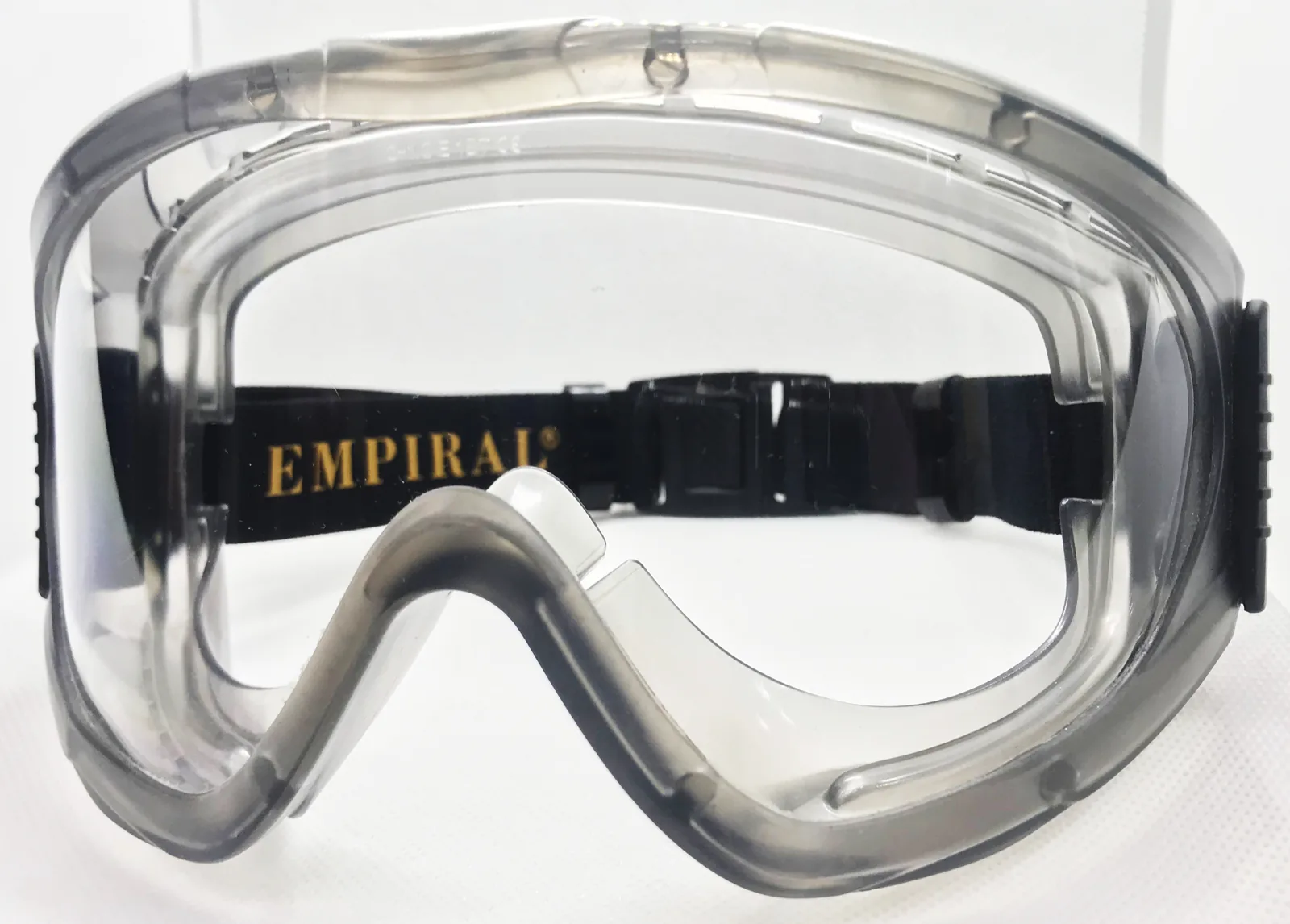
In soccer, eye injuries are an important public health ophthalmology issue. Soccer balls deform upon impact, enter the orbit, and deliver blunt force to the eyeball. Polycarbonate protective eyewear compliant with ASTM F803 is said to prevent ball contact, and its use is strongly recommended 11). It is important to select contact lenses suitable for use during sports and to ensure proper fit.
Each element of sports vision is evaluated using specialized testing equipment and methods. These can be performed at facilities specializing in sports ophthalmology, or at university ophthalmology and sports science laboratories.
Facilities that can provide specialized sports vision evaluations include ophthalmology clinics specializing in sports ophthalmology and sports medicine, ophthalmology departments at university hospitals (especially those collaborating with sports medicine divisions), and physical education universities or comprehensive universities with sports science research laboratories. Since specialized equipment such as DVA testing devices and eye movement recording devices are required, the available evaluation items vary by facility. It is advisable to confirm the target test items before visiting.
Vision training is a general term for training that purposefully exercises specific elements of visual function. It ranges from scientifically validated methods to commercially popular ones, so it is important to use them based on the quality of evidence.
The effects of vision training vary among individuals, and because studies differ in target sports, measurement indicators, and training content, the quality of evidence is considered moderate 9). Whether improvements in visual function indicators (e.g., DVA values, reaction time) directly lead to enhanced sports performance requires further verification. Some commercially advertised vision training devices lack sufficient scientific evidence, so it is recommended to verify the evidence before adoption.
Some studies have reported improvements in dynamic visual acuity and eye movements through training 9). A study of youth field hockey players found that a sports vision training program improved multiple visual function indicators 9). However, the degree of improvement varies among individuals, and evidence for a direct impact on athletic performance is limited. Continuous and systematic training along with professional feedback are considered important for enhancing effectiveness.
Each component of sports vision is processed by different neural circuits.
Perception of moving objects is mediated by the dorsal pathway (where/how pathway) from the primary visual cortex (V1) to visual area V5/MT (Middle Temporal area) 13). Neurons in V5/MT respond selectively to motion direction and are involved in judging ball trajectories and opponent movement directions in sports. This pathway integrates with the ventral pathway (what pathway: responsible for object recognition) to process “what is moving, where, and how” as a whole 13).
Stereopsis is established when binocular disparity detection neurons in V1 and V2 detect slight differences between the left and right retinal images and convert them into depth information 4). Binocular stereopsis is more accurate than monocular depth cues, especially for distance judgments at close range (approximately 2 to 6 meters).
Saccades are primarily controlled by the frontal eye fields (FEF) and superior colliculus, with precision and speed adjusted through coordination with the basal ganglia and cerebellum 8). Smooth pursuit involves V5/MT and the vestibulo-ocular reflex pathway, determining the accuracy of tracking target velocity 8). Eye movement control can be refined through practice, which is considered part of the training effect.
Dynamic visual acuity peaks in the 20s and 30s and declines with age 14). A decrease in motion perception processing speed in V5/MT is thought to be a major factor 14). Age-related nuclear sclerosis (changes in the lens), reduced contrast sensitivity, and slower eye movement speed also contribute to the decline in dynamic visual acuity. For masters athletes, these changes particularly affect athletic performance, making regular visual function assessment beneficial.
Sports vision training using VR (virtual reality) and AR (augmented reality) technology is in the research and development stage 15). It features the ability to recreate sport-specific visual scenarios in a virtual environment and simultaneously train dynamic visual acuity, peripheral vision, and reaction time. A review of digital training technology (Appelbaum & Erickson, 2018) suggests that digital technologies including VR may be more efficient than traditional paper- and device-based training 15).
With the spread of competitive gaming (e-sports), attention to the visual function profile of e-sports players is increasing. Issues such as accommodative fatigue and eye strain from prolonged close use of high-resolution displays, as well as superior reaction time and eye movements, have become new subjects of sports vision research.
Research is progressing on wearing miniaturized and lightweight eye trackers during competition to measure eye movements in real time in actual game situations. By analyzing gaze patterns during competition, it is expected to clarify the visual basis of skill differences between experts and beginners and apply this to effective training design.
Research is underway to improve visual attention and reaction time using technologies such as VR/AR, digital training, and neurofeedback. However, direct effects on competitive performance are still in the verification stage 1)15).